

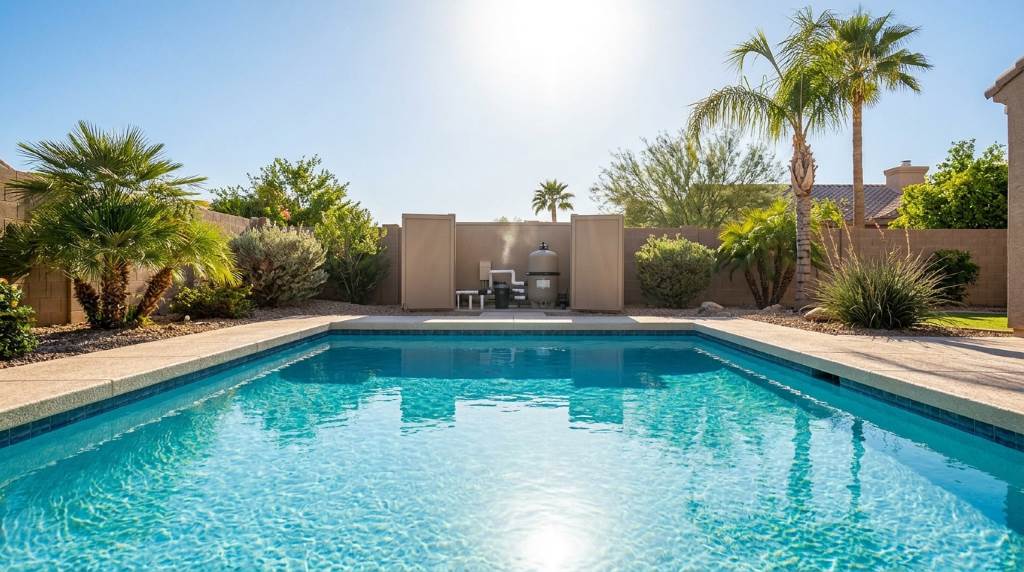
Keeping a swimming pool sparkling in Arizona requires consistent care because intense sunshine speeds chemical loss every day. According to industry estimates, ultraviolet rays can reduce free chlorine levels by up to 90% within just two hours without protection. Meanwhile, millions of American homeowners maintain backyard pools throughout the USA using simple maintenance routines. While improving water quality, many owners also review salt chlorinator troubleshooting methods because efficient equipment supports cleaner, healthier swimming conditions throughout every season.
Phoenix experiences extremely hot summers, dusty winds, and long swimming seasons that challenge pool maintenance. However, clear water remains achievable when you balance chemistry, improve circulation, and follow a consistent cleaning schedule. This guide explains practical steps that protect water quality while reducing unnecessary maintenance costs for homeowners across Arizona.
Understand Phoenix Pool Challenges First
Phoenix pools face stronger environmental pressure than many other locations across the USA. High temperatures encourage algae growth while dust storms introduce dirt, pollen, and debris into the water every week.
Before creating a maintenance routine, homeowners should understand avoid building a pool considerations because climate, maintenance demands, and long term ownership responsibilities affect overall planning. Proper expectations help owners maintain cleaner pools with greater confidence.
Evaporation also concentrates minerals that increase calcium hardness over time. Therefore, regular testing prevents cloudy water before serious problems develop.
Maintain Proper Water Chemistry Every Week
Balanced water chemistry creates the foundation for crystal clear swimming conditions. Moreover, accurate testing prevents algae growth, cloudy water, scaling, and equipment damage.
Homeowners planning future upgrades often research choosing the perfect pool designs because proper construction improves circulation and simplifies long term maintenance. Better design often supports cleaner water with less effort.
Test these important water levels every week.
- Free chlorine between 2 and 4 ppm
- pH between 7.4 and 7.6
- Total alkalinity between 80 and 120 ppm
- Calcium hardness between 200 and 400 ppm
- Cyanuric acid between 30 and 50 ppm
Additionally, test more frequently after heavy pool use or strong monsoon storms. Small adjustments usually prevent larger water quality problems later.
Keep Filtration Running Efficiently
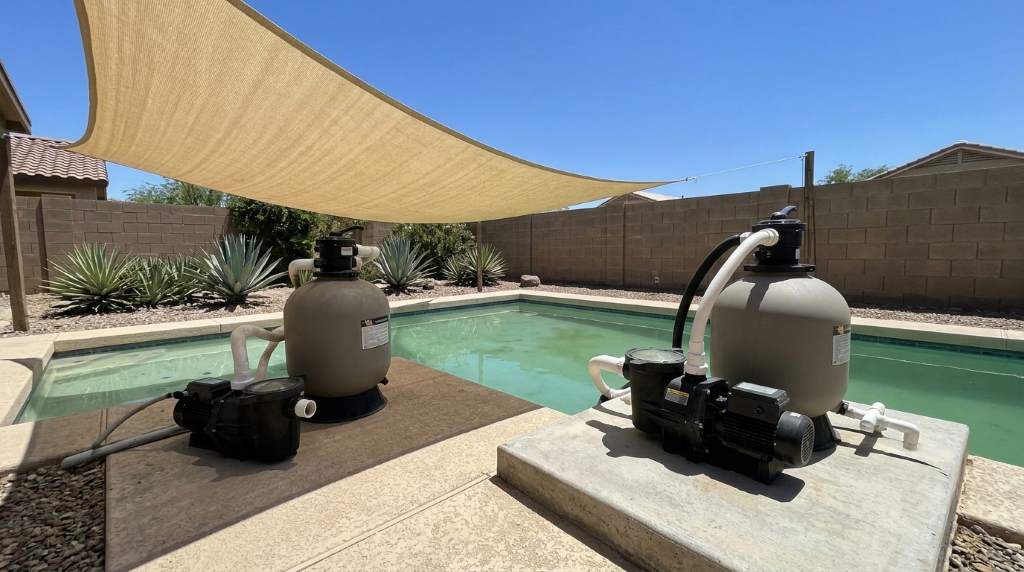
The filtration system removes fine particles before they cloud the water. Consequently, sufficient circulation remains essential during Phoenix summers.
Many homeowners also learn manual pool vacuum techniques because removing settled debris reduces strain on filtration equipment. Clean surfaces help filters perform much more efficiently.
Run the pump between eight and twelve hours daily during hot weather. However, increase runtime whenever temperatures remain above one hundred degrees for several consecutive days.
Clean cartridge filters regularly according to manufacturer recommendations. Likewise, backwash sand or DE filters whenever pressure increases beyond normal operating levels.
Brush and Vacuum the Pool Frequently
Brushing removes algae spores before they establish stubborn colonies on pool surfaces. Furthermore, routine brushing loosens dirt that filters remove more effectively.
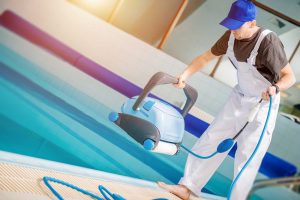
Vacuum the pool at least once every week during swimming season. Manual or robotic cleaners both improve water clarity when used consistently.
Pay extra attention to shaded corners, pool steps, and waterline areas because algae often begin growing there first. Early cleaning reduces chemical demand significantly.
Remove Debris Every Day
Leaves, insects, and desert dust quickly reduce water clarity when they remain inside the pool. Therefore, daily skimming saves both chemicals and cleaning time.
Empty skimmer baskets before they become overloaded with debris. Similarly, clean pump baskets regularly to maintain strong water circulation.
After dust storms, remove floating debris immediately instead of waiting until the following weekend. Prompt action prevents organic waste from affecting water chemistry.
Prevent Algae Before It Starts
Algae prevention always costs less than algae removal. Consequently, proactive maintenance protects both water quality and pool equipment.
Shock the pool after heavy rain, large gatherings, or extended periods of extreme heat. Additionally, maintain consistent chlorine levels instead of allowing sudden drops.
Brush walls immediately after shocking because dead algae settles across surfaces quickly. Regular brushing also improves sanitizer effectiveness throughout the pool.
Watch Water Levels Carefully
Phoenix pools lose significant water through evaporation during summer months. Therefore, monitor water levels every few days.
Maintain the water halfway up the skimmer opening for efficient circulation. Excessively low levels reduce filtration performance while high levels weaken skimming efficiency.
If frequent refilling becomes necessary, inspect equipment carefully for hidden leaks. Early repairs prevent unnecessary water waste and higher utility costs.
Manage Calcium Hardness
Arizona water naturally contains higher mineral levels than many regions across the USA. Consequently, calcium buildup commonly affects local swimming pools.
Test calcium hardness every month throughout the swimming season. Furthermore, partial water replacement sometimes restores balanced mineral levels safely.
Scaling appears on tile, heaters, and plumbing when hardness remains too high. Preventive maintenance protects expensive equipment from premature wear.
Prepare for Dust Storm Season
Monsoon weather introduces fine dust that quickly clouds pool water across Phoenix neighborhoods. Therefore, preparation reduces cleanup time afterward.
Use a secure pool cover whenever storms approach if practical. Afterwards, skim debris immediately before particles sink toward the bottom.
Check chemical levels after every major storm because rainfall dilutes sanitizer concentrations. Quick testing restores proper balance before algae develops.
Create a Simple Weekly Maintenance Schedule
Consistency produces clearer water than occasional deep cleaning sessions. Moreover, short maintenance tasks remain easier than correcting neglected pools.
- Test water chemistry twice weekly.
- Brush walls and steps weekly.
- Vacuum the floor weekly.
- Empty skimmer baskets every few days.
- Inspect equipment every week.
- Clean filters as needed.
- Shock after heavy use when necessary.
Common Mistakes to Avoid
Many homeowners accidentally create cloudy water through inconsistent maintenance habits. Fortunately, avoiding several common mistakes greatly improves long term results.
- Ignoring regular water testing.
- Running the pump too briefly.
- Skipping weekly brushing.
- Adding excessive chemicals unnecessarily.
- Waiting too long before cleaning filters.
- Leaving storm debris inside the pool.
Conclusion
Keeping pool water clear in Phoenix, AZ requires consistency rather than complicated techniques. Balanced chemistry, efficient filtration, regular cleaning, and prompt debris removal work together throughout every season. Start following these proven maintenance habits today, and enjoy cleaner, healthier swimming with fewer costly repairs and greater peace of mind.
Frequently Asked Questions
How often should I test my Phoenix pool water?
Test your pool water at least twice each week during the swimming season.
Why does my pool become cloudy after a dust storm?
Fine desert dust introduces particles that overload filters and reduce water clarity.
How long should I run my pool pump during summer?
Most Phoenix pools need eight to twelve hours of daily filtration during hot weather.
Can high temperatures reduce chlorine levels?
Yes, strong sunlight and heat rapidly lower chlorine without proper stabilization.
What is the fastest way to prevent algae growth?
Maintain balanced chlorine levels and brush pool surfaces every week.