

You vacuum, dust, and crack a window now and then, yet the air inside your home can still carry more pollutants than the air outside. As homes are sealed tighter for energy efficiency, everyday activities like cooking, cleaning, and even burning a candle release particles and gases that have nowhere to go. Some of these pollutants irritate allergies and asthma; others quietly affect long-term health. For Georgia homeowners who run air conditioning for much of the year and deal with heavy spring pollen, filtration is the first practical line of defense. That is why many residents start with a guide to MERV 11 filters in Georgia before deciding what to install. Understanding where pollution comes from, though, tells you what filtration can and cannot fix.
Quick Answer
The most common indoor air pollution sources in homes are cooking (especially frying and gas stoves), combustion appliances like fireplaces and furnaces, cleaning products and air fresheners, building materials and furniture that off-gas chemicals, biological contaminants such as mold, dust mites and pet dander, and outdoor pollutants that enter through ventilation and gaps. Most homes have several sources at once, and the right fix depends on whether a pollutant is a particle, a gas, or a biological contaminant.
Key Takeaways
- Indoor air pollution usually comes from a mix of sources, not just one, so no single device solves everything.
- Particles (dust, smoke, pollen) and gases (VOCs, carbon monoxide, radon) require different strategies—filtration handles the first far better than the second.
- Combustion sources like gas stoves, fireplaces, and furnaces deserve special attention because they can release carbon monoxide and nitrogen dioxide.
- Ventilation and source control often matter more than filtration alone, especially for gases and moisture-related problems.
- In Georgia, high humidity and long pollen seasons make moisture control and filter choice especially important.
Why Indoor Air Quality Often Gets Worse Than Outdoor Air
Modern homes are built and retrofitted to be airtight, which saves energy but traps pollutants inside. Without deliberate ventilation, the same air recirculates while new contaminants are continuously added through cooking, cleaning, and off-gassing. The U.S. Environmental Protection Agency has long noted that indoor pollutant levels can be several times higher than outdoor levels, and that Americans spend roughly 90% of their time indoors. The takeaway is not that your home is dangerous—it is that indoor air quality is something you actively manage rather than assume.
Cooking: One of the Biggest Everyday Sources
Cooking is frequently the largest single contributor to indoor particle pollution in a typical home. Frying, broiling, and toasting generate fine particles and grease aerosols. Gas stoves add another layer by producing nitrogen dioxide and carbon monoxide during combustion, even when the flame looks clean.
What actually helps
- Run the range hood every time you cook, not just when something smokes. A hood that vents outdoors is far more effective than a recirculating one.
- Match hood use to cooking intensity. Boiling water needs less; searing meat needs the highest setting.
- Open a window briefly if your hood is weak, even in summer.
- Consider an induction or electric cooktop if you are remodeling and want to eliminate combustion at the source.
Combustion Appliances: Fireplaces, Furnaces, and Water Heaters

Any device that burns fuel—natural gas, propane, oil, wood, or kerosene—can release carbon monoxide, nitrogen dioxide, and fine particles. Carbon monoxide is odorless and potentially deadly, which makes it a different category of risk than dust or pollen.
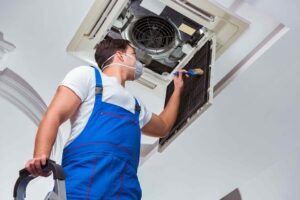
Key precautions include annual servicing of furnaces and water heaters, keeping flues and chimneys clear, never idling a car in an attached garage, and installing carbon monoxide alarms on every level of the home. If you burn wood, burn seasoned wood and ensure a proper draft. A poorly maintained fireplace can undo the benefit of every filter in the house, To keep your home’s air clean and systems running efficiently, remember the benefits of routine ac maintenance for homeowners.
Cleaning Products, Air Fresheners, and Candles
Clean-smelling does not mean clean air. Many cleaning sprays, plug-in air fresheners, and scented candles release volatile organic compounds (VOCs) and, in the case of candles, soot particles. Some people are sensitive to these even at low concentrations.
Practical alternatives include using fragrance-free or low-VOC cleaners, ventilating while cleaning, choosing unscented candles or skipping them entirely, and using baking soda or vinegar for routine tasks. This is one area where simple substitution removes the source rather than trying to filter it out later.
Building Materials, Furniture, and Household Chemicals
New carpets, pressed-wood furniture, paint, adhesives, and vinyl flooring can off-gas formaldehyde and other VOCs for weeks or months after installation. This is why a newly renovated room sometimes has a distinct smell. Electronics, printed materials, and dry-cleaned clothing can also contribute.
What helps most is time plus ventilation. Opening windows during and after renovation, running a fan to move air, and choosing low-VOC or formaldehyde-free products when possible reduces exposure. Activated carbon filters can capture some VOCs, but they have limited capacity and are not a substitute for ventilating the source.
Biological Contaminants: Mold, Dust Mites, and Pet Dander
Biological pollutants thrive where there is moisture and organic material. Mold grows in bathrooms, basements, around leaky windows, and inside HVAC systems that stay damp. Dust mites live in bedding, upholstery, and carpet. Pet dander and pollen are tracked in from outside.
Control strategies differ by contaminant:
- Mold: fix leaks, keep indoor humidity roughly between 30% and 50%, and clean or replace damp materials promptly.
- Dust mites: wash bedding in hot water weekly, use allergen-proof covers, and reduce clutter that collects dust.
- Pet dander: regular vacuuming with a HEPA-equipped vacuum and brushing pets outdoors help reduce load.
- Pollen: keep windows closed during peak season, remove shoes at the door, and change filters more frequently.
Outdoor Pollutants Getting In
Outdoor air enters through open windows, doors, exhaust vents, and the small gaps that exist in every home. In Georgia, spring pollen, wildfire smoke drifting from other regions, and traffic-related pollution near busy roads are common concerns. Filtration on your HVAC system can capture a meaningful share of these particles, but only if the filter is matched to your system and changed on schedule.
How filter choice fits in
MERV ratings describe a filter’s ability to capture particles of different sizes. A MERV 11 filter captures a high percentage of particles in the 1–3 micron range and a moderate share of smaller ones, which makes it a reasonable middle ground for households dealing with pollen, dust, and pet dander without over-restricting airflow. Higher MERV ratings capture more but can strain systems not designed for them. Choosing well, however, only addresses particles—not gases, carbon monoxide, or radon.
What Filtration Can and Cannot Do
A furnace or HVAC filter, even a good one, is designed primarily to protect equipment and capture airborne particles. It is not a whole-home air purifier.
| Pollutant Type | Filter Helps? | Better Approach |
|---|---|---|
| Dust, pollen, pet dander | Yes, with proper MERV rating | Regular filter changes plus source control |
| Smoke and fine particles | Partially | Ventilation, HEPA air cleaner, source removal |
| VOCs and odors | Minimally | Activated carbon filtration, ventilation, low-VOC products |
| Carbon monoxide | No | Alarms, appliance maintenance, proper venting |
| Radon | No | Testing and mitigation system |
A Practical Order of Operations
Rather than buying equipment first, work through the problem in a logical sequence.
- Identify likely sources by walking through your home and noting cooking habits, moisture, smells, and combustion appliances.
- Control sources at the origin—vent the range hood outdoors, fix leaks, store chemicals properly, and reduce unnecessary fragrances.
- Ventilate deliberately, especially during cooking, cleaning, and after renovations.
- Filter what remains with an appropriately rated filter changed on schedule.
- Test for hidden hazards such as radon and carbon monoxide, which you cannot see or smell.
This order matters because no filter can remove pollution that is continuously generated faster than the system can process it.
Frequently Asked Questions
What is the single biggest source of indoor air pollution in most homes?
For many households, cooking is the largest routine source of indoor particles, particularly frying and gas-stove combustion. However, the biggest source varies by home. In houses with moisture problems, mold may dominate; in newly renovated homes, off-gassing chemicals may be the main concern.
Can a MERV 11 filter remove VOCs, odors, or carbon monoxide?
No. A MERV 11 filter is designed to capture particles such as dust, pollen, and pet dander. It does not effectively remove gases like VOCs, odors, or carbon monoxide. For those, you need ventilation, activated carbon filtration, or source removal.
Do air purifiers replace the need for ventilation?
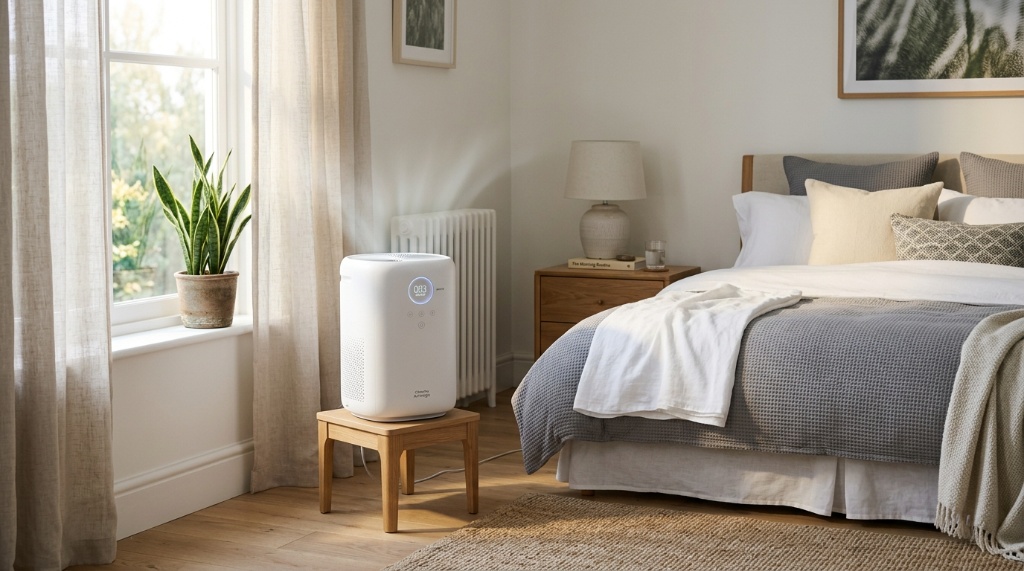
No. Portable air purifiers can reduce airborne particles in a specific room, but they do not supply fresh air or remove gases the way ventilation does. They work best as a supplement to source control and ventilation, not a replacement.
How often should I change my HVAC filter in Georgia?
Every 60 to 90 days is a common guideline, but homes with pets, heavy pollen exposure, or ongoing renovation may need changes every 30 to 45 days. A visibly loaded filter should always be replaced regardless of the calendar.
Is radon a real concern in Georgia homes?
Radon can be found in homes throughout Georgia, not just in mountain regions. Because it is invisible and odorless, the only way to know your level is to test. Testing kits are inexpensive and widely available, and mitigation is a standard, well-understood process when elevated levels are found.
Does opening windows always improve indoor air?
Not always. On high-pollen days, during wildfire smoke events, or in areas with heavy traffic pollution, opening windows can make things worse. Ventilation works best when outdoor air quality is reasonable and when you are trying to clear a specific indoor source.
Conclusion
Indoor air pollution in residential homes rarely comes from one dramatic source. It accumulates from cooking, combustion appliances, cleaning products, building materials, moisture, and outdoor air seeping in. The most effective response is sequential: identify the sources in your home, control them where possible, ventilate deliberately, and then use filtration to handle what remains. In Georgia’s humid climate and long pollen season, that combination matters more than any single purchase. Start by walking through your home with these sources in mind, fix what you can this week, and let the rest follow.