




A dock ladder is more than just a piece of equipment; it’s a crucial component of your boating experience. It provides safe and easy access to and from your boat, enhancing both comfort and security. Whether you’re a seasoned boater or just starting, understanding the nuances of dock ladders is essential. This guide explores the different types, safety considerations, and factors to consider when choosing the perfect ladder for your needs.
Why Do You Need a Dock Ladder?
A dock ladder serves several essential purposes:
- Safety: It provides a secure and stable way to enter and exit the water, reducing the risk of slips, falls, or injuries.
- Convenience: A ladder eliminates the hassle of climbing awkwardly onto or off your boat, especially when carrying gear or assisting others.
- Accessibility: It ensures everyone can enjoy the water, including children, elderly individuals, and those with limited mobility.
- Boat Protection: By providing a designated entry and exit point, ladders help prevent damage to your boat’s hull or other components.
Types of Dock Ladders
Dock ladders come in various styles to suit different dock configurations and preferences:
- Straight Ladders: These are the most common type, featuring fixed rungs attached to a vertical frame. They are sturdy, reliable, and easy to install.
- Lift Ladders: These ladders can be raised or lowered to accommodate varying water levels. They are ideal for docks with fluctuating water depths.
- Swing-Up Ladders: These ladders fold flat against the dock when not in use, providing a sleek appearance and saving space.
- Floating Ladders: Designed for floating docks, these ladders adjust to water level changes and offer excellent stability.
- Boat Ladder: While primarily used for boarding a boat, a boat ladder can also serve as a dock ladder in certain situations, especially on smaller boats or pontoons.
Choosing the Right Dock Ladder
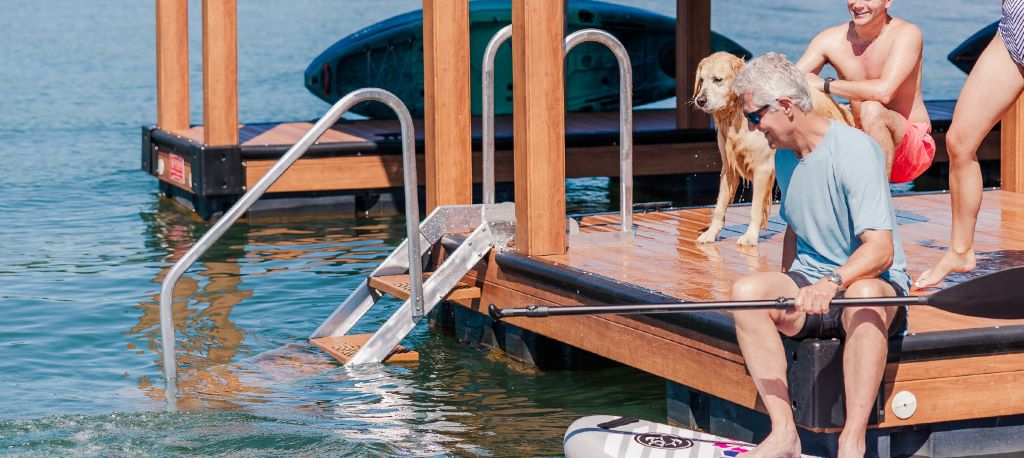
Selecting the appropriate dock ladder depends on several factors:
- Dock Type: Consider the type of dock you have (fixed, floating, or pontoon) and the ladder’s compatibility.
- Water Depth: Ensure the ladder’s length is sufficient to reach the water’s surface at its lowest point.
- Ladder Material: Choose between aluminum, stainless steel, or plastic based on durability, corrosion resistance, and aesthetics.
- Rung Spacing: Opt for rungs spaced comfortably for your needs, considering factors like shoe size and age of users.
- Ladder Width: Wider rungs provide better stability and comfort, especially for those with larger feet or balance concerns.
- Weight Capacity: Ensure the ladder can safely support the weight of the intended users.
- Additional Features: Some ladders offer non-slip surfaces, handrails, or folding mechanisms for added convenience.
Safety First: Tips for Using Your Dock Ladder
- Inspect Regularly: Check the ladder for any signs of wear, damage, or loose components before each use.
- Secure Mounting: Ensure the ladder is securely attached to the dock to prevent accidents.
- Maintain Proper Foot Placement: Use the entire step surface and avoid stepping on the edges of the rungs.
- Hold Onto Railings: If available, use handrails for added stability, especially when entering or exiting the water.
- Mind Your Balance: Be cautious, especially in windy or choppy water conditions.
- Supervise Children: Always supervise children when using a dock ladder.
- Consider Ladder Accessories: Optional accessories like ladder lights or safety rails can enhance visibility and security.
HVAC Repair Heroes: Decoding Online Reviews to Find the Perfect Repair Match
Maintaining Your Dock Ladder
Proper maintenance extends the life of your dock ladder and ensures its continued safety:
- Rinse with Fresh Water: Rinse the ladder with fresh water after each use to remove salt, chlorine, or other contaminants.
- Dry Thoroughly: Allow the ladder to dry completely before storing or covering it.
- Inspect Regularly: Check for signs of corrosion, rust, or damage and address issues promptly.
- Winter Storage: If you live in a cold climate, consider storing the ladder indoors during winter to protect it from harsh weather conditions.
Related: Buying your First Trailer
By carefully selecting and maintaining your dock ladder, you can enhance your boating experience while prioritizing safety and comfort for yourself and your guests. Remember, a well-chosen and properly maintained ladder is an essential investment in enjoying your time on the water to the fullest.