

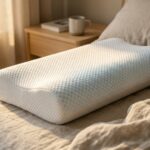
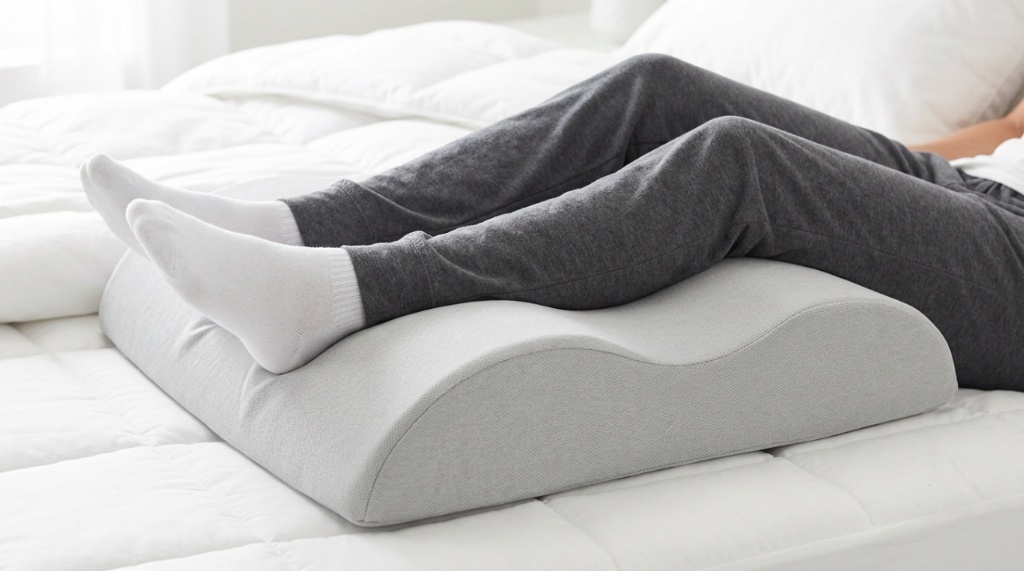
You have acid reflux, chronic back pain, or trouble breathing when lying flat. Your doctor suggested elevating your upper body while sleeping, so you started looking at wedge pillows. Now you are staring at dozens of options online, and every product looks like a foam triangle. The problem is that not all wedges are built the same. Buying the wrong one can mean neck strain, a collapsed foam, or a pillow that slides off the bed. The smartest way to avoid this mistake is to learn how to properly compare wedge pillow design before you spend a single dollar. Let us break down exactly what separates a life-changing wedge from a frustrating waste of money.
What Specific Design Features Actually Matter in a Wedge Pillow?
The most important design elements are the incline angle, the cut of the foam, and the base stability. A wedge that measures 12 inches in height at the highest point typically provides a 30-degree slope, which is the sweet spot for reducing acid reflux and improving sleep apnea symptoms. Flatter wedges below 10 inches often fail to provide enough elevation for medical relief, while wedges above 14 inches can cause the hips to slide down, creating a dreaded “slip effect.” Beyond height, look for a reverse slope or a scalloped cut at the bottom edge. This design prevents the pillow from pushing your head forward and keeps your spine in a neutral alignment.
Why Does Foam Density and Quality Change the Sleeping Experience?
Foam density determines whether your wedge will hold its shape for one year or for five. Many affordable wedges use foam rated between 1.5 and 1.8 pounds per cubic foot. That foam will compress noticeably within six months, leaving you with a flatter, less supportive surface. A high-quality wedge should use foam with a density of 2.0 pounds per cubic foot or higher. You can test this by pressing your hand into the foam. If it springs back instantly, it is a higher density. If it leaves a slow indent, it is lower quality foam that will degrade. Memory foam wedges offer pressure relief, but they sleep warmer. High-resilience polyurethane foam offers better airflow and firmer support for heavier individuals.
How to Check Foam Certifications
Look for CertiPUR-US certification on the product page. This certification guarantees the foam is free from heavy metals, formaldehyde, and ozone depleters. Without this certification, you risk sleeping on chemicals that off-gas into your breathing zone. Reputable manufacturers display this badge clearly. If you cannot find it, move to another product.
Which Wedge Pillow Slope Is Right for Your Sleep Position?
Back sleepers need a continuous, even slope. Side sleepers require a wedge with a contoured neck groove or a higher loft to fill the space between the ear and the shoulder. Stomach sleepers should rarely use a wedge at all, but if elevation is medically necessary, a very low incline of 15 degrees works best. The mistake most buyers make is choosing a one-size-fits-all wedge without considering their dominant sleep position. If you toss and turn, a wedge that is too steep will force you to slide down repeatedly. A wedge with a gentle, graduated slope allows you to shift positions without waking up at the bottom of the bed.
How Does Cover Fabric Affect Temperature and Hygiene?
The cover is the barrier between your skin and the foam, so fabric choice directly impacts sleep quality. A wedge pillow should have a removable, machine-washable cover made from bamboo-derived rayon, organic cotton, or a moisture-wicking polyester blend. Avoid solid polyester covers, as they trap heat and cause sweating. Bamboo rayon covers are naturally breathable and antimicrobial, which reduces the growth of dust mites and bacteria. A zippered cover with a separate inner liner also makes washing easier and protects the foam core. If the cover is not removable, do not buy that wedge. You cannot wash the foam core, and it will develop odors and stains over time.
When Should You Choose a Wedge with a Non-Slip Bottom?
You should prioritize a non-slip bottom if you have a smooth mattress surface like silk sheets, a memory foam topper, or a platform bed. Without a non-slip grip, a wedge will slide away from your back during the night. This creates a gap between your lower back and the pillow, which defeats the purpose of elevation. The best non-slip designs use a rubberized bottom layer or silicone dots embedded into the base. Some wedges also include a strap that hooks under the mattress for total stability. If you sleep on a soft mattress, the wedge may sink in, making the non-slip feature less critical. On a firm mattress, it is essential.
Can a Single Piece Wedge Outperform a Modular System?
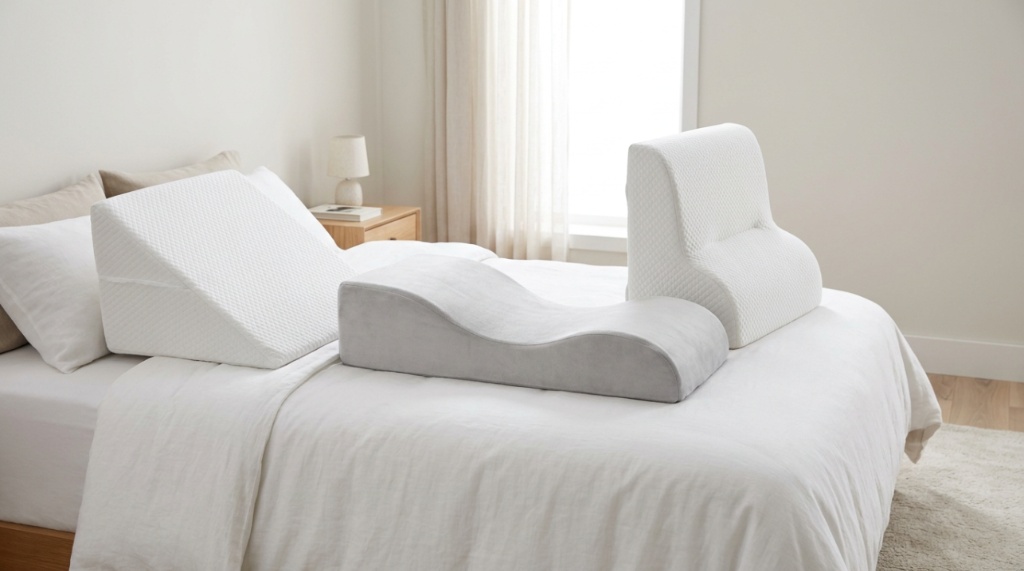
A single-piece wedge offers simplicity and stability. There is no risk of the pieces separating during sleep, and the foam is continuous without a weak seam in the middle. Modular wedge systems, which include a separate leg lifter and a head elevation piece, allow for customization. You can adjust the angle by adding or removing layers. The trade-off is that modular systems can shift apart, especially with restless sleepers. For medical conditions like GERD or post-surgical recovery, a rigid single-piece wedge provides more consistent elevation. For general comfort and reading in bed, a modular system offers flexibility. Evaluate your need for precision versus versatility before deciding.
Pros and Cons of Each Type
- Single-piece wedge: Pros include zero shifting, consistent angle, easier to clean. Cons include bulkier storage and fixed incline.
- Modular wedge system: Pros include adjustable incline, separate leg elevation, easier to travel with in pieces. Cons include potential separation during sleep and more seams to clean.
What Size and Dimensions Fit Your Bed Properly?
A wedge pillow should match the width of your mattress. A standard wedge is 24 inches wide, which works for a twin or a shared side of a queen or king. If you sleep with a partner, two narrower wedges side by side are better than one wide wedge, because you can adjust independently. Length is equally important. A wedge that is too short will leave your hips unsupported, causing your lower back to arch. The ideal wedge length is at least 24 inches long for upper body support. For full torso support, look for wedges that are 30 inches long. Measure the distance from your tailbone to the top of your head while lying down. The wedge you select should cover that distance.
| Bed Size | Recommended Wedge Width | Recommended Wedge Length |
|---|---|---|
| Twin | 24 inches | 24–30 inches |
| Full | 24–27 inches | 24–30 inches |
| Queen | 24–30 inches | 24–30 inches |
| King | 24–30 inches (or two 12-inch wedges) | 24–30 inches |
How Does a Cutout or Contoured Design Improve Comfort?
Cutout designs remove foam from the center of the wedge where your tailbone rests. This redistributes pressure away from the spine and allows your lower back to curve naturally. A contoured wedge that includes a head cavity reduces forward head posture, which is common with flat wedge surfaces. If you wake up with a sore neck or a headache, a contoured wedge may fix the issue. Some wedges also feature an arm cutout on the sides, which allows side sleepers to place their lower arm under the pillow without straining the shoulder. These design nuances transform a generic foam slope into an ergonomic sleep tool.
Which Wedge Pillow Design Is Best for Acid Reflux vs. Sleep Apnea?
For acid reflux, choose a wedge with a minimum height of 10 inches and a consistent 30-to-45-degree slope. This keeps stomach acid from traveling up the esophagus. Avoid wedges with memory foam toppers, as they allow your head to sink, which lowers the effective angle. For sleep apnea, consider a wedge that lifts the entire torso rather than just the head. A full torso wedge of 30 inches long prevents your chin from dropping toward your chest, which can collapse the airway. Many sleep specialists also recommend a wedge with a cervical support cutout for apnea patients. The design priority differs: reflux needs pure elevation, while apnea needs alignment and airway space.
How Much Weight Can a Wedge Pillow Support Without Compressing?
Weight capacity is rarely listed on standard product pages, yet it is critical. A person weighing over 200 pounds will compress low-density foam to the point where the incline drops by several inches. When comparing designs, look for load-bearing information in the specifications or reviews. Wedges with a solid core of high-resilience foam support up to 300 pounds without significant compression. Wedges with a layered construction, where a softer layer sits atop a firmer base, can also support heavier weights while providing pressure relief. If you are heavier, avoid wedges that advertise “plush” or “ultra-soft” comfort. You need a firm base designed to hold shape under load.
What Is the Difference Between a Therapeutic Wedge and a Comfort Wedge?
A therapeutic wedge is designed with medical-grade specifications. It has a precise incline, high-density foam, and certifications for safety. A comfort wedge prioritizes softness and often includes pillow-top layers or cooling gel. Therapeutic wedges are recommended for post-surgery recovery, chronic pain, and diagnosed reflux. Comfort wedges work well for reading, watching TV, or mild congestion. If you are buying for a medical reason, never choose a comfort wedge. The soft materials will not provide the elevation your body needs. Read the product description carefully. Words like “medical grade” or “post-surgery” indicate therapeutic intent. Words like “luxurious” or “plush” indicate a comfort design.
Frequently Asked Questions
What incline angle is best for acid reflux relief?
An incline between 30 and 45 degrees is standard for preventing acid reflux. This typically corresponds to a wedge height of 10 to 12 inches. A lower angle may not prevent nighttime reflux episodes.
Can I use a wedge pillow on an adjustable bed?
Yes, but you may not need a wedge if your bed already elevates. If you prefer extra support, a low-profile wedge of 6 to 8 inches works well on a partially raised adjustable bed to prevent sliding.
How do I clean a wedge pillow properly?
Remove the outer cover and wash it on a gentle cycle with cold water. The foam core should never go in a washing machine. Spot clean the core with a mild detergent and allow it to air dry completely before replacing the cover.
Is a memory foam wedge better than a polyurethane foam wedge?
Memory foam offers pressure relief and conforms to your body, but it retains heat. Polyurethane foam is cooler and more responsive. For medical conditions requiring firm elevation, polyurethane is usually more effective.
How often should I replace a wedge pillow?
High-density wedges last between two and five years. If you notice visible sagging, a permanent indent, or your head no longer stays elevated, it is time to replace the pillow. Inspect it every six months.
Can wedge pillows help with snoring?
Yes. Elevating the upper body can reduce snoring by keeping the airway open and preventing the tongue from collapsing backward. A wedge with 10 to 12 inches of height is most effective for snoring reduction.
Do I need a wedge for both sides of the bed?
If your partner also needs elevation, it is better to buy two separate wedges. Sharing a single large wedge limits individual adjustment and can cause one person to slide into the other over the course of the night.
Conclusion
Your wedge pillow is a sleep investment, not a disposable accessory. By focusing on foam density, incline angle, cover quality, and your specific sleep position, you can avoid the frustration of a pillow that collapses or causes neck pain. A thoughtful comparison of design elements ensures you get elevation that lasts, Wedge Pillow Designs Before You Buy. fits your body, and improves your health. Do not settle for a generic foam block without checking the details. Now that you know exactly what to look for, you can shop with confidence and find a wedge that actually transforms your sleep. Start your search today and wake up feeling better tomorrow.