



Waking up in the middle of the night with a burning sensation in your chest and a sour taste in your throat is exhausting. You aren’t just losing sleep; you are losing quality of life. While medications help manage stomach acid, they don’t fix the mechanical issue that occurs when you lie flat. Gravity is your enemy during sleep, allowing acid to escape your stomach. The solution isn’t just stacking pillows; it is using a specialized tool designed to elevate your body effectively. Let’s explore how an adjustable wedge pillow can transform your nights.
What Is an Adjustable Wedge Pillow and How Does It Work?
An adjustable wedge pillow is a sloped foam support designed to raise your upper body while you sleep. Unlike a standard flat pillow that only lifts your head, this device elevates your torso from the waist or mid-back upward. It works by utilizing gravity to keep stomach acid where it belongs—in the stomach. By creating a consistent incline, you prevent the acidic contents from flowing backward into the esophagus, reducing irritation and inflammation.
The Anatomy of a Wedge Pillow
Most high-quality wedge pillows are constructed from high-density foam, often memory foam or polyurethane, cut at a specific angle. The “adjustable” nature means the design includes stacked layers or a customizable height system. You can remove or add layers to achieve the perfect elevation for your body type.
The Physiological Mechanism of Inclined Sleep
Your esophagus enters your stomach at a specific angle. When you lie flat, this angle flattens, making it easier for acid to splash upward. Sleeping on a wedge restores a sharper angle at the junction of the stomach and esophagus. This, combined with gravity, creates a physical barrier that is highly effective for mild to moderate reflux sufferers.
Why Not Just Use Regular Pillows?
Regular pillows bend at the neck, actually increasing abdominal pressure and worsening reflux. They also fail to support the entire upper body. A wedge provides a rigid, continuous slope that prevents the “jackknife” position, ensuring a straight line from your hips to your head.
How Do You Choose the Right Height for Your Body?
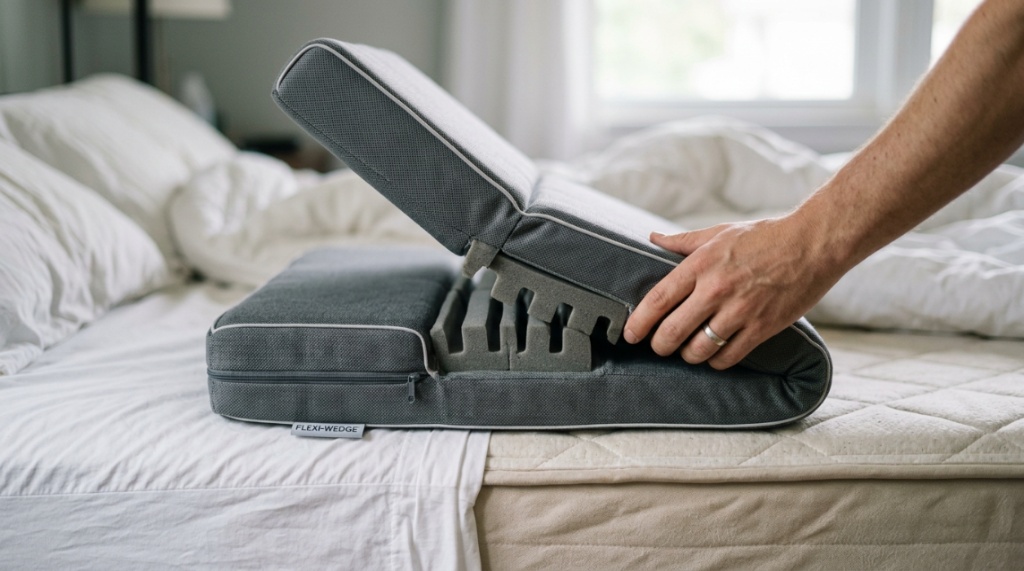
The ideal height for your wedge pillow depends on the severity of your reflux and your body weight. A general rule of thumb is that the incline should be between 6 and 10 inches from the top of the mattress. Also, you must measure from the base of the wedge to the highest point. If the incline is too steep, you may slide down; if it is too low, gravity won’t work effectively.
Mild Reflux vs. Severe Reflux
If you experience acid reflux less than twice a week, a lower profile (6–8 inches) may suffice. For chronic, nightly symptoms, you might require a greater incline of 8–10 inches. It is crucial to start with a moderate height and adjust based on your symptoms and comfort levels.
Body Weight and Density Considerations
Heavier individuals will compress the foam more than lighter individuals. Therefore, a taller wedge is often necessary for heavier body types, as the compression reduces the effective height. Look for pillows with a high foam density (ILD rating) to ensure durability and support that doesn’t flatten out overnight.
Adjusting for Sleep Position
This is critical; wedge pillows are specifically designed for back sleepers. If you are a side sleeper, you may need to angle your body slightly so that your chest is facing forward but your hips remain on the wedge. Alternatively, you may need a wedge with a cutout for the shoulder to maintain spinal alignment.
How Should You Position the Pillow on the Bed?
Place the wedge directly on top of the mattress and under your regular fitted sheet, which helps keep it in place. The taller end should sit slightly below your waistline, generally around the lower back or upper buttocks. The shorter end extends toward the headboard. This positioning ensures your stomach is physically lower than your esophagus.
Step-by-Step Placement Guide
Let’s walk through the optimal setup to avoid slipping and maximize comfort.
- Remove the wedge from its cover and place it flat on the mattress.
- Pull your fitted sheet tightly over the wedge and mattress to secure it.
- Position yourself so your hips are at the apex (highest point) of the wedge.
- Place a standard pillow on top of the wedge for your head and neck only.
- To prevent sliding, place a dense pillow or rolled blanket at the foot of your bed to brace your feet.
Common Positioning Mistakes
Do not place the wedge solely under your head. This negates the effect. Also, avoid putting your knees directly on the apex of the wedge, as this can impede circulation. The goal is a straight incline from your hips to your shoulders.
Using Additional Pillows for Support
While the wedge handles the heavy lifting, a thin pillow under your knees can help relieve lower back pressure. This improves sleep quality significantly, even if you are a back sleeper, by reducing the strain of the incline on your lumbar spine.
When Should You Use the Wedge Pillow?
You should use the wedge pillow every time you sleep, including naps. However, timing is more than just sleeping. You should also use it when you are lying down to watch television or read in bed. The danger window is typically 2–3 hours after eating, but the physical elevation is beneficial immediately upon lying down.
The “Wait Time” Rule
Even with a wedge, you should still wait at least 2 to 3 hours after a meal before lying down. The wedge is a management tool, not a cure. Lying down immediately after a large meal, even on an incline, can still trigger reflux for some individuals.
Using the Wedge with Medication
If you take antacids or PPIs, the wedge works synergistically. Medication reduces acid volume, while the wedge prevents the remaining acid from moving. This combination is the gold standard for nocturnal reflux management.
Travel and Napping Scenarios
For naps, always use the wedge if you are in bed. Do not “cheat” and use the couch, as you will likely end up in a semi-reclined position that puts pressure on the stomach. For travel, consider inflatable wedge options that can be adjusted to replicate this setup.
How Do You Prevent Sliding Down the Wedge?
Sliding is the most common complaint among wedge users. The slippery feel of the foam or the sheet can cause you to end up horizontal by morning. To prevent this, you must create friction and a physical barrier at your feet.
Creating a Foot Barrier
Place a memory foam pillow, a rolled-up comforter, or a dense sleeping bag at the end of the bed where your feet rest. This gives your body something to push against naturally during the night, preventing gravitational sliding.
Utilizing Non-Slip Pads
If your wedge does not have a non-slip bottom, place a rubberized shelf liner between the mattress and the wedge. This stops the wedge itself from moving, even if your body shifts. Additionally, using a fitted sheet with a high elastic content helps hold everything in place.
Adjusting Your Sleeping Posture
Bend your knees slightly while sleeping. This alters the angle of your pelvis and reduces the tendency to slide. Sleeping with a pillow under your knees also supports this bent-leg position, which naturally anchors your lower body.
Can a Wedge Pillow Help Beyond Just Acid Reflux?
Yes, while the primary use is for GERD, the benefits extend to several other respiratory and circulatory conditions. The elevation reduces pressure on the diaphragm, which improves breathing mechanics and can alleviate symptoms of sleep apnea and snoring. Furthermore, it aids in reducing sinus pressure by promoting drainage.
Benefits for Respiratory Issues
Sleeping on an incline opens up the airways, reducing the vibration of soft tissue that causes snoring. For asthma sufferers, the elevation helps keep airways clear of mucus, making breathing easier during the night. This makes the adjustable wedge pillow for acid reflux a multi-functional health investment beyond just digestive support.
Cardiovascular and Circulation Support
Elevating the legs and torso can assist with conditions like edema (swelling in the legs) and venous insufficiency. While the wedge primarily elevates the head, the angle also slightly elevates the legs, promoting better venous return to the heart.
Post-Surgery Recovery
Many patients utilize wedge pillows after abdominal or breast surgery to reduce stress on incisions. The incline allows patients to get in and out of bed with significantly less pain and strain compared to lying flat.
What Are the Best Materials for Durability?
The material dictates whether your wedge will last for years or become a pancake within months. The two main types are high-resilience polyurethane foam and shredded memory foam. You want a foam that has an ILD (Indentation Load Deflection) of at least 24–30. This ensures it is firm enough to hold your body weight without collapsing.
Foam Density vs. Firmness
Density refers to weight, while firmness refers to support. Be careful: a “high-density” but low-ILD memory foam can be too soft. For a wedge, you want a high-density and high-ILD foam. This provides the rigid support necessary to keep the angle intact.
Cover Materials and Breathing
Look for a cover made from bamboo or organic cotton. These materials wick away moisture and are more breathable than polyester blends. Since the foam can trap heat, a breathable cover is essential for hot sleepers. Often, bamboo viscose covers are the best choice for temperature regulation.
Waterproof and Washable Options
Given that acid reflux involves bodily fluids, choose a pillow with a waterproof inner core or a zip-off, machine-washable outer cover. This protects the foam from stains and odors and extends the life of the pillow significantly.
How Do You Clean and Maintain Your Wedge Pillow?
Regular cleaning prevents the buildup of allergens, dust mites, and bacteria. While you cannot toss the foam core in the washing machine, you must maintain the cover and spot-clean the foam periodically.
If you live in the Pacific Northwest and want to learn more about localized sleep solutions, check out our guide on how bed wedge pillows boost sleep in Washington for more regional insights.
Daily and Weekly Maintenance
Air out the pillow cover weekly. Wash the cover in cold water and tumble dry on low. This removes oils and sweat that accumulate daily.
Deep Cleaning the Foam
Spot clean the foam core with a mild detergent diluted in water. Do not soak the foam, as this can damage the structure. To remove odors, sprinkle baking soda over the foam, let it sit for 30 minutes, and vacuum it off.
Storage and Lifespan
A high-quality wedge will last between 3 to 5 years. If you see a permanent indentation that doesn’t bounce back, or if the incline angle has visibly decreased, it is time to replace it. Always store the wedge flat to maintain its shape if not in use.
How Soon Can You Expect Results?
Many users report immediate relief on the first night, specifically regarding regurgitation and waking up with a sore throat. However, the full benefits regarding esophageal healing take time. While the wedge stops the initial reflux event, the irritation in your throat needs time to heal, which can take several weeks.
The First Few Nights
Expect an adjustment period. Your back and hips will feel unusual pressure as they adapt to the new angle. You may sleep lighter initially. Do not give up early; your body will acclimate to the incline.
Tracking Symptom Reduction
Keep a sleep diary for two weeks. Note the frequency of nighttime coughing, heartburn, or a sour taste in your mouth. If these symptoms decrease by 50% or more, the wedge is working. If not, you may need to increase the height.
When to Consult a Doctor
If you use the wedge consistently for one month and see no improvement, consult a gastroenterologist. Persistent GERD can cause esophageal strictures or Barrett’s esophagus, which require medical intervention.
Are There Any Downsides or Risks?
While generally safe, wedge pillows are not perfect. They can cause discomfort for stomach sleepers. Sleeping on your stomach with a wedge is practically impossible. Additionally, they can exacerbate hip arthritis or lower back pain if the angle is too aggressive.
Neck Pain and Spinal Alignment
If your neck is bent severely upward, you will wake up with stiffness. To mitigate this, ensure you use a normal, flat pillow on top of the wedge to keep your head and spine aligned. Your head should not be flexed forward.
Sleep Disruption from Adjusting
Some users find themselves sliding down, which wakes them up. Using a foot brace (as mentioned earlier) minimizes this. Also, consider a “CPAP-friendly” wedge if you use a sleep apnea machine, as it features a channel for the mask hose.
Heat Retention in Memory Foam
Memory foam retains heat, which can be uncomfortable. If you are a hot sleeper, look for a wedge with gel infusion or perforated channels in the foam to encourage airflow.
Which Features Should You Prioritize When Buying?
When shopping for your wedge, prioritize flexibility and support over aesthetics. You need a product that can grow with your needs. Look for adjustable options where you can buy additional layers to stack, allowing you to increase the height in increments if your reflux worsens.
Adjustability vs. Fixed Wedges
Fixed wedges are cheaper but leave no room for customization. Adjustable wedges feature layers of foam that zip together. This allows you to start with a 4-inch incline and move to a 6-inch or 8-inch incline as your condition changes. This long-term flexibility makes the adjustable type more valuable.
Size and Footprint
Wedges come in twin and king sizes. While a twin size is usually sufficient for a single person, a king size offers more room to move around without falling off. Ensure the base of the wedge is long enough to support your torso from hips to head. Measure your body length to check this.
Return Policies and Warranties
Because sleep is personal, ensure you buy from a retailer with a generous trial period (minimum 30 nights). This allows you to test the incline and adjust before committing. Also, check for a warranty that covers foam degradation (at least 5 years).
Frequently Asked Questions
Can I use a wedge pillow if I am a side sleeper?
Yes, but it requires modification. Place a firm pillow between your knees to keep your hips aligned. You also need to angle your torso so you are lying at a 45-degree angle, resting between your back and side, otherwise, the incline may cause shoulder pain.
Is it safe to use a wedge pillow every night?
Yes, it is safe for continuous use. It is a non-invasive therapy recommended by many physicians. Regular use is actually encouraged to prevent the cumulative damage of nightly acid exposure. There are no known health risks associated with sleeping on a consistent incline for this purpose.
What is the difference between a wedge and a bed riser?
Bed risers elevate the entire head of the bed, providing a full-body incline. Wedges only elevate your torso. While raising the bed head is often more comfortable for the spine, wedges are mobile and do not require furniture modifications. Wedges also keep the lower body flatter, which is better for circulation.
Should I still take my medication if I use the wedge?
Yes. The wedge is a lifestyle modification and does not replace medication. It reduces the volume of reflux reaching the throat, but it does not neutralize acid. Continue taking your prescribed medication until your doctor advises otherwise.
Can I sleep with a regular pillow on top of the wedge?
Absolutely. In fact, it is recommended. The wedge supports your torso, but a flat, comfortable pillow on top supports your head and neck, preventing stiffness. Ensure the regular pillow is not too thick, as this can increase the angle of your head too much.
How do I stop the wedge from slipping off my bed?
Place the wedge between the mattress and a non-slip rug pad. Ensure the fitted sheet is tight. You can also purchase clips that attach the wedge to the mattress foundation. An easy trick is to place the wedge against the wall if your bed is positioned against one.
Conclusion
An adjustable wedge pillow is a proven, non-pharmaceutical way to reclaim your nights from the grip of acid reflux. By utilizing gravity and maintaining a consistent incline, you stop the upward migration of stomach acid that damages your esophagus and disturbs your sleep. The key is not just buying a pillow, but using it correctly: positioning it under your hips and torso, bracing your feet, and giving your body time to adjust. You will likely see a reduction in symptoms immediately, but consistency is crucial. Take the step tonight to invest in your sleep hygiene. Adjust your bed setup, elevate your body, and wake up refreshed without the burning sting of reflux.