


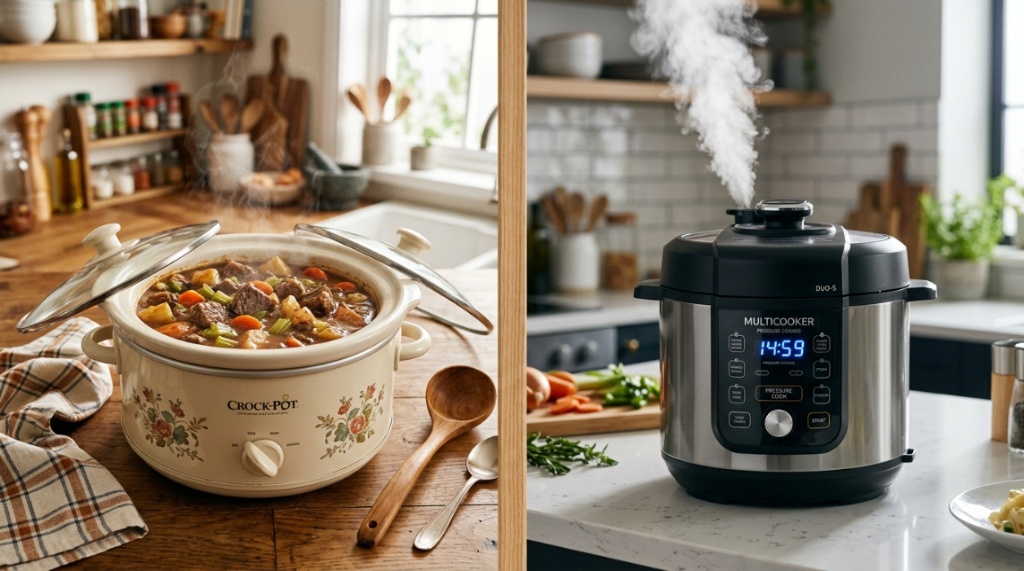
You stand in the appliance aisle, phone in hand, staring at two boxes that promise to change your dinner game. One says Crock Pot. The other says Multi Cooker. Both claim to make your life easier. So which one do you actually need?
Here is the honest truth: these are not the same machine, and buying the wrong one means wasted counter space and money. A slow cooker specializes in one job—low-and-slow braising. A multi cooker tries to do everything from pressure cooking to sautéing. This article cuts through the marketing noise and gives you a practical framework to decide which appliance fits your cooking style, schedule, and budget. You will learn exactly how each works, where they overlap, and which one deserves a spot in your kitchen.
What Is the Actual Difference Between a Crock Pot and a Multi Cooker?
A Crock Pot (slow cooker) uses low, steady heat over 4–10 hours to tenderize meat and develop flavors. A multi cooker is a programmable electric pressure cooker that can also slow cook, sauté, steam, and even make yogurt. The core difference is speed and versatility. A slow cooker is a single-purpose specialist. A multi cooker is a Swiss Army knife with a pressure-cooking core.
Think of it this way: you would not use a chef’s knife to peel a carrot, and you would not use a mandoline to chop an onion. Each tool excels at specific tasks. The Crock Pot excels at hands-off, all-day cooking. The multi cooker excels at fast, high-pressure cooking with bonus functions you can use for almost any meal.
How Does Each Appliance Actually Cook Food?
Understanding the science behind each appliance helps you match it to your recipes.
Slow Cooker (Crock Pot) Mechanics
A slow cooker uses a ceramic or stoneware pot surrounded by heating elements. The heat radiates gently from the sides and bottom. Temperatures typically range from 170°F (low) to 300°F (high). Moisture stays inside, creating a humid environment perfect for breaking down tough cuts of meat. There is no pressure, no steam release valve, and no quick cooking.
Multi Cooker Mechanics
A multi cooker uses a sealed lid and pressure-cooking technology. Liquid inside the pot creates steam, which builds pressure. Higher pressure means a higher boiling point (around 250°F). This cooks food 2–6 times faster than traditional methods. Most multi cookers also have a slow cook setting, but it does not replicate the exact heat distribution of a dedicated slow cooker.
| Feature | Slow Cooker (Crock Pot) | Multi Cooker |
|---|---|---|
| Cooking Method | Low, moist heat over hours | High pressure + heat (or low heat in slow cook mode) |
| Typical Cook Time | 4–10 hours | 20–90 minutes (pressure mode) |
| Temperature Range | 170°F – 300°F | Up to 250°F under pressure |
| Versatility | Slow cooking only | Pressure cook, slow cook, sauté, steam, rice, yogurt, sous vide |
| Hands-On Time | Very low | Low to moderate (sautéing steps) |
| Best For | Chilis, stews, pot roasts, pulled pork | Beans, grains, soups, tough meats (fast), steamed vegetables |
Which One Is More Versatile for Daily Cooking?
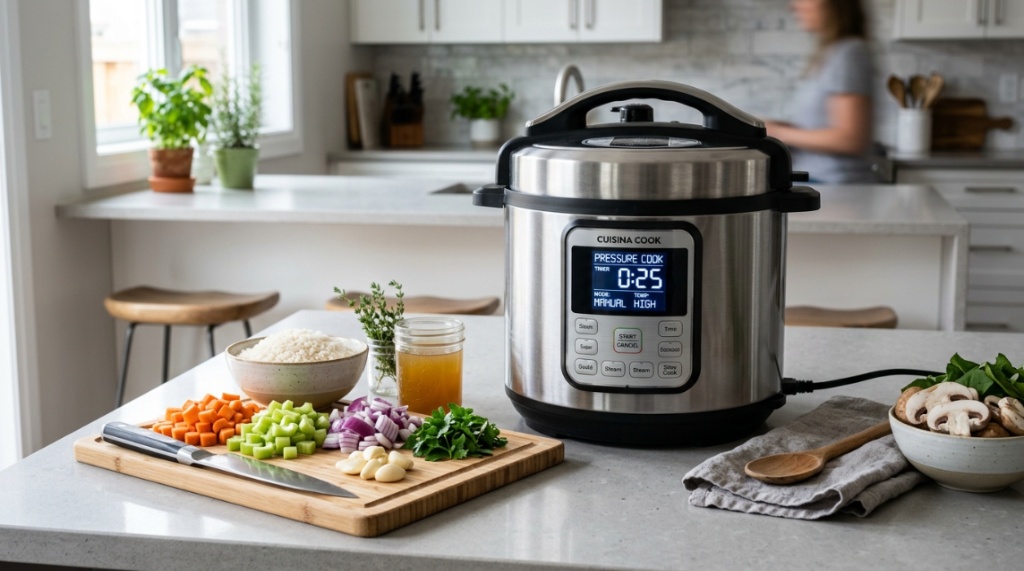
The multi cooker wins this category by a wide margin. A multi cooker can replace at least seven separate appliances: pressure cooker, slow cooker, rice cooker, steamer, yogurt maker, sauté pan, and warmer. A Crock Pot is limited to slow cooking and holding food at serving temperature.
If you cook a wide variety of meals, especially grains like brown rice or quinoa, beans from dry, or need to sear meat before braising, the multi cooker is the obvious choice. However, versatility comes with a learning curve. You need to understand pressure settings, natural vs. quick release, and timing adjustments. A Crock Pot is simpler: add ingredients, set timer, walk away.
Can a Multi Cooker Replace a Crock Pot Entirely?
Yes, but with one major caveat. Most multi cookers include a slow cook setting, but the heat distribution is not identical to a dedicated Crock Pot. The heating element in a multi cooker is at the bottom, not the sides. This can cause uneven cooking and potential scorching if you leave it on low for 8–10 hours.
If you plan to slow cook frequently and want perfect results every time, a dedicated Crock Pot is still superior. If you slow cook occasionally and need an all-in-one workhorse, the multi cooker is good enough. Read reviews of the specific model you are considering—some multi cookers have better slow cook performance than others. For a deep dive into budget-friendly options, check our guide on the best affordable crock pot multi cooker combos.
Is a Multi Cooker Worth the Higher Price?
On average, a decent multi cooker costs $70–$150, while a basic Crock Pot costs $30–$60. The multi cooker costs more because it packs in more technology: pressure sensor, programmable controls, multiple safety mechanisms, and often a non-stick inner pot.
Whether it is worth the extra money depends on your kitchen inventory. If you already own a rice cooker and a pressure cooker, you do not need a multi cooker. If you own nothing and want one appliance for everything, the multi cooker pays for itself by replacing several gadgets. The Crock Pot is cheaper upfront but limited in function. Calculate the space and money you would spend on separate appliances, then decide.
What Recipes Work Best in Each Appliance?
This is where you need to think about your weekly menu.
Best Recipes for a Crock Pot (Slow Cooker)
- Chili and bean soups (long simmer develops flavor)
- Pulled pork or brisket (low and slow breaks down collagen)
- Oatmeal or breakfast porridge (gentle heat overnight)
- Mulled wine or cider (keep warm for hours without burning)
- Dips like queso or spinach artichoke (steady low heat)
Best Recipes for a Multi Cooker
- Dry beans from scratch (20–40 minutes vs. hours)
- Brown rice, quinoa, and other whole grains (perfect texture every time)
- Stews that need a sear first (sauté in the same pot)
- Hard-boiled eggs (easy peel in minutes)
- Yogurt (temperature control is precise)
- Frozen meat (cook from frozen under pressure)
Notice the overlap: both can make stews and braised meats. The difference is time. A multi cooker finishes a beef stew in 35 minutes. A Crock Pot takes 8 hours. The flavor difference is real—long slow cooking allows deeper flavor development, but a multi cooker delivers convenience when you forgot to plan ahead.
Which One Is Easier to Clean and Maintain?
Cleanup matters more than you think. A Crock Pot has a removable ceramic insert that is dishwasher safe. No crevices, no gaskets, no valve parts. You can scrub it with abrasive cleaners without damage. The lid is usually glass and dishwasher safe.
Multi cookers require more care. The inner pot is non-stick or stainless steel and is usually dishwasher safe. However, you must clean the silicone sealing ring, the steam release valve, the anti-block shield, and the condensation collector. These parts trap food particles and odors. If you cook savory meals, the sealing ring will absorb smells like garlic and chili. You might need a separate ring for sweet dishes. The extra maintenance is not difficult, but it is real.
What Should You Consider Before Buying?
Before you add either appliance to your cart, ask yourself these five questions:
- How much time do you have for dinner? If you plan meals a day ahead, slow cooker is fine. If you need dinner in 30 minutes, go multi cooker.
- How many people are you feeding? Both come in 4-quart to 8-quart sizes. Match size to your household.
- Do you cook beans or grains often? If yes, multi cooker saves hours. If not, slow cooker covers your needs.
- What is your comfort with technology? Multi cookers have digital controls and safety features. Crock Pots are analog and forgiving.
- Do you meal prep? Multi cooker handles batch cooking of rice and proteins fast. Slow cooker handles bulk stews and shredded meats.
Which Appliance Is Safer for Beginners?
The Crock Pot is safer for absolute beginners. There are no pressure risks, no steam burns, no complex settings. You plug it in, set a timer, and walk away. Overfilling a slow cooker is forgiving—it might bubble over, but it will not explode.
A multi cooker requires you to follow pressure release instructions carefully. Quick release sends a jet of steam upward, which can cause burns if you are not careful. You must ensure the sealing ring is properly seated and the valve is in the correct position. That said, modern multi cookers have multiple safety interlocks. You cannot open the lid while pressurized. Once you learn the basics, the risks are minimal.
Do You Need Both Appliances in Your Kitchen?
Only if you cook very frequently and want the best tool for every job. A dedicated slow cooker is better for overnight cooking and large batches of long-simmered dishes. A multi cooker is better for weeknight speed and variety. Having both gives you ultimate flexibility, but most households do not need the redundancy.
Think about your biggest cooking pain point. Is it speed? Get a multi cooker. Is it set-and-forget simplicity? Get a Crock Pot. If you find yourself wanting the other one later, you can always add it. Start with the appliance that solves your biggest problem today.
Multi-cookers can release a massive, sudden cloud of steam during quick-pressure release, while slow cookers emit a steady stream of moisture over hours. To keep your kitchen air clean and moisture-free, ensure your appliance sits under a Powerful Range Hood for Heavy Cooking.
Frequently Asked Questions
Can I use my multi cooker as a slow cooker every day?
Yes, but slow cooking in a multi cooker is less even than a dedicated Crock Pot. The heat comes from the bottom, so thick stews may scorch if you do not stir occasionally. For best results, use the slow cook setting on high and reduce the liquid slightly.
Is a Crock Pot the same as a slow cooker?
Crock Pot is a brand name that has become synonymous with slow cookers. All Crock Pots are slow cookers, but not all slow cookers are Crock Pots. The term is commonly used interchangeably, but Crock Pot specifically refers to the brand.
Which is better for making chili?
Both work well, but a Crock Pot produces deeper flavor because the long cooking time allows spices to meld. A multi cooker makes chili in under an hour, but the flavor is less developed. If you have time, use a slow cooker. If you are in a hurry, a multi cooker works.
Do multi cookers use more electricity than slow cookers?
Multi cookers use more electricity per minute, but they cook much faster. Over the course of a single meal, the total energy consumption is similar. Slow cookers draw about 200–300 watts over 8 hours. Multi cookers draw about 800–1200 watts for 30–60 minutes.
Can I pressure cook in a Crock Pot?
No. Standard Crock Pots do not have a sealed lid or pressure mechanism. You cannot pressure cook in a traditional slow cooker. Some brands make multi-function models that include pressure cooking, but these are technically multi cookers, not pure slow cookers.
Which appliance is better for meal prepping?
The multi cooker wins for meal prepping because you can cook rice, beans, chicken, and steamed vegetables in rapid succession. The Crock Pot is better for making large batches of soups or shredded meats that freeze well. Both are useful, but the multi cooker is more efficient for varied meals.
Is a multi cooker hard to learn?
It takes two to three uses to feel comfortable. The manual can be intimidating, but the basic cycle is simple: add food and liquid, close lid, set pressure time, press start. The real learning curve involves understanding natural vs. quick release and adjusting cooking times for different foods.