


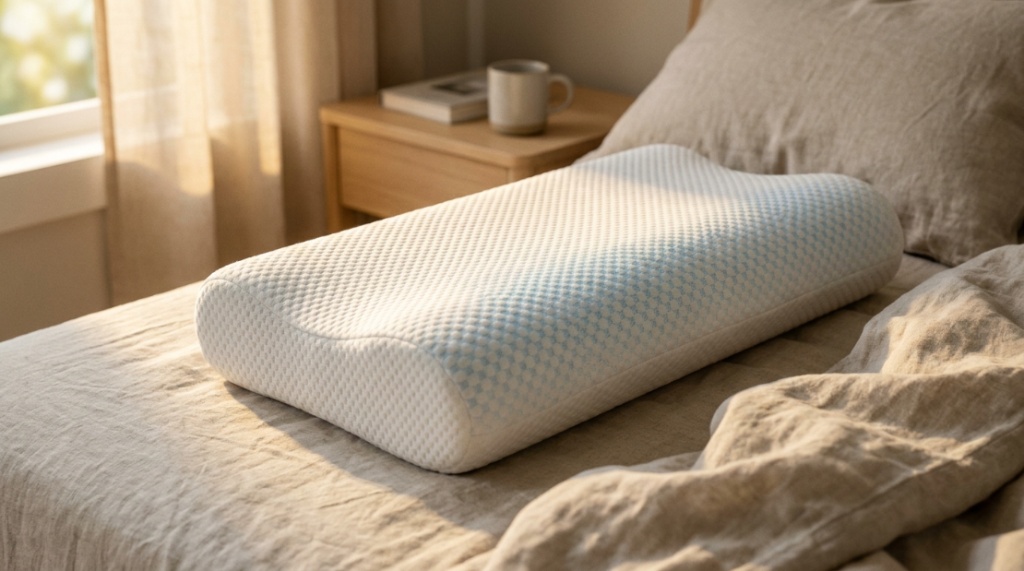
Waking up with a hot, sweaty neck is a frustrating way to start the day. If you sleep on traditional memory foam, you already know the struggle: the material conforms beautifully to your head and shoulders, but it also traps body heat like a solar oven. The result is night sweats, restless tossing, and a stiff neck that lingers well past your morning coffee. You need the contouring support of memory foam without the heat buildup. That is precisely where cooling memory foam pillows come into play. This guide explains how they work, what to look for, and whether they are the right solution for your sleep struggles.
Key Takeaways
- Cooling memory foam pillows use either gel infusions, phase-change materials, or breathable airflow designs to actively draw heat away from your head and neck, rather than just feeling cool to the touch.
- The primary benefit is temperature regulation, which helps you fall asleep faster and reduces middle-of-the-night wake-ups linked to overheating.
- Not all “cooling” claims are the same. Distinguishing between gel-infused foam and true phase-change materials (PCMs) is critical to matching a pillow to your specific body temperature needs.
- Support and alignment remain equally important. A pillow that stays cool but fails to keep your cervical spine neutral will lead to neck pain, no matter the temperature.
Why Is Heat Retention a Problem in Traditional Memory Foam?
Before understanding the solution, it’s helpful to understand the problem. Traditional memory foam is a viscoelastic polyurethane foam. Its defining characteristic is its sensitivity to temperature. When you press your head into the pillow, the foam softens in response to your body heat, allowing it to mold precisely to your contours. This is great for pressure relief. The downside is the same temperature sensitivity that makes it great also makes it cling to heat.
Since the foam is dense and closed-cell in nature, it restricts airflow. Heat from your head and neck gets trapped within the lower layers. Over a few hours, the pillow can feel noticeably warmer than your body, causing your core temperature to rise. Your body naturally lowers its temperature, particularly around your head and face, to initiate and maintain deep sleep. When a pillow prevents that heat exchange, it disrupts your sleep cycle and leads to micro-awakenings you might not even remember in the morning.
How Do Cooling Memory Foam Pillows Actually Work?
Cooling memory foam pillows are designed to solve the heat problem through several distinct mechanisms. They are not merely “cold” pillows. Most utilize one or more of the following technologies to actively reduce heat buildup or enhance heat escape.
1. Gel Infusion and Swirls
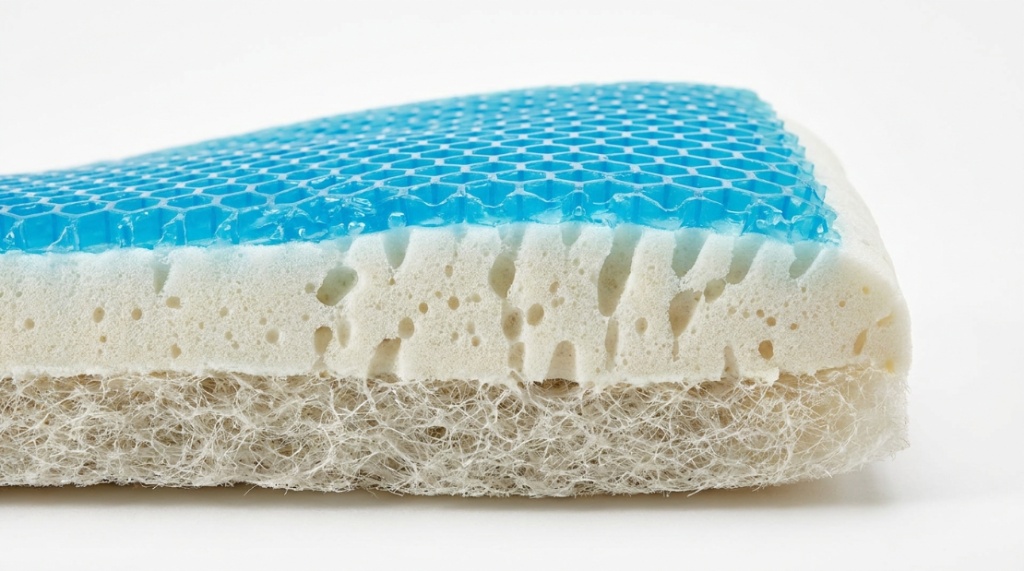
Many cooling pillows are made with open-cell foam that has cooling gel beads infused into the structure. The gel is typically made from a polymer that has a higher thermal conductivity than traditional foam. This means it absorbs body heat and redistributes it across the pillow surface. As the gel warms up, it dissipates the heat away from the contact point. Some pillows also feature a top layer of solid gel or a quilted gel pad. This layer provides an immediate sensation of coolness upon contact, though that initial chill may fade after a few minutes as body heat equalizes.
2. Phase-Change Materials (PCMs)
Phase-change materials take a more high-tech approach. These are specifically engineered substances, often microencapsulated in the foam or top fabric. They are designed to absorb, store, and release heat as they change from a solid to a liquid state at precise temperatures. A PCM designed to be active at 85°F will absorb excess heat from your head as it melts. Once you get up and the pillow cools down, it solidifies again, ready for the next night. This creates a “thermostatic” effect that maintains a consistent surface temperature for a much longer period than basic gel.
3. Airflow Optimization
Another major element of cooling foam is the physical structure. High-quality cooling pillows are often made from open-cell foam. Unlike closed-cell foam, open-cell foam comprises an interconnected network of air pockets. This allows air to flow freely through the pillow as you move. When you shift positions, the foam compresses and expels warm air, and upon decompression, it draws in cooler ambient air. Many models also feature perforated holes or grooved channels on the surface to further increase breathability and wick away humidity.
If you are looking for specific recommendations that combine these technologies, checking out reviews for cooling memory foam pillows can help you narrow down the options that are effective in warm climates and for hot sleepers.
It is important to note that all three methods address heat differently. Gel-infused pillows usually offer a high “cool-to-touch” rating but can warm up over time. PCMs provide dynamic regulation that works well for those who maintain a constant body temperature. Airflow designs are excellent for reducing humidity and moisture, though the foam may feel slightly less plush or dense than traditional memory foam.
What Benefits Can You Expect Beyond Temperature?
Using these cooling materials does not just mean you won’t sweat. It directly connects to better sleep quality. Here are the specific biological and physical benefits you can expect.
Reduced Night Sweats and Discomfort
Cooling foam helps maintain your body’s core temperature at the ideal level for deep, restorative sleep. When your hypothalamus (the body’s thermostat) doesn’t have to fight with a hot pillow, your sleep architecture remains uninterrupted. You spend more time in the deep REM stages where your body repairs tissue and consolidates memories, and less time in light sleep stages where you are prone to rolling over due to thermal discomfort.
Improved Pressure Relief Without the “Sink” Feeling
Traditional memory foam tends to soften excessively with heat, causing some sleepers to feel like they are sinking into a hole. Cooling variations often use firmer foams that are engineered to maintain structural integrity at lower temperatures. This ensures you get the cushioning effect of memory foam for your shoulders and joints, but without the “quicksand” sensation that forces you to adjust frequently. This is particularly beneficial for side sleepers who need firm support under the neck and back sleepers who need a flatter, more supportive cradle.
Enhanced Hygiene and Freshness
Less heat means less sweat. Sweat does not just make you uncomfortable; it creates a damp environment where dust mites and bacteria thrive. By keeping the pillow surface dryer and cooler, cooling memory foam pillows create an inhospitable environment for these allergens. This makes a notable difference for allergy sufferers, helping to keep the pillow fresher for longer between washes.
What Are the Limitations or Trade-Offs?
Cooling memory foam is not a one-size-fits-all miracle solution. There are trade-offs you need to evaluate to ensure you are making the right purchase.
Touch Sensitivity vs. Deep-Core Cooling
Some people confuse the immediate “cool feel” of the pillow cover with the pillow’s ability to maintain that coolness. A pillow might feel cool for the first five minutes due to a nylon cover, but if it lacks proper PCM or airflow engineering, it will heat up just like standard foam. Conversely, some pillows do not feel cold initially but are incredibly effective at preventing heat buildup over eight hours because of open-cell construction. You must decide whether you value that initial cool sensation or sustained temperature neutrality.
Firmness Variations
Because cooling materials alter the density of the foam, some cooling pillows can feel significantly firmer than standard memory foam. If you are used to the dense, high-contouring hug of traditional foam, a cooling option might feel like a stiff block at first. It is crucial to check the firmness rating (soft, medium, firm) and consider your sleeping position to avoid buying a pillow that compromises your spinal alignment for the sake of temperature.
Noise and Weight
Gel-infused and PCM pillows are often heavier than standard foam or down alternatives. If you tend to prop pillows up behind your back while reading, you may notice the extra weight. Additionally, some pillows with perforated foam channels can create a faint “squeak” or crinkle sound when you shift, although modern high-density materials have largely eliminated this issue in premium models. If you are dealing with acid reflux or breathing issues at night, you might also want to check out how specialized support helps elevate your upper body by reading our guide on how bed wedge pillows boost sleep in Washington.
How to Choose the Right Cooling Memory Foam Pillow
When you shop, you need to filter through marketing language. Here is a practical decision guide to help you evaluate your options.
- Check the Cooling Agent: Look for specifics. Is the cooling layer a “wicking cover,” or is it a “phase-change material”? If the cooling is only in the cover, it will dissipate quickly. Look for “PCM” or “cooling gel infused” in the foam itself.
- Evaluate the Loft and Firmness: Side sleepers generally need a high loft (4-6 inches) and a medium to firm feel to fill the space between the ear and shoulder. Back sleepers should use a medium loft (3-5 inches) with medium firmness. Stomach sleepers need a low loft (2-3 inches) with soft density to keep the head level.
- Look for a Washable Cover: The cooling cover is where you rest your face. Ensure it is removable and machine-washable.
- Consider the Heat Level of Your Body: If you sleep in a hot bedroom or run exceptionally hot, opt for a pillow with a combination of airflow layer and a denser cooling layer. If you live in a colder climate, a milder gel-infused version may be more comfortable year-round.
Are Cooling Memory Foam Pillows Worth the Investment?
Yes, for a specific subset of sleepers. If you wake up frequently with a sweaty neck, flip your pillow to the “cold side” at night, or wake up with headaches caused by overheating, a cooling memory foam pillow is a worthwhile upgrade. They are also excellent for peri-menopausal women experiencing hot flashes and athletes whose body temperature remains elevated after evening workouts.
However, if you rarely notice heat at night or you are predominantly a stomach sleeper who dislikes pressure under the forehead, you might be better off with a latex or down alternative pillow. Cooling foam is typically denser and heavier, and the “cooling” aspect does not improve comfort if the pillow height is wrong for your build.
Frequently Asked Questions
How long do cooling memory foam pillows stay cool?
It depends entirely on the technology. Pillow covers with gel-infused yarns may feel cool for 10-20 minutes. Deep-infused gel pillows often last 1-2 hours. Phase-change material (PCM) pillows are designed to regulate your body heat all night, maintaining a temperature roughly 5-10 degrees below standard body temperature for up to 8 hours.
Can I put a cooling memory foam pillow in the freezer?
No. Placing memory foam in the freezer can cause the foam to become brittle and crack. Even cooling gel pads can be damaged by extreme freezing. These pillows are engineered for passive cooling or thermoregulation, not for refrigeration.
Will cooling memory foam help with neck pain?
Yes, if the firmness and loft are correct for your sleep position. The cooling element is just a bonus. The main benefit for neck pain is the pressure-relieving contour. A cool pillow allows the muscles in your neck to relax without the distraction of heat, which can contribute to tension and stiffness.
Do they feel different from regular memory foam?
Yes, they often feel slightly denser and firmer immediately upon contact. The “break-in” period can also be slightly different. Because they do not soften with body heat as aggressively, you may not feel the deep “sinking” effect. You will feel a more immediate surface support.
Are these pillows only for hot sleepers?
Not necessarily. They are also ideal for anyone in warm climates without air conditioning, those who use heavy blankets, and people who prefer the support of foam but dislike the “stuffy” feel. For naturally cold sleepers, ensure you choose a mild gel infusion rather than a strong PCM, as the pillow won’t generate heat, but the foam surface may feel noticeably cooler against bare skin.
Conclusion
Waking up hot is not just uncomfortable—it is a barrier to deep, restorative sleep. Cooling memory foam pillows address the fundamental flaw of traditional viscoelastic foam by integrating thermal regulation directly into the material. Whether through open-cell designs that promote airflow, gel infusions that draw heat away, or advanced phase-change materials that actively manage your microclimate, these pillows provide the dual benefits of contouring support and temperature stability. To get the best results, focus less on the surface “cool touch” and more on the underlying structural cooling technology. Pair that with the correct loft for your sleeping position, and you should wake up feeling drier, better supported, and significantly more refreshed.