



In assessing whether washing will dry outside, it is not sufficient to look for sunshine. There are several other factors that are of greater significance and once one knows what to look for, there can be few tumble driers’ worth of working out wasted on what promises to be a good dry day but turns out to be just another dull, wet, chilly afternoon.
Humidity matters more than sunshine
Moisture in the air is far more important than the temperature. Warm, moist air can mean that your washing will take hours to dry, whereas cooler, drier air can mean that your washing will dry in half the time. The Met Office’s guidance on the factors that affect drying outdoor clothing explains this in more detail. Specifically, it explains how humidity and dew point affect drying and how these factors differ from temperature.
Wind is often the real hero
A few miles per hour can make a huge amount of difference to drying. Air constant in speed and direction is best of all to ensure drying happens as quickly as possible. If it’s blowing strongly then even a cool day can mean clothes dry much faster than expected. Remember to check local forecasts for predicted wind for the day as well as for any forecasted rain and you’ll find that days with moderate but constant wind can be the best for drying outside.
Temperature and dew point together
While the air temperature tells you how warm it is outside, the real indicator for whether clothes will dry is the difference between the air temperature and the dew point. This is the temperature at which the air would start to condense should it cool further. If the air temperature is close to the dew point then the air is near saturation and your clothes will not dry. If however there is a large difference between the two, then the air has a large capacity to hold moisture and your clothes should dry quickly.
What a dryer load actually costs
The cost of a typical dryer load is around 1.5-2.5 kWh per load, that’s to translate to around 40p-65p per load at current electricity tariffs. Spread that over 3-4 loads per week, and you’re looking at a significant annual sum of around £250 and above for average households. Even getting half of these loads to dry outside on decent days will make a big difference to your bills.
Hang washing the right way
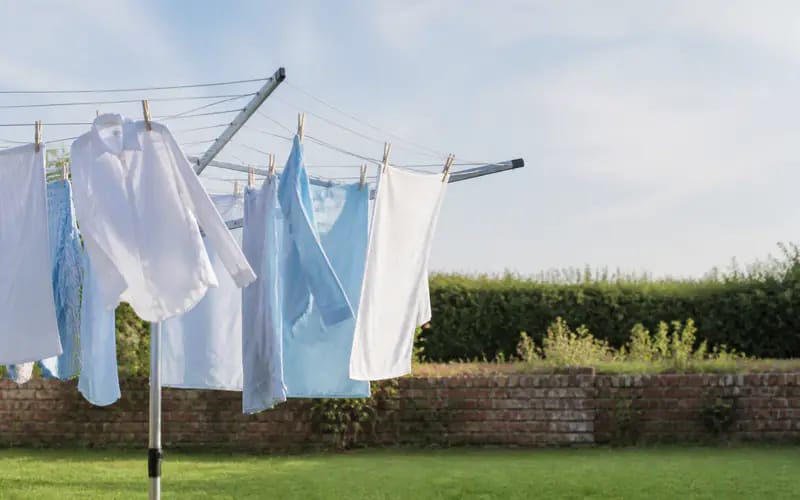
The way you hang your washing to dry can impact on how quickly it will dry almost as much as the weather. So make sure to hang your items out to dry with enough space between them for air to be able to pass through. Also try to hang items such as trousers and skirts up by the hem, not by the waistband. Items such as jeans, towels and bedding are best to dry as heavy items and these will dry fastest if turned half way.
Bring washing in before the dew
Even if it looks like it’s gone to dry by four pm, don’t assume your washing will be fine until the next day. Dew can form quickly on outdoor drying clothes in the late afternoon and be a major problem by six pm, particularly in spring and autumn. Bring your washing in an hour or so before sunset to avoid this.
Drying indoors on a wet day
Whether you dry inside or outside, your clothes need to be dried in such a way that your walls don’t get damp too. Work in a well-ventilated room and move your airer away from closed unheated rooms. Don’t drape clothes over a hot radiator in a shut room or you risk pumping moist air into the room with nowhere for it to go. See our consumer advice on drying clothes without a dryer. Then wipe down any window sills and surfaces that clothes have come into contact with to prevent any moisture from the clothes to form condensation on cold surfaces and mould.
Make checking part of your routine
Working out whether washing will dry outside can work as a simple ‘look before you hang out’ habit. If you enter your postcode into a washing line drying forecast it will show you the forecast humidity, wind speed and dew point for your area. It can make a big difference to your washing line and your wallet to check this out the night before and then again first thing in the morning to see if it is still a good drying day or not.
Good drying, like good golfing, is about reading the conditions, and it doesn’t have to take long to work out whether your laundry is going to dry well outside your home and save you lots of money and damp clothes over the year.