



Key Takeaways
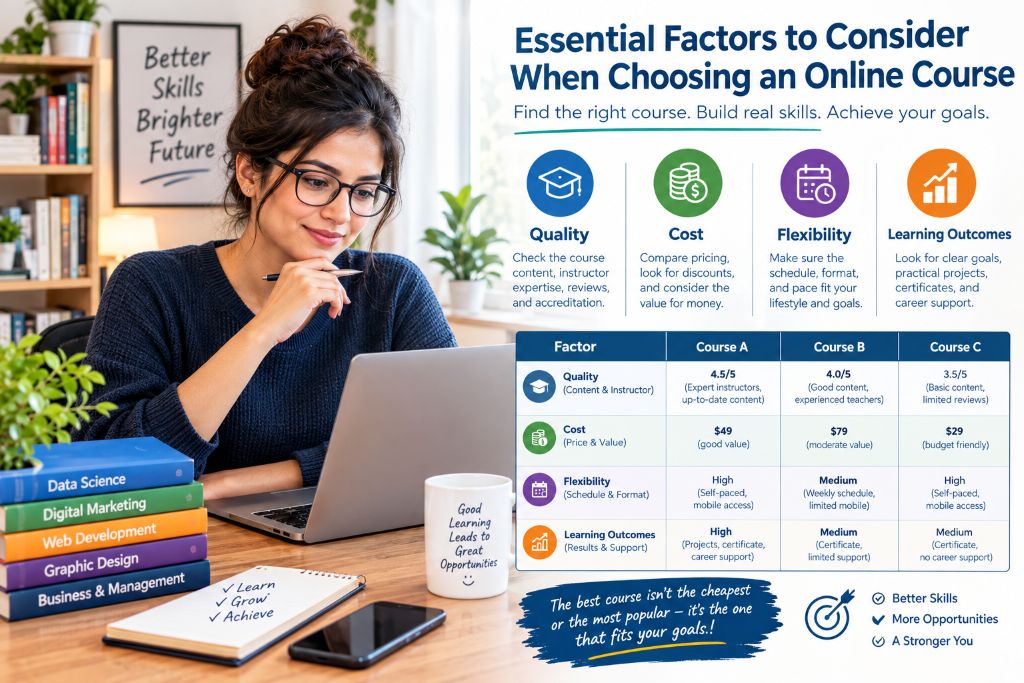
- Define a clear goal before you browse any course list.
- Check the provider’s reputation, accreditation, and instructor background.
- Match the course format and schedule to your daily life.
- Compare the full cost, including exams, certificates, and hidden fees.
- Read reviews and try a free preview before you pay.
Thousands of online courses compete for your attention. Some are excellent, while others waste your time and money. Therefore, choosing an online course takes careful thought. Completion is also a real challenge. According to a study by Katy Jordan, published in the International Review of Research in Open and Distributed Learning, the median completion rate for massive open online courses was about 12.6 percent. This shows that many learners pick the wrong course or lose interest. This guide explains the key factors that help you choose well.
Define Your Goals and Learning Needs
Start with your purpose. Ask yourself why you want to learn this skill. Without a clear reason, you may pick a course that looks nice but does not help you.
Your goal shapes every other choice. For example, a career changer needs a course with recognized credentials. However, a hobbyist may only need a simple, low-cost class. Similarly, a manager who wants a promotion may prefer a short course linked to real workplace tasks.
Next, check your current skill level. A course that is too hard causes stress. On the other hand, a course that is too easy bores you. Therefore, read the prerequisites carefully. Many providers also offer a quick skill quiz or a free first lesson.
Use these questions to sharpen your goal:
- What result do I want? Examples include a new job, a raise, or a finished project.
- How will I use this skill? Practical use helps you pick hands-on lessons.
- Do I need a certificate? Some employers value proof, while others value a portfolio.
- What is my deadline? A short target date favors focused, fast courses.
Finally, write your answers in one sentence. For instance, you might write, “I want to learn spreadsheet skills to build reports at work within three months.” This sentence becomes your filter. Any course that does not match it is not the right fit.
Check Credibility and Course Quality
Not every course provider deserves your trust. Therefore, spend time on research before you enroll. A few minutes now can save weeks of frustration later.
First, look at the provider. Universities and well-known learning platforms usually offer reliable content. If the course leads to a degree or formal credit, confirm the school’s accreditation. In the United States, you can check accredited schools through the Council for Higher Education Accreditation and the Department of Education. Other countries have similar official lists.
Next, study the instructor. A strong teacher has real experience in the subject. Read the instructor’s profile and look for work history, published material, or teaching awards. Additionally, watch a sample video. Clear teaching matters as much as expert knowledge.
Then, read the course outline. A good outline lists lessons, hours, projects, and assessments. However, be careful with vague promises such as “become an expert in days.” Real skills take time and practice.
Reviews also help. Consider these checks:
- Read both positive and negative reviews for patterns.
- Look for reviews that describe specific results.
- Check the date, because old reviews may describe outdated content.
- Search for opinions on independent sites and forums.
Finally, confirm that the material is current. Fields like technology and marketing change quickly. Therefore, choose a course updated within the past year or two.
Consider Format, Schedule, and Support
The best content fails if the format does not suit you. Therefore, think about how you learn and how much time you truly have.
Online courses come in two main types. Self-paced courses let you study whenever you like. They suit busy people with unpredictable schedules. However, they require strong self-discipline. Live or cohort-based courses have fixed dates and group sessions. As a result, they offer more structure and accountability, but they are less flexible.
Consider your learning style as well. Some people learn best from video lectures. Others prefer reading, quizzes, or hands-on projects. Choose a course that mixes methods, because variety keeps you engaged.
Support is another key factor. Many learners quit when they get stuck and nobody helps. Before you enroll, check what help is available:
- Instructor access: Can you ask questions and get answers?
- Community: Is there a forum or study group?
- Feedback: Does someone review your assignments?
- Technical help: Is there a support team for login or payment issues?
Additionally, check the time commitment. Divide the total course hours by the weeks you have. For example, a 30-hour course over six weeks needs five hours a week. If that number feels too high, pick a shorter option. Finally, confirm that the platform works on your phone and laptop, so you can learn anywhere.
Compare Cost and Overall Value
Price matters, but it is not the only measure. A cheap course that you never finish costs more than a fair-priced course that changes your career. Therefore, think in terms of value.
Start by finding the total cost. Some courses advertise a low price but charge extra for certificates, exams, or downloadable resources. Others use monthly subscriptions that keep billing until you cancel. Read the terms carefully before you pay.
Next, look for free options. Many platforms let you audit courses at no cost. Public libraries and community programs also provide free lessons. In addition, employers often fund training. Ask your manager about learning budgets before you spend your own money.
Refund policies are important too. A fair provider offers a money-back window, often seven to thirty days. This gives you time to test the course. If a provider refuses refunds, consider it a warning sign.
Finally, weigh the return on your investment. Ask yourself these questions:
- Will this course help me earn more or work better?
- Is the certificate respected in my industry?
- Will I gain a project I can show to employers?
If the answer is yes, a higher price may be worth it.
Conclusion
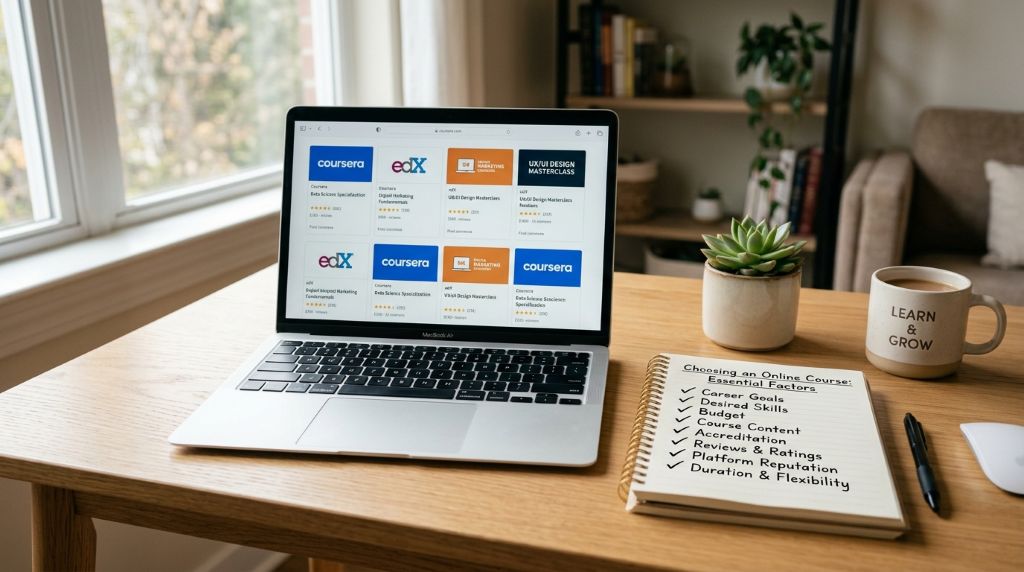
Choosing an online course does not need to feel overwhelming. Begin with a clear goal. Then check the provider, the instructor, and recent reviews. Additionally, match the format to your schedule and compare the total cost. If your goal also involves building an online presence, navigating the path to online influence can be a helpful part of your learning journey. When these factors line up, you are far more likely to finish the course and use your new skills.
Take action today. Write your learning goal in one sentence, and shortlist three courses. Then try a free preview for each one. Share your top pick in the comments, and subscribe to our newsletter for more practical learning tips.
Frequently Asked Questions
How do I know if an online course is legitimate?
Check the provider’s reputation, accreditation, and instructor background. Also read independent reviews and confirm that the course has a clear outline and refund policy.
Are free online courses worth taking?
Yes, many free courses offer solid content. However, they may lack certificates, feedback, or instructor support. Use them to test a topic before you pay.
How long should an online course be?
It depends on your goal. Short courses of five to ten hours teach a single skill. Longer programs suit career changes or deeper study.
Should I choose a self-paced or live course?
Pick self-paced if you need flexibility and stay motivated alone. Choose live courses if you want structure, deadlines, and group support.
Do employers value online certificates?
Many do, especially when the provider is well known. Even so, employers care most about skills, so add a project or portfolio piece to prove what you learned.