
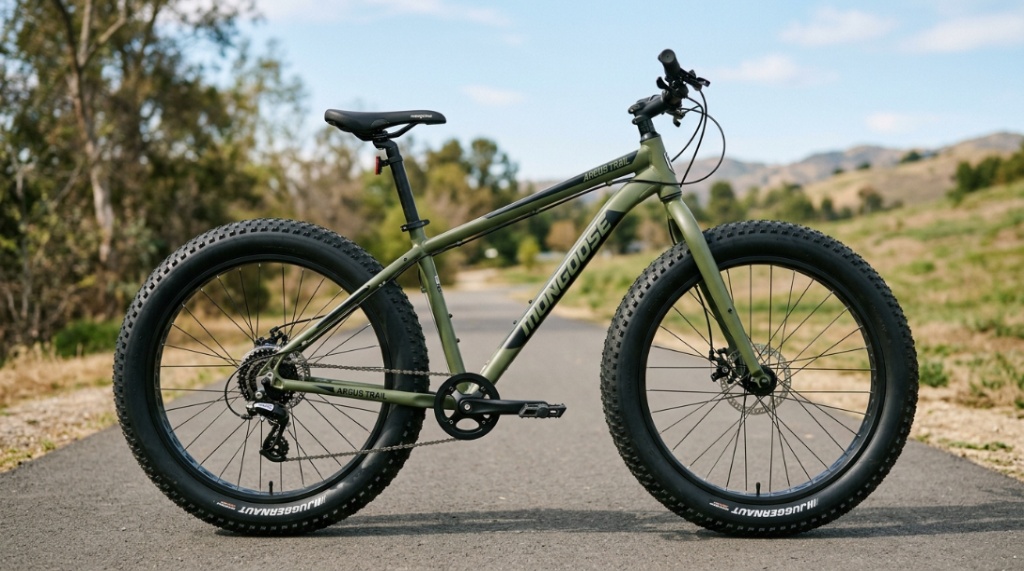
You have probably stared at fat tires and wondered if they are actually fun or just a gimmick. Maybe you are a new rider looking for confidence on loose gravel, sand, or snow, but you don’t want to spend thousands of dollars on a hobby you are just testing. The Mongoose Argus Trail promises big stability at a small price.
What Makes the Mongoose Argus Trail Different from a Standard Mountain Bike?
The Mongoose Argus Trail differs from standard mountain bikes primarily due to its 4-inch wide tires. These massive tires provide a much larger contact patch with the ground, which creates extraordinary stability. Standard mountain bikes typically have tires that are 2.1 to 2.5 inches wide, designed for speed and agility. The Argus Trail sacrifices some of that agility for raw grip and flotation.
When you ride a standard mountain bike on loose sand or fresh snow, you sink. The Argus Trail floats over these surfaces. The frame geometry is also slacker and more relaxed, putting you in a position that prioritizes balance over aggressive leaning. For a beginner, this difference is massive. You feel glued to the trail even when moving at slow speeds.
The Suspension Setup
The Argus Trail typically comes with a 100mm travel suspension fork. This is entry-level travel, but it is tuned for heavy, slow riding rather than fast descents. It absorbs small bumps and roots, keeping the front tire planted. However, it is not designed for jumps or rock gardens. Think of it as a comfort feature, not a performance feature.
Is the Mongoose Argus Trail Actually Easy to Ride for a Beginner?
Yes, the Mongoose Argus Trail is very easy to ride for a beginner because of its low center of gravity and massive tire footprint. New riders often struggle with balance at slow speeds or during turns. The Argus Trail forgives these mistakes. You can roll over obstacles that would stop a thinner tire bike, and you do not need perfect technique to stay upright.
The bike is heavy, typically weighing between 35 and 40 pounds. This weight is a double-edged sword. It makes the bike feel planted and secure, but it also makes maneuvering in tight spaces harder. Beginners will appreciate the stability on straight trails and climbs. You will find that you can ride over roots and rocks without the bike bucking you off.
Where Beginners Struggle with This Bike
The biggest challenge is the sheer weight when lifting the bike. Loading it onto a car rack or carrying it up stairs is a workout. Additionally, the rolling resistance is high. You will pedal harder to maintain speed on pavement compared to a hybrid bike. Beginners should expect to work harder on flat roads.
- Stability: Excellent. You feel locked in.
- Speed: Slow. Fat tires create drag.
- Maneuverability: Low. Tight switchbacks require effort.
- Comfort: High. The tires act as suspension.
How Does the Mongoose Argus Trail Perform on Different Terrains?
The Mongoose Argus Trail performs best on loose, soft, or uneven surfaces where standard tires fail. On packed dirt and gravel, it provides a smooth, stable ride. pavement, it feels sluggish. deep sand or snow, it excels. You can ride this bike where many other bikes cannot go, which is the main selling point for a beginner wanting adventure.
Sand and Snow Performance
This is the bike’s party trick. The 4-inch tires at low pressure (8-15 PSI) allow the bike to float on top of soft surfaces. Beginners who live near beaches or in snowy areas will find this incredibly freeing. You do not need to find a perfect trail; you can ride across the beach or through a field of snow.
Climbing Ability
The heavy weight and high rolling resistance make climbing steep hills a challenge. Beginners will need to use their gears efficiently. The bike has a wide-range cassette, usually 7 or 8 speeds, which helps. However, you should expect to stand up on the pedals for steep, loose climbs. The rear tire grips well, so you rarely spin out.
Technical Trail Riding
On rooty, rocky singletrack, the Argus Trail feels cumbersome. The long wheelbase makes it hard to pop the front wheel over logs. This is not the bike for tight, technical descents. It is a cruiser and a soft-surface explorer, not a downhill shredder.
Which Components Matter Most on the Mongoose Argus Trail?
The most critical components for a beginner are the tires, the drivetrain, and the brakes. The frame is sturdy but heavy. The tires are the heart of the bike. They are knobby 26×4.0 inch tires that provide grip. The drivetrain is typically a Shimano Tourney or similar entry-level group. This is functional but not smooth. The brakes are usually mechanical disc brakes, which are adequate for the bike’s speed.
Wheels and Tires
The wheels are standard for fat bikes, using wider hubs and rims. The tires can be run at very low pressures for maximum grip. Beginners should invest in a good floor pump with a gauge. Over-inflating these tires makes the ride harsh and reduces grip. Under-inflating them risks damaging the rims on sharp rocks.
| Component | Rating for Beginners | Notes |
|---|---|---|
| Frame | Good | Heavy steel or aluminum, very durable. |
| Fork | Fair | Entry-level coil suspension. Gets the job done. |
| Drivetrain | Fair | Functional but can skip under high torque. |
| Brakes | Good | Mechanical disc. Requires adjustment over time. |
| Tires | Excellent | Best feature. Excellent grip and flotation. |
What Are the Main Pros and Cons of the Mongoose Argus Trail?
Every bike has trade-offs. The Argus Trail offers incredible stability and off-road capability for a low price, but it suffers from heavy weight and sluggish performance on pavement. Understanding these pros and cons helps you decide if this bike matches your specific riding goals.This mongoose argus trail review cuts through the hype to tell you exactly who should buy this bike and who should keep shopping.
The Pros
- Exceptional Stability: The best feature for nervous beginners.
- Soft Surface Flotation: Rides on sand, snow, and mud.
- Affordable Price: One of the cheapest fat bikes on the market.
- Comfortable Ride: Tires absorb vibration and small bumps.
- Durable Construction: Built to take a beating.
The Cons
- Heavy Weight: Makes it hard to transport and maneuver.
- High Rolling Resistance: Slow on pavement and hardpack.
- Cheap Components: Drivetrain and fork are entry-level.
- Poor Technical Performance: Not good for tight singletrack.
- Assembly Required: Often comes partially assembled with tuning needed.
Can a Beginner Use the Mongoose Argus Trail for Daily Commuting?
A beginner can use the Mongoose Argus Trail for daily commuting, but it is not the ideal tool for the job. If your commute is short (under 5 miles) and involves gravel, dirt paths, or winter snow, it works fine. However, if you ride primarily on paved roads, you will be faster and more comfortable on a hybrid bike or a road bike. The Argus Trail is a specialized tool.
The bike’s weight makes acceleration slow, and the knobby tires hum loudly on pavement. You will arrive at work sweating more than you would on a lighter bike. Consider your specific path. If you have to carry the bike up stairs or onto a train, the 40-pound weight is a major disadvantage. For flat, stable commutes on rough paths, it is a tank that gets you there reliably.
Gearing for Commuting
The gearing is low enough for climbing but not high enough for fast cruising. You will find yourself spinning out on downhills or trying to keep up with traffic. For commuting, you might want to switch to a smoother tire, like a semi-slick, to reduce rolling resistance. This changes the bike’s character significantly.
If you want to haul extra gear or take your kids along on rugged paths, pairing your new fat bike with a sturdy trailer is a game-changer. Check out our comprehensive guide to Buying your First Trailer to find the perfect match for your terrain.
How Does the Mongoose Argus Trail Compare to Other Budget Fat Bikes?
Compared to other budget fat bikes like the Kent Havoc or the Schwinn Bonafide, the Mongoose Argus Trail often comes with slightly better suspension and a more modern geometry. The frame is typically aluminum on newer models, which saves some weight compared to steel frames from competitors. However, all bikes in this price range share similar entry-level drivetrains and brakes.
The main differentiator is the fit and finish. Mongoose has a long history in BMX and mountain biking, so their geometry is usually more rideable for taller adults. Many cheap fat bikes are too small or have poor weight distribution. The Argus Trail feels more balanced. If you are choosing between a handful of $400-$600 fat bikes, the Mongoose Argus Trail is generally considered the safest bet for beginners due to better suspension tuning.
What Routine Maintenance Does the Mongoose Argus Trail Require?
The Mongoose Argus Trail requires the same basic maintenance as any bike, but beginners need to pay special attention to the tires and brakes. The mechanical disc brakes need adjustment as the pads wear. The drivetrain needs regular cleaning because fat bikes often ride in mud, sand, and snow, which is abrasive. The tires must be checked for pressure before every ride.
- Check Tire Pressure: Use a low-pressure gauge. Do not guess.
- Lubricate Chain: Clean and oil the chain every 100 miles or after wet rides.
- Adjust Brakes: Mechanical discs loosen over time. Learn the barrel adjuster trick.
- True Wheels: Fat bike wheels can go out of true easily. Learn to tighten spokes or take it to a shop.
- Tighten Bolts: The heavy bike vibrates a lot. Check stem, saddle, and axle bolts monthly.
Winter Maintenance Tips
If you ride in snow, wash the bike with fresh water after every ride. Salt and brine used on roads will rust the chain and frame bolts. Consider using a corrosion inhibitor spray on the drivetrain. The fat tires hold snow in the tread, which can build up and lock up the wheels if you let it freeze.
How Should a Beginner Set Up the Tires on the Mongoose Argus Trail?
Beginners should start with tire pressure between 10 and 15 PSI for general trail riding. If you are riding on hardpack or pavement, go higher (15-20 PSI). If you are riding on soft sand or deep snow, go lower (5-8 PSI). The rule is simple: lower pressure equals more grip and comfort but higher risk of pinch flats. Higher pressure equals less grip but faster rolling.
Never exceed the maximum pressure printed on the tire sidewall. For most fat tires, this is 20-30 PSI. At those pressures, the ride becomes very harsh and the bike will bounce over roots. The magic of fat tires is unlocked at low pressures. Invest in a digital tire gauge that reads in 0.5 PSI increments to dial in your specific weight and terrain.
Is the Mongoose Argus Trail Worth the Investment for a Hobbyist Rider?
Yes, the Mongoose Argus Trail is worth the investment for a hobbyist rider who wants to explore off-road terrain without breaking the bank. It opens up access to beaches, snowy trails, and forest roads that a standard hybrid bike cannot handle. The low cost means you have money left over for a helmet, lights, and a lock. For a casual weekend explorer, it is an excellent gateway bike.
However, if you plan to ride frequently on pavement or compete in any way, this is not the bike for you. The Argus Trail is a purpose-built machine for soft surfaces. If your hobby involves speed, distance, or technical mountain bike trails, you will quickly outgrow this bike. It is a niche tool. If your hobby is “having fun in the snow and sand,” this is the perfect tool.
Resale Value
Budget fat bikes do not hold resale value well. Expect to sell it for 50-60% of the purchase price after a year. This is fine for beginners because the low initial cost minimizes the financial loss. You are paying for an experience, not an asset. Think of it as a fun rental that you own.
Frequently Asked Questions
Is the Mongoose Argus Trail good for tall riders?
Yes, the Mongoose Argus Trail is generally good for riders up to 6 feet 2 inches tall. The frame geometry provides ample legroom. Riders over 6 feet 3 inches may find the cockpit too cramped and may need a longer stem or handlebar riser.
Can the Mongoose Argus Trail handle jumps?
No, the Mongoose Argus Trail is not designed for jumps. The frame and fork are heavy duty for rough terrain, but the suspension is basic and the wheels are not built for high-impact landings. Stick to rolling trails and avoid drops over 12 inches.
Does the Mongoose Argus Trail come with pedals?
Yes, the Mongoose Argus Trail typically ships with basic platform pedals. However, these are often low-quality plastic pedals. Beginners should consider upgrading to metal platform pedals for better grip and durability almost immediately.
How do I adjust the suspension on the Mongoose Argus Trail?
Most entry-level forks have a preload adjuster on top of the fork leg. Turn it clockwise to make the fork stiffer for heavier riders or aggressive riding. Turn it counterclockwise for a softer ride. Set the sag so the fork compresses about 20% under your body weight.
Is the Mongoose Argus Trail good for kids or teenagers?
It is best suited for adults and older teenagers due to its weight and frame size. Younger children will struggle to handle the 40-pound weight. Look for a 24-inch wheel fat bike for smaller riders instead of this adult-sized model.
Can I upgrade the brakes on the Mongoose Argus Trail?
Yes, you can upgrade the mechanical disc brakes to hydraulic disc brakes. This improves stopping power significantly. However, the frame may not have internal routing for hydraulic lines. This upgrade is recommended for heavier riders or those riding steep terrain.
How often should I replace the tires on the Mongoose Argus Trail?
Replace the tires when the knobs are worn down to half their original height or when you see cords showing through the rubber. For casual riding, this typically happens after 1,000 to 2,000 miles. Frequent pavement riding will wear them out faster.
If you are a beginner looking for a durable, stable, and affordable way to explore soft terrain, the Mongoose Argus Trail delivers. is not a fast bike, and it is not a technical trail machine. is a confidence builder. will get you outside, keep you upright, and teach you the basics of off-road riding. Start with low tire pressure, take it easy on the hills, and enjoy the float.