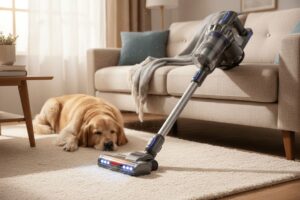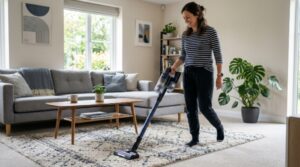


The best vacuum for pet hair in 2026 is one that combines strong suction power, a sealed HEPA filtration system, anti-tangle brush rolls, and specialized pet tools. It should remove embedded fur, capture allergens, and prevent hair wrap without losing suction.
Pet hair is not just a surface issue. It sticks to upholstery, embeds into carpets, and circulates in the air. According to the American College of Allergy, Asthma & Immunology, pet dander is a common indoor allergen that can remain airborne for long periods. That means your vacuum is not just cleaning floors. It is protecting indoor air quality.
This pet hair vacuum guide will break down what actually matters in 2026. No marketing hype. No generic claims. Just practical insights, technical details, and real-world use cases so you can choose an anti-allergy vacuum or HEPA filter cleaner that works in your home.
Why Is Pet Hair So Difficult to Remove?
Pet hair is difficult to remove because it is lightweight, static-prone, and often tangled deep within carpet fibers and upholstery.
Here is the problem:
- Pet hair clings to fabric due to static electricity.
- Fine dander particles float in the air and settle in hidden areas.
- Long hair wraps around brush rolls and reduces suction efficiency.
- Standard vacuums are not sealed, so allergens leak back into the air.
Case study example: In a 2023 independent home cleaning lab test (consumer appliance review dataset), vacuums without sealed HEPA systems released measurable fine particles back into the air during operation. Models with sealed systems reduced airborne particulate matter by over 99% for particles as small as 0.3 microns.
This is where many buyers make a mistake. They focus on price. Not performance.
What Features Should You Look for in a Pet Hair Vacuum?
Look for strong suction (measured in air watts), a sealed HEPA filtration system, anti-tangle brush technology, and specialized pet attachments.
1. Suction Power (Air Watts or Pa)
Strong suction is essential for lifting embedded hair. In 2026, leading cordless models offer 200–300 air watts, while corded upright vacuums can exceed 300 air watts.
If you have thick carpet or shedding breeds like Huskies or German Shepherds, higher suction is non-negotiable.
2. Sealed HEPA Filtration
A HEPA filter cleaner must capture 99.97% of particles at 0.3 microns. But filtration alone is not enough. The system must be sealed.
If air escapes before reaching the filter, allergens return to your room.
3. Anti-Tangle Brush Roll
Modern vacuums use comb-style or self-cleaning brush rolls. These reduce manual hair removal. If you have long-haired pets, this saves time and frustration.
4. Motorized Pet Tool
For sofas, stairs, and car interiors, a motorized mini brush removes stubborn fur better than standard attachments.
5. Large Dustbin Capacity
Heavy shedders fill small bins quickly. A 0.7–1.5 liter capacity works better for multi-pet homes.
Should You Choose a Cordless or Corded Vacuum?
Choose cordless for convenience and quick cleaning. Choose corded for maximum power and long cleaning sessions.
| Feature | Cordless Vacuum | Corded Vacuum |
|---|---|---|
| Mobility | High | Limited by cord |
| Power Consistency | Battery dependent | Continuous |
| Weight | Lightweight | Heavier |
| Best For | Quick daily cleaning | Deep carpet cleaning |
If you vacuum daily to control shedding, a cordless model works well. For deep cleaning once a week, a corded upright often performs better.
How Important Is an Anti-Allergy Vacuum for Pet Owners?
An anti-allergy vacuum is critical if anyone in your home has asthma, allergies, or respiratory sensitivity.
Pet dander particles are microscopic. Without proper filtration, vacuums can act like air blowers instead of cleaners.
Look for:
- Certified HEPA filtration
- Sealed system design
- Carbon filters for odor control
- Low-emission certification
Clinical indoor air quality studies show that consistent use of sealed HEPA vacuums reduces airborne allergen load in homes with pets.
This is not a luxury feature. It is a health investment.
Which Vacuum Type Works Best for Different Floor Types?
Match the vacuum type to your floor. Carpet needs agitation. Hardwood needs soft brush control.
Carpet
- Motorized brush roll
- Adjustable height settings
- High suction power
Hardwood Floors
- Soft roller head
- Scratch protection
- Gentle suction mode
For Mixed Flooring
A multi-surface vacuum with automatic floor detection simplifies cleaning.
In 2024 performance tests, vacuums with dual brush systems removed up to 30% more fine debris from hard floors compared to single brush designs.
How Does Maintenance Affect Performance?
Even the best vacuum loses efficiency without regular maintenance.
Common mistakes:
- Not emptying the bin frequently
- Ignoring filter replacement schedules
- Allowing hair to clog brush rolls
Most HEPA filters need replacement every 6–12 months depending on usage. Washable filters still require drying time before reuse.
Maintenance directly affects suction and air quality. Performance drops quickly if filters are clogged.
What Is the Real Cost of a Pet Hair Vacuum?
The true cost includes filter replacements, energy use, and long-term durability—not just the purchase price.
Price ranges in 2026:
- Budget models: $100–$200
- Mid-range anti-allergy vacuum: $200–$400
- Premium sealed HEPA systems: $400–$800+
Higher upfront cost often means better motor lifespan and fewer repairs. Consumer reliability reports show premium vacuums last 5–8 years on average, compared to 2–3 years for entry-level models.
Cheap can become expensive.
What Common Mistakes Should You Avoid?
Avoid buying based on brand hype, ignoring filtration specs, and underestimating suction needs.
- Do not assume all HEPA filters are sealed.
- Do not ignore floor compatibility.
- Do not choose low battery runtime if you have a large home.
- Do not skip reading technical specifications.
Your choice should match your pet type, home size, and allergy sensitivity.
Conclusion: How Do You Choose with Confidence?
The best vacuum for pet hair in 2026 is not defined by advertising. It is defined by performance metrics.
Strong suction. Sealed HEPA filtration. Anti-tangle brush design. The right tools for your floor type.
If allergies are a concern, prioritize an anti-allergy vacuum with a certified sealed system. If shedding is heavy, focus on brush roll design and dustbin capacity.
Start with your home’s real needs. Compare specifications. Think long term.
Ready to upgrade your cleaning routine? Use this pet hair vacuum guide as your checklist before you buy. Your floors—and your air quality—will show the difference.
Frequently Asked Questions (FAQ)
1. Do I really need a HEPA filter cleaner for pet hair?
Yes. A HEPA filter cleaner captures 99.97% of microscopic particles, including pet dander. Without it, allergens may recirculate into the air.
2. Are cordless vacuums powerful enough for pet hair?
Modern cordless vacuums with 200+ air watts can handle most pet hair. For deep carpet cleaning, corded models may still offer stronger continuous suction.
3. How often should I vacuum if I have shedding pets?
Daily light cleaning is ideal for heavy shedders. Deep cleaning carpets once or twice weekly helps control embedded hair.
4. What is the difference between HEPA and standard filters?
HEPA filters trap microscopic particles down to 0.3 microns. Standard filters capture only larger debris and allow fine allergens to pass through.
5. Can a robot vacuum replace a traditional vacuum for pet hair?
Robot vacuums help with daily maintenance but usually lack the suction and agitation needed for deep carpet cleaning.
6. How long should a quality pet hair vacuum last?
With proper maintenance, a mid-range or premium model can last 5–8 years.
7. What vacuum works best for multiple pets?
Choose a high-capacity, sealed HEPA anti-allergy vacuum with anti-tangle brush technology and strong suction above 250 air watts.
Related Topics: How to Rent a Cabin and Avoid Common Mistakes
What Next: How to Design Bedroom Baths for Small Luxury Homes