



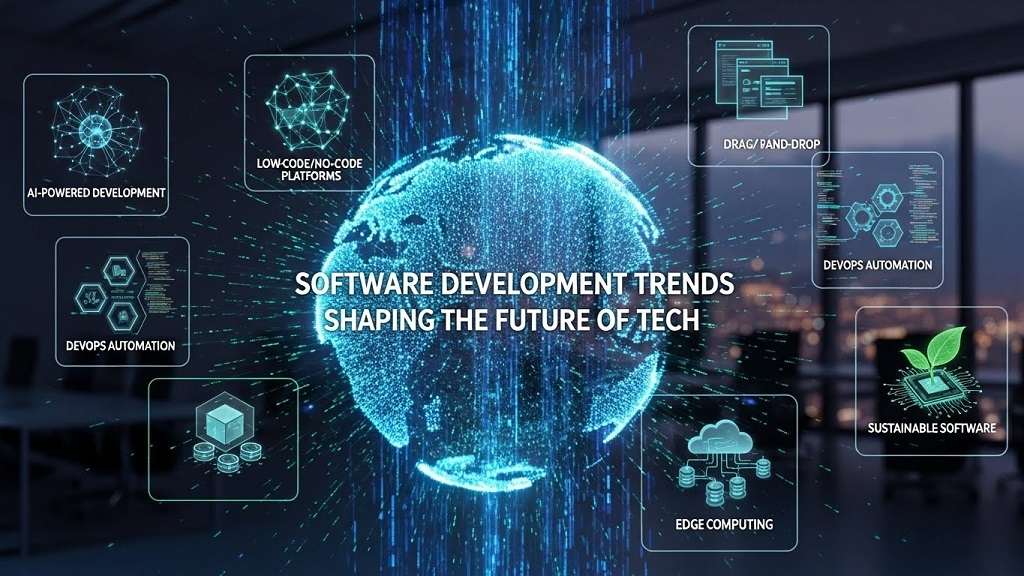
Software development trends are the evolving practices, tools, and technologies that influence how software is planned, built, tested, and delivered. These trends matter because they directly impact speed, cost, security, and scalability.
Here’s the problem many teams face today. Technology is moving faster than planning cycles. What worked two years ago now feels slow, expensive, or risky. Businesses struggle with outdated architectures, skill gaps, and rising user expectations. As a result, projects miss deadlines, budgets increase, and products fail to scale.
The solution starts with understanding where modern software development is heading. Teams that adapt early gain efficiency, reduce technical debt, and stay competitive. Those that don’t often spend more time fixing systems than building value.
This guide breaks down the most important software development trends shaping the future of tech. Each section starts with a direct answer, then expands with practical insights, real-world examples, and data-backed observations. The goal is simple: help you make informed decisions, not chase hype.
What are the most important software development trends right now?
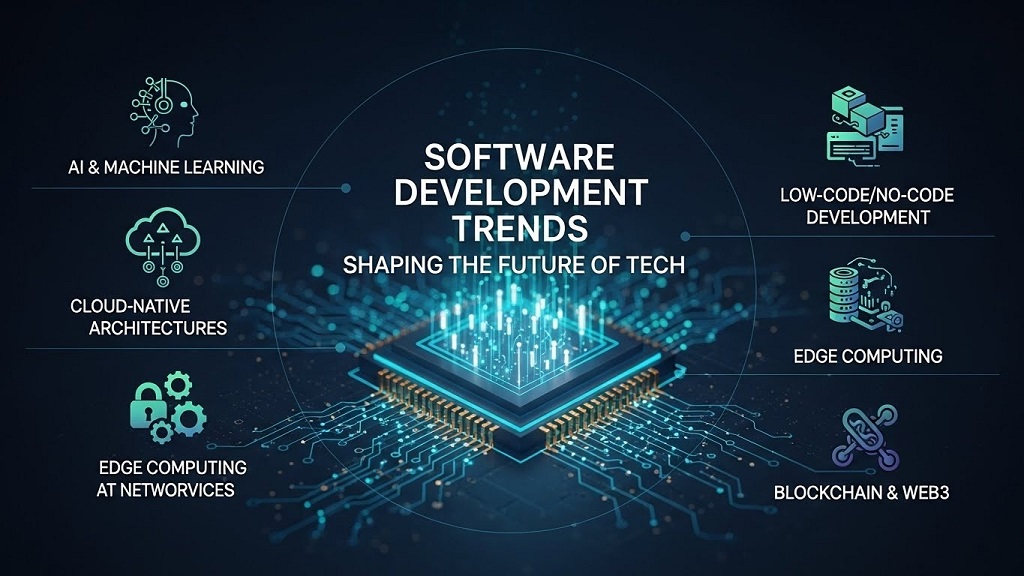
The most important software development trends today include AI-assisted development, cloud-native architectures, low-code platforms, DevSecOps, and API-first design.
These trends exist because teams need to deliver software faster without sacrificing quality or security. According to industry surveys, over 70% of organizations now release updates weekly or daily, compared to quarterly releases a decade ago.
Modern development is no longer about writing code alone. It’s about systems, automation, collaboration, and long-term maintainability.
- AI tools reduce repetitive coding work
- Cloud platforms improve scalability
- Automation lowers operational risk
- APIs enable faster integration
Each of these trends solves a specific pain point faced by development teams today.
How is AI changing modern software development?
AI is changing software development by automating repetitive tasks, improving code quality, and accelerating delivery cycles.
AI-powered tools now assist with code completion, bug detection, test generation, and documentation. This doesn’t replace developers. It reduces manual effort.
In real-world teams, AI tools have shown measurable impact. One mid-sized SaaS company reported a 25% reduction in debugging time after integrating AI-assisted code reviews. Another saw faster onboarding for junior developers due to clearer, auto-generated documentation.
The value comes from focus. Developers spend less time on boilerplate code and more time on architecture and problem-solving.
However, AI is only effective when used with human oversight. Teams that blindly accept AI-generated code often introduce logic errors or security gaps. The trend works best when paired with strong review processes.
Why is cloud-native development becoming the standard?
Cloud-native development is becoming standard because it enables scalability, resilience, and faster deployment.
Traditional on-premise systems struggle with sudden traffic spikes and long deployment cycles. Cloud-native systems are designed to scale automatically.
Key components of this trend include:
- Microservices architecture
- Containers and orchestration
- Managed cloud services
Companies that moved to cloud-native systems report fewer outages and lower infrastructure costs over time. A fintech case study showed a 40% reduction in downtime after migrating from a monolithic system to microservices.
This trend supports global teams, remote work, and faster experimentation. It is now a core part of modern software development.
What role do low-code and no-code platforms play?
Low-code and no-code platforms allow faster application development with minimal manual coding.
These platforms solve a common problem: development bottlenecks. Not every internal tool or workflow requires a fully custom-built system.
Business teams now use low-code tools to build dashboards, approval systems, and internal apps. Developers then focus on complex systems and integrations.
In practice, organizations using low-code platforms report:
- Shorter development cycles
- Lower maintenance costs
- Improved collaboration between teams
This trend does not eliminate developers. It changes how they allocate time. Governance and security controls are still essential to avoid uncontrolled growth.
How is DevSecOps reshaping software delivery?
DevSecOps integrates security into every stage of the development lifecycle.
Security used to be a final checklist. Today, that approach fails. Attacks happen faster than manual reviews.
DevSecOps embeds security testing into CI/CD pipelines. Code is scanned automatically. Vulnerabilities are flagged early.
One enterprise case study showed a 60% drop in post-release security incidents after adopting DevSecOps practices.
This trend aligns development, operations, and security teams around shared responsibility. It also reduces costly fixes after deployment.
Why is API-first development a growing trend?
API-first development focuses on building software as reusable, connected services.
Modern products rarely exist in isolation. They integrate with payment systems, analytics tools, CRMs, and third-party services.
API-first design ensures flexibility. Teams can build frontends, mobile apps, and partner integrations without rewriting core systems.
This approach improves long-term scalability and supports faster innovation. It is a key driver behind many current tech trends.
How are remote and distributed teams influencing development practices?
Remote work has reshaped collaboration, tooling, and delivery models.
Development teams are now global by default. This increases access to talent but also introduces coordination challenges.
As a result, teams rely more on:
- Asynchronous communication
- Clear documentation
- Automated testing and deployment
Organizations that invested in strong processes reported higher productivity than those trying to replicate office-based workflows remotely.
What impact do data-driven decisions have on software development?
Data-driven development uses metrics to guide product and technical decisions.
Teams now track deployment frequency, error rates, user behavior, and performance metrics.
For example, one product team reduced churn by 15% after analyzing feature usage data and simplifying underused workflows.
This trend improves accountability and reduces guesswork. Decisions are based on evidence, not assumptions.
Why is sustainability becoming part of software development trends?
Sustainable software development focuses on reducing energy consumption and resource waste.
As cloud usage grows, so does energy demand. Companies now optimize code, infrastructure, and workloads to lower environmental impact.
Efficient software also reduces costs. Sustainability is no longer just ethical. It is practical.
Conclusion: How Should Teams Prepare for These Software Development Trends?
The future of software development is not about chasing every new tool. It’s about understanding which trends solve real problems.
Software development trends like AI-assisted coding, cloud-native systems, DevSecOps, and API-first design exist because teams need speed, reliability, and scalability.
Teams that adapt early build systems that last. They reduce technical debt. ship faster. respond better to change.
The next step is action. Audit your current stack. Identify gaps. Start small. Test new approaches before scaling.
Call to Action: If you want to stay ahead, review your development process today and align it with modern software development practices before competitors do.
FAQ: Software Development Trends
What are software development trends?
Software development trends are emerging practices and technologies that influence how software is built, deployed, and maintained.
Why are software development trends important?
They help teams stay competitive, reduce costs, and meet changing user expectations.
How often do software development trends change?
Major shifts occur every few years, but tools and practices evolve continuously.
Do small businesses need to follow these trends?
Yes. Even small teams benefit from automation, cloud services, and modern workflows.
Is AI replacing software developers?
No. AI supports developers by reducing manual work. Human oversight remains essential.
What is the biggest risk of ignoring modern software development?
Higher maintenance costs, slower delivery, and security vulnerabilities.
Related Topics: Dot and Dot Twist Pillow: Best Neck Support for Travelers
Related Topics: Sleep Haven Makeover: Elevate Your Bedroom Aesthetic!