


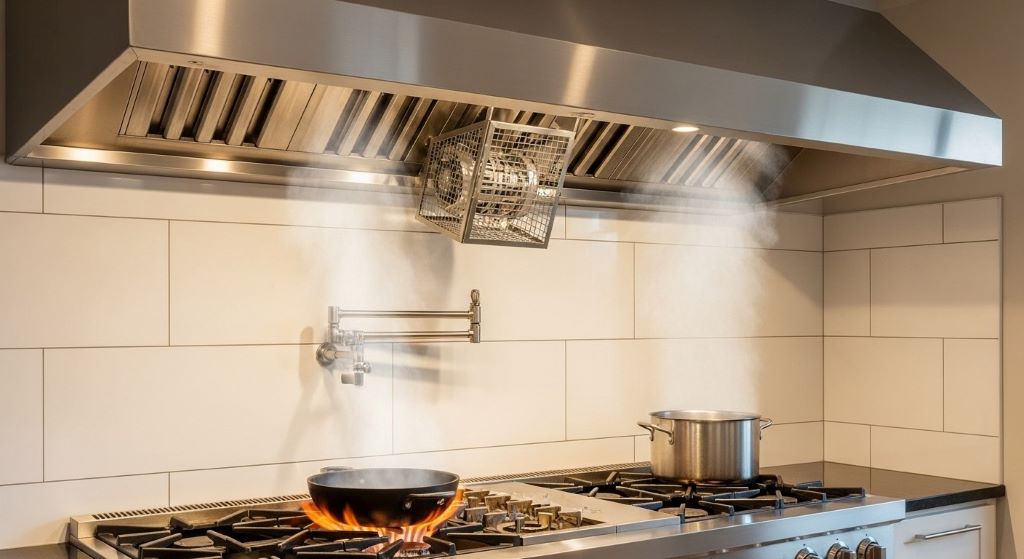
If you love cooking elaborate meals, stir-frying at high heat, or grilling indoors, you know how quickly smoke and grease can fill your kitchen. A powerful ventilation system isn’t just a luxury for serious home cooks—it’s a necessity. Without proper airflow, your kitchen walls collect grease, your smoke detectors go off constantly, and lingering odors permeate your entire home.
Choosing the right ventilation system requires understanding several technical specifications and how they relate to your cooking style. This guide will help you navigate the options and find a system that keeps your kitchen air clean and fresh, no matter how ambitious your culinary projects become.
Understanding Why Ventilation Power Matters
When you cook at high temperatures, you create more than just delicious food. Combustion byproducts, steam, grease particles, and smoke all need somewhere to go. Without adequate ventilation, these contaminants circulate through your home, settling on surfaces and potentially affecting indoor air quality.
The amount of heat you generate while cooking directly impacts how much ventilation you need. A gas range produces significantly more heat than an electric cooktop. Professional-style ranges with high BTU burners create even more heat and combustion gases that must be removed efficiently.
Grease particles are particularly problematic. They become airborne when you cook with oil at high temperatures. Without proper ventilation, these particles settle on cabinets, walls, and ceilings, creating sticky buildup that’s difficult to clean. Over time, this accumulation can even pose a fire hazard.
Additionally, cooking produces moisture that can contribute to mold growth and damage to your kitchen materials. Steam from boiling water or simmering sauces adds humidity to your kitchen air. A strong ventilation system removes this moisture before it becomes problematic.
Decoding Airflow Measurements and CFM Ratings
When shopping for ventilation equipment, you’ll encounter the term CFM, which stands for cubic feet per minute. This measurement indicates how much air the unit can move in one minute. Higher numbers mean more powerful airflow, which is essential for high CFM range hood performance.
For light cooking on electric stoves, you might get away with 200 to 300 CFM. However, serious cooking demands much more. Gas ranges typically require at least 100 CFM for every 10,000 BTU of cooking power. Professional-style ranges with six burners often need 600 CFM or higher.
The type of cooking you do most frequently should guide your decision. If you regularly sear meat, deep fry foods, or cook with a wok at maximum heat, aim for the higher end of the recommended range. These cooking methods produce substantial smoke and grease that require robust ventilation.
Keep in mind that CFM ratings represent maximum capacity under ideal conditions. Real-world performance depends on factors like ductwork length, number of bends in the duct, and the type of exterior vent cap. Therefore, choosing a unit with slightly more capacity than the minimum recommendation ensures adequate performance.
Evaluating Different Ventilation Styles
Several distinct styles of range ventilation exist, each with advantages and limitations. Understanding these differences helps you choose the right type for your kitchen layout and cooking needs.
Under-cabinet models mount beneath your upper cabinets and work well in kitchens with standard layouts. These units offer good performance when properly sized and ducted. However, they may not provide sufficient coverage for ranges wider than 30 inches.
Wall-mounted chimney-style units make a visual statement while providing excellent coverage. These systems typically offer higher CFM ratings and work particularly well for larger ranges. The chimney design also helps contain cooking vapors more effectively than flat under-cabinet models.
Island installations present unique challenges because they lack nearby walls for mounting. Island hoods typically require more powerful motors to compensate for their exposed position. These units often feature striking designs that become focal points in your kitchen.
Downdraft systems pull air downward instead of upward. While these create clean sight lines, they generally don’t perform as well for heavy cooking ventilation. The physics of rising heat and smoke work against downdraft designs, making them less effective for capturing grease and steam.
Professional-style units offer the highest performance levels. These systems often feature multiple fan speeds, heat sensors, and commercial-grade materials. While expensive, they provide unmatched capability for serious cooking enthusiasts.
Choosing Between Ducted and Recirculating Systems
How your ventilation system handles captured air makes a tremendous difference in performance. Two main approaches exist: ducted systems that exhaust outdoors and recirculating systems that filter and return air to your kitchen.
Ducted installations provide superior performance because they remove contaminated air from your home entirely. This approach eliminates moisture, heat, grease, and combustion gases completely. For heavy cooking, ducted systems are strongly preferred.
Installing ductwork requires planning and often professional help. The duct should be as short and straight as possible. Each bend and foot of ductwork reduces efficiency. The duct should also be appropriately sized for your unit’s CFM rating—typically six inches for lower CFM units and eight inches or more for powerful systems.
Recirculating systems use charcoal filters to clean air before returning it to your kitchen. While easier to install, these systems have significant limitations. They cannot remove heat or moisture, only odors and some particulates. The filters require regular replacement, adding to ongoing costs.
For serious cooking, recirculating systems simply don’t provide adequate performance. They may work acceptably for light cooking, but they struggle with the smoke and grease produced by high-heat techniques. If ducting to the exterior is possible, it’s always the better choice.
Considering Noise Levels and Sound Ratings
Power and noise often go hand in hand with ventilation equipment. However, some units manage impressive airflow while remaining relatively quiet. Understanding sound ratings helps you balance power with comfort.
Noise levels are measured in sones. One sone roughly equals the sound of a quiet refrigerator. For reference, normal conversation measures about four sones. Most range hoods operate between four and eight sones at maximum speed.
Quieter operation typically costs more. Manufacturers achieve lower noise levels through better motor design, insulation, and larger fan blades that can move more air at lower speeds. Some premium models feature external blowers mounted outside your home, dramatically reducing kitchen noise.
Multi-speed controls let you adjust performance to match your cooking intensity. You might use a lower, quieter setting for simmering or baking, then switch to maximum power when searing or stir-frying. This flexibility provides powerful ventilation when needed without constant noise.
Consider where noise sensitivity matters most in your home. If your kitchen opens to living areas where you watch television or hold conversations, quieter operation becomes more important. In a closed kitchen, higher noise levels may be more acceptable.
Sizing Your System for Maximum Effectiveness
Proper sizing involves more than just CFM ratings. The physical dimensions of your ventilation system relative to your cooktop significantly impact performance.
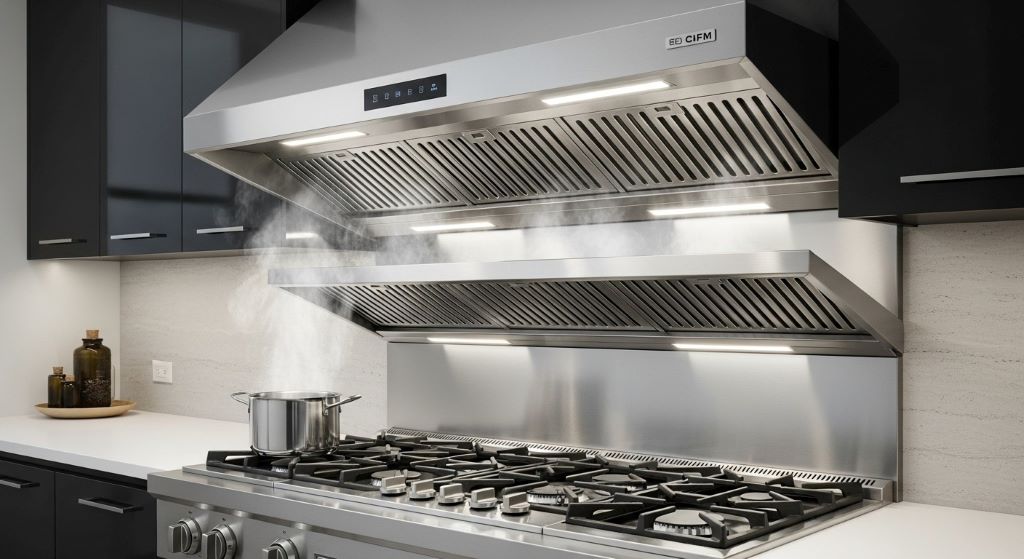
Your unit should be at least as wide as your cooking surface. Ideally, it should extend three inches beyond on each side. This overlap helps capture rising vapors before they escape into your kitchen. For ranges 36 inches or wider, this becomes particularly important.
Height above the cooktop also matters. Most manufacturers recommend 24 to 30 inches between your cooking surface and the bottom of the hood. Installing it too high reduces effectiveness because vapors can escape before being captured. Mounting it too low creates a safety hazard and makes cooking uncomfortable.
The depth of your unit affects coverage too. Deeper units extending further over your cooktop capture vapors more effectively. This becomes especially important for back burners, which sit furthest from the front edge of the range.
Consider the ceiling height in your kitchen. Standard ceiling heights work well with most units. However, higher ceilings may require units with greater CFM capacity because vapors have more space to disperse before being captured.
Examining Filter Systems and Maintenance Requirements
Effective filtration protects both your kitchen and the ventilation system itself. Different filter types serve different purposes, and understanding their maintenance needs prevents performance degradation over time.
Grease filters capture oil particles before they enter the fan and ductwork. These come in several varieties. Mesh filters are common and washable. Baffle filters feature angled slats that change airflow direction, causing grease to condense and drip into a collection tray. Baffle designs typically capture grease more effectively than simple mesh.
Cleaning grease filters regularly maintains performance and prevents fire hazards. Most manufacturers recommend washing them every month with heavy use. Dishwasher-safe filters simplify this maintenance. Some filters require hand washing with degreasing solution.
Charcoal filters apply only to recirculating systems. These remove odors but cannot be cleaned—only replaced. Replacement frequency depends on cooking habits, typically every three to six months. This ongoing expense adds to the total cost of recirculating systems.
Some high-end units feature automatic cleaning systems that use heat or steam to break down grease. While convenient, these systems add to the initial cost and complexity. For most home cooks, manually cleaned filters work perfectly well with regular attention.
Exploring Additional Features and Controls
Modern ventilation systems offer features beyond basic on-off switches. These enhancements can improve convenience, efficiency, and performance.
Variable speed controls provide flexibility to match ventilation power with cooking intensity. Three speeds work for most situations, though some units offer more. Electronic controls often provide finer adjustment than mechanical switches.
Automatic sensors detect heat or smoke and adjust fan speed accordingly. This feature ensures adequate ventilation without requiring constant attention. However, sensors add complexity and potential points of failure.
Integrated lighting illuminates your cooking surface. LED lights have become standard, offering bright, energy-efficient illumination that doesn’t add unwanted heat. Some units provide adjustable brightness or color temperature.
Delayed shutoff allows the fan to continue running after you turn off the controls. This feature removes lingering odors and allows the unit to cool down before stopping. A delay of five to ten minutes usually proves sufficient.
Remote controls or smartphone connectivity appeal to some users. While not essential, these features add convenience if you frequently adjust settings while cooking. However, they also increase cost and complexity.
Factoring in Installation Requirements
Professional installation ensures proper performance and safety. While some handy homeowners tackle this project themselves, several factors complicate installation.
Electrical requirements vary by model. Most residential units require standard 120-volt power. However, powerful systems might need dedicated circuits. Check your home’s electrical capacity and local codes before purchasing.
Ductwork installation requires careful planning. The duct should vent to an exterior wall or the roof. The shortest, straightest path provides best performance. Avoid venting into attics, crawl spaces, or garages, which violates building codes in most areas.
The exterior vent cap should be appropriate for your climate. Caps with dampers prevent backdrafts. In cold climates, caps that minimize heat loss work better. Make sure the cap doesn’t discharge near air intakes, windows, or areas where people gather.
Supporting the weight of heavy units requires proper backing in the wall or ceiling. Some professional-style units weigh over 100 pounds and need substantial structural support. Inadequate support creates safety hazards and can damage your home.
Local building codes may require makeup air systems for units exceeding certain CFM ratings. These systems replace air exhausted by the range hood, preventing negative pressure that can backdraft furnaces or water heaters. Requirements typically kick in around 400 to 600 CFM, depending on your location.
Comparing Budget Options Versus Premium Models
Ventilation systems span a wide price range, from a few hundred to several thousand dollars. Understanding what you get at different price points helps you make an informed decision.
Budget models provide basic functionality at affordable prices. These typically offer lower CFM ratings, simpler controls, and louder operation. Materials may be thinner, and construction less robust. For light to moderate cooking, these can work adequately when properly sized.
Mid-range options offer better performance and features. You’ll find higher CFM ratings, quieter operation, better filters, and more durable construction. Many serious home cooks find this price range offers the best value.
Premium units justify their cost with exceptional performance, superior materials, and advanced features. Stainless steel construction, powerful yet quiet motors, sophisticated controls, and excellent warranty coverage characterize this category. Professional or serious home cooks benefit most from these investments.
Remember that the purchase price represents only part of the total cost. Installation expenses can equal or exceed the unit cost, especially for ducted systems requiring significant work. Factor in ongoing costs like filter replacement and electricity usage as well.
Maintaining Your System for Long-Term Performance
Proper maintenance keeps your ventilation system working effectively for years. Regular attention prevents most problems and extends equipment life.
Clean grease filters monthly if you cook frequently. This simple task maintains airflow and prevents grease buildup inside the unit. Mark your calendar to ensure you don’t forget.
Wipe down the exterior regularly to prevent grease accumulation. Use a degreasing cleaner suitable for your unit’s finish. Stainless steel requires specific cleaners to avoid streaking and maintain its appearance.
Inspect the ductwork annually if possible. Look for loose connections, damage, or excessive grease accumulation. Professional duct cleaning may be worthwhile every few years, particularly if you notice reduced performance.
Replace light bulbs promptly to maintain good visibility over your cooking surface. LED bulbs last much longer than traditional bulbs and use less energy.
Listen for changes in sound that might indicate problems. Unusual noises, vibrations, or reduced airflow suggest issues requiring attention. Addressing problems early prevents more expensive repairs later.
Conclusion
Selecting the right range hood for heavy cooking involves balancing several factors. You need sufficient CFM capacity to handle the heat and smoke your cooking produces. The system should be properly sized for your cooktop and mounted at the correct height. Ducted installation provides far superior performance compared to recirculating systems.
Beyond basic specifications, consider features that match your cooking habits and preferences. Quieter operation, effective lighting, and convenient controls enhance the cooking experience. Quality filters and proper maintenance keep the system working effectively.
Remember that your ventilation system is an investment in your kitchen’s functionality and your home’s air quality. A high CFM range hood matched to your cooking style, properly installed with adequate heavy cooking ventilation capability, makes a dramatic difference in cooking comfort and kitchen cleanliness.
Take time to assess your specific needs, research options thoroughly, and don’t hesitate to consult with professionals about installation. The right choice will serve you well for many years of enjoyable cooking.
Frequently Asked Questions
How much CFM do I need for a gas range?
A general guideline suggests 100 CFM for every 10,000 BTU of cooking power. For a typical residential gas range with 40,000 to 60,000 total BTU, you’ll need 400 to 600 CFM minimum. Professional-style ranges with higher output require 800 CFM or more. Always check your range’s specifications and consider your cooking style when determining requirements.
Can I install a range hood myself?
Installation difficulty varies considerably. Replacing an existing under-cabinet model with a similar unit is relatively straightforward for handy homeowners. However, installing new ductwork, wall-mounted units, or systems requiring electrical work typically requires professional help. Building codes may also mandate professional installation in your area, particularly for powerful systems requiring makeup air.
Why is my range hood so loud?
Several factors contribute to noise levels. Higher CFM settings naturally create more sound. The motor quality, housing insulation, and installation all affect noise. Loose ductwork, improper mounting, or worn bearings can also increase sound. Some noise is normal at maximum power, but excessive or unusual sounds may indicate problems requiring attention.
Do I need a makeup air system?
Many jurisdictions require makeup air systems when range hood capacity exceeds 400 to 600 CFM. These systems replace exhausted air, preventing negative pressure that can backdraft dangerous combustion gases from furnaces or water heaters. Even if not required by code, makeup air improves comfort by preventing doors from becoming difficult to open and reducing drafts.
How often should I replace charcoal filters in a recirculating hood?
Charcoal filters typically need replacement every three to six months with regular use. Heavy cooking requires more frequent changes. Unfortunately, these filters cannot be cleaned—only replaced. This ongoing expense, combined with inferior performance compared to ducted systems, makes recirculating hoods less suitable for serious cooking despite their easier installation.
Related Topics:
Cooking Up a Dream Kitchen: Design Tips for Every Budget
Cooking in Style: Trendy Home Kitchen Decor Ideas for 2024