


Choosing between resin and tarmac as your new driveway is one of the first decisions you will have to make as a homeowner, both options have their uses and perform differently when laid as a surface.
Surface Finish and Appearance
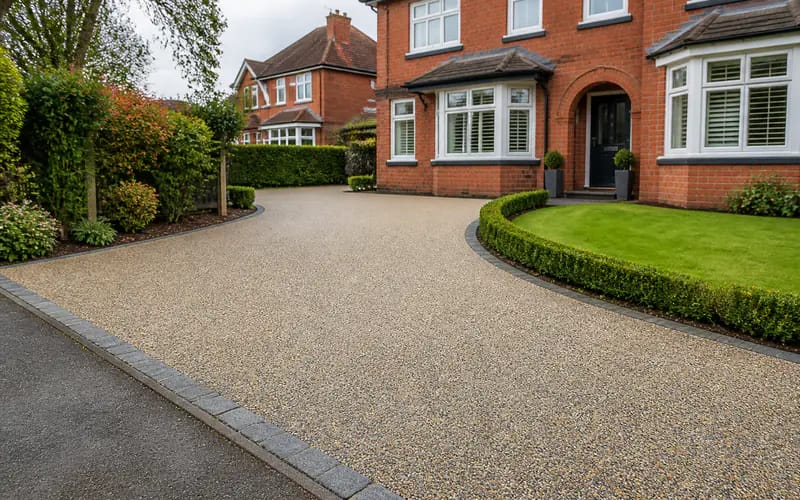
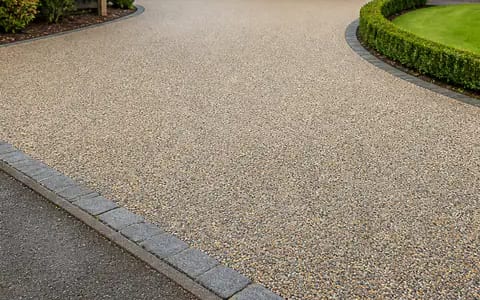
A resin-bound surface looks like a natural stone path. The aggregate is embedded within a clear resin binder, producing a textured surface containing many visible flecks of colour that run throughout. A tarmac driveway on the other hand looks like a road surface – a very flat and uniform black surface.
Drainage Performance
A big difference between the two types of surfacing is how drainage works. Resin-bound surfaces are porous so water can penetrate through the surface and flow down through the ground beneath. Tarmac is non-porous so water runs off the surface and will need to go down a drain, into a soakaway or be sloped to flow away from the property. A sloping drive or a drive near a boundary with a neighbour could be affected by the drainage of a surface.
Installation Process and Disruption
The laying of tarmac is a relatively quick process as the hot tar is rolled out and smoothed to create a level surface. By the following day or so, the surface will be ready for use. The resin driveway, however, is laid as a cold mixed product on site. It is applied in layers with each layer to be allowed to set before the next layer is applied. The surface must also be allowed to set before any traffic is allowed on it. The curing process of resin can be affected by the weather and ideally requires a dry and mild situation for the best results.
Resistance to Cracking and Staining
Tarmac surfaces can also crack due to tarmac suffering from frost heave. The water that gets into the tiny cracks in the surface, freezes and then expands causing serious damage to the surface. As the temperature rises in the summer the tarmac can also soften slightly. It can also get stains from oil and fuel drips on the surface as they are able to soak into the surface. Unlike a resin bound driveway the tarmac doesn’t have a strong binding agent, meaning that it can be easily damaged. See more at Resin Driveways Gloucester.
Weed and Moss Growth
Joints, edges and cracks in tarmac surfaces provide perfect havens for weeds and moss to grow. In contrast, the open structure of resin-bound surfaces don’t provide the same ‘homes’ for weed seeds to germinate in, making it an ideal choice for those looking to reduce weed growth in their driveway. Why let your weekend be ruined by pulling weeds and scraping moss out of driveway cracks?
Colour and Design Flexibility
For a driveway that will sit alongside Cotswold stone walling, brick paving, or other features of the garden and surrounding grounds, a resin driveway can be blended to a wide variety of different aggregate colours and types. In contrast to tarmac which is typically supplied in black, and occasionally in a dark red, there is limited scope to match tarmac to other features of the property.
Environmental Considerations
Resin allows water to penetrate through the surface of the driveway, reducing surface water runoff which can lead to local flooding. Many resin-bound surfaces use recycled aggregate which can help to reduce the amount of virgin stone extracted from quarries. The resin itself is a chemical binder which is mixed on site with the stone aggregate. Safe handling guidance for resin-based building products should be adhered to by anyone handling or storing the products, as the curing process releases volatile compounds that require good ventilation during mixing and laying. This is in contrast to tarmac bitumen that is laid hot and has different handling risks.
Coping with Gloucestershire’s Ground and Winters
A lot of properties in and around Gloucester are built on soils with a high clay content, which can hold a lot of water and can be affected by the season’s expansion and contraction. A permeable resin driveway will perform well on such a substrate as long as a suitable sub-base has been prepared. A solid tarmac driveway, on the other hand, can suffer from surface water accumulation during wet winters, which can result in cracking and subsequent repair in the form of potholes.
Each surface is suitable for different types of properties and solve different problems. If it’s the issue of drainage, controlling weeds and providing a natural looking surface that is the main concern then resin is likely to be the better choice. On the other hand, if speed of completion and a lower initial cost is the main priority then tarmac is still a great option.