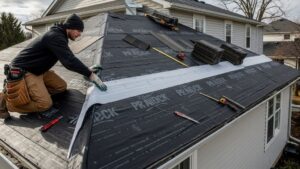



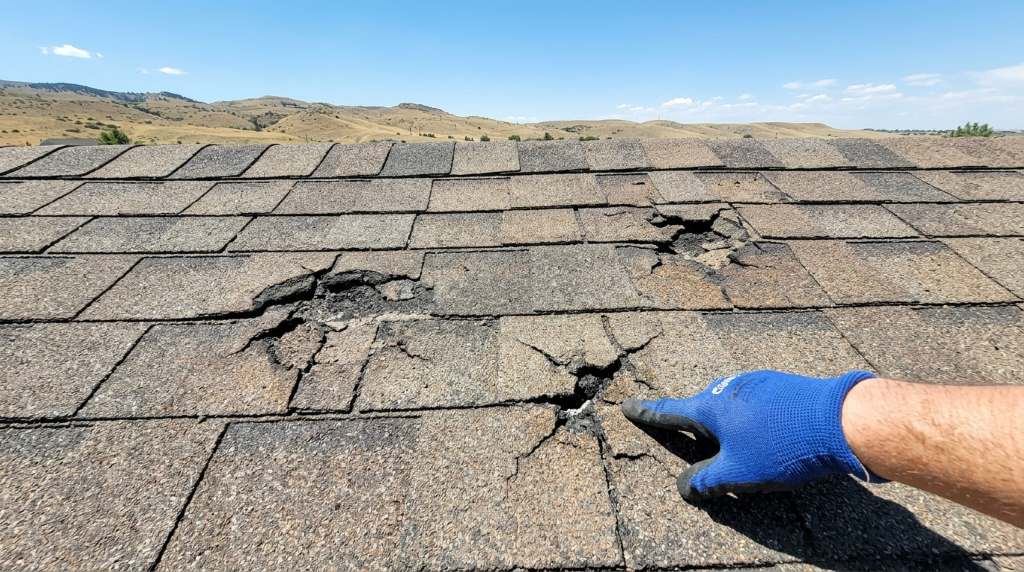
Yes, you can fix roof hail damage in Denver, CO, but the right repair depends on the damage severity. Start with a safe inspection, document every affected area, contact your insurer, then hire a qualified roofing contractor. Denver’s hail history makes prompt action especially important, with past storms producing millions in property losses. In June 2025, Denver-area storms also produced hail between 2.5 and 3 inches. Your roof style, including architectural metal roof designs, also affects repair methods and material choices.
Key Takeaways
- Inspect hail damage from the ground before attempting any roof access.
- Photograph damaged shingles, flashing, gutters, vents, and exterior surfaces.
- File an insurance claim promptly when covered storm damage exists.
- Use a qualified roofing contractor for a detailed roof assessment.
- Replace severely damaged materials instead of masking visible defects.
- Address hidden moisture damage before it spreads into the attic.
1. Inspect the Roof After the Hailstorm
First, wait until the storm completely passes before checking your property. Wet roofs become extremely slippery, while damaged shingles can create additional fall hazards.
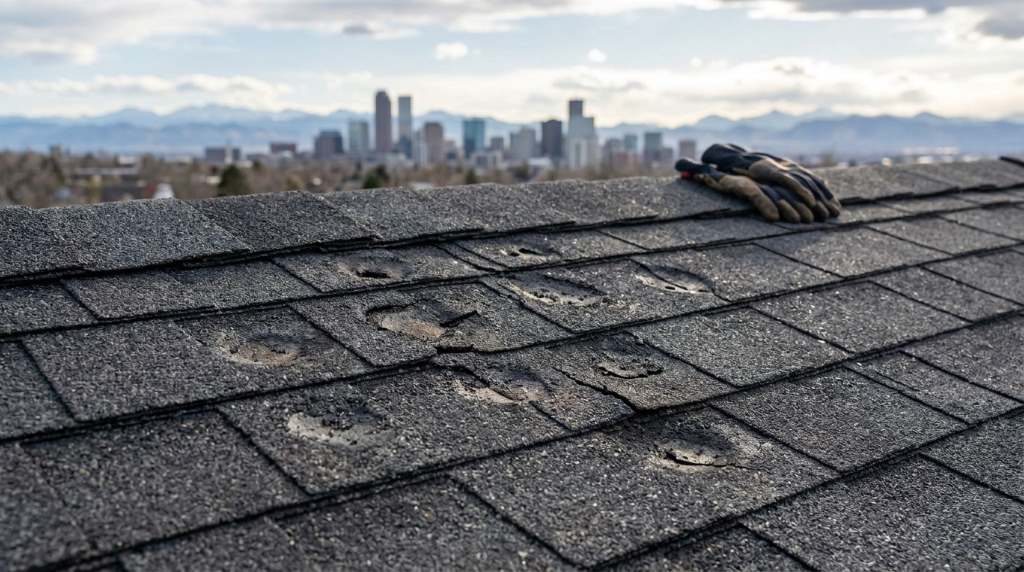
Instead, inspect the roof from ground level using binoculars whenever possible. Look for missing shingles, exposed underlayment, cracked tiles, dented metal, and displaced flashing.
Then inspect gutters, downspouts, siding, window screens, and outdoor equipment. These surfaces often reveal hail impact patterns that help confirm storm severity.
Pay special attention to soft spots, exposed roofing layers, and visible holes. These signs can indicate damage that requires immediate professional attention.
What Hail Commonly Damages
Hail can bruise asphalt shingles without creating an obvious hole. It can also fracture protective granules, weaken fiberglass mats, and expose vulnerable areas.
Metal roofs may show dents, coating damage, or distorted panels after larger impacts. However, a dent does not automatically mean the entire panel needs replacement.
Roof vents, skylights, chimney caps, and flashing can also suffer impact damage. Therefore, a complete inspection should cover every roof penetration.
2. Document Damage Before Making Repairs
Take clear photographs before removing, replacing, or covering damaged materials. Include wide shots that show each roof section and close-ups of individual defects.
Also photograph damaged gutters, siding, windows, fences, and exterior fixtures. This broader documentation can help establish the storm’s overall impact on your property.
Create a simple damage inventory with locations, observations, and approximate quantities. A structured record makes conversations with your insurer and contractor much easier.
Meanwhile, avoid temporary repairs that permanently alter the evidence. If water enters the home, use temporary protection while documenting the affected area first.
3. Decide Whether You Need Roof Repair or Replacement
Not every hailstorm requires complete roof replacement. A professional should determine whether localized repairs can restore performance safely.
Minor damage may involve replacing individual shingles, repairing flashing, or sealing specific penetrations. However, widespread bruising can justify replacing larger roof sections.
Roof age also matters when evaluating repair economics. Older roofing systems may have less remaining service life after substantial storm damage.
Before approving major work, review what to know about replacing a roof. That information can help you understand replacement scope, material considerations, and project planning.
Signs That Replacement May Make More Sense
- Hail damaged large portions of multiple roof slopes.
- Shingles show widespread granule loss or fractured surfaces.
- The roof already approaches the end of its expected service life.
- Previous repairs have created numerous vulnerable areas.
- Water intrusion has affected decking or interior structures.
Still, do not assume replacement represents the best solution. An experienced contractor should distinguish cosmetic marks from functional roofing failures.
4. Contact Your Insurance Company Promptly
After documenting the damage, contact your homeowners insurance provider and ask about the claim process. Keep your policy information, photographs, storm date, and inspection records available.
Your insurer may send an adjuster to inspect the roof and surrounding property. Give the adjuster access to documented damage while maintaining your own photographic record.
Never exaggerate damage or approve unnecessary work simply because someone recommends it. Accurate documentation protects your interests and supports a legitimate claim.
Ask your insurer about deductibles, coverage limits, depreciation rules, and temporary repair requirements. Understanding these details prevents unpleasant financial surprises later.
5. Get a Professional Hail Damage Inspection
A professional roofing inspection can identify defects that homeowners cannot easily see from ground level. Experienced inspectors examine shingles, underlayment, flashing, ventilation, penetrations, and decking.
Ask the contractor to explain every finding using photographs or other clear evidence. A trustworthy professional should distinguish hail damage from ordinary aging, installation defects, and previous storm damage.
Also request a written inspection report when substantial damage exists. This document can help organize repair recommendations and support discussions with your insurer.
Choose contractors who carry appropriate insurance and provide clear written estimates. Avoid contractors who pressure you into signing immediately after a storm.
Questions to Ask a Roofing Contractor
- How extensive is the documented hail damage?
- Which areas require replacement rather than repair?
- Can you provide photographs supporting each recommendation?
- What roofing materials will you install?
- What workmanship warranty accompanies the project?
- Who handles permits and disposal?
6. Repair Leaks and Vulnerable Areas First
If hail created openings, prioritize water protection before completing cosmetic repairs. Even a small opening can allow moisture into insulation, decking, or interior ceilings.
Use temporary weather protection when permanent repairs cannot happen immediately. However, temporary measures should not replace a proper roofing repair.
Check attic spaces for damp insulation, water stains, mold-like odors, or damaged wood. These signs can reveal leaks that remain invisible from inside the living area.
Also inspect attic ventilation after major repairs. Proper airflow helps manage moisture and protects the roof system over time.
7. Choose Materials That Suit Denver’s Conditions
Denver roofs face intense sun, temperature swings, wind, snow, and recurring hail. Therefore, material selection should consider more than appearance or initial price.
Ask your contractor about impact-resistant roofing products when appropriate. Some products carry recognized impact classifications, although performance depends on the complete roofing assembly.
Metal roofing can provide a durable option when properly designed and installed. You can also review metal roofing sustainable construction considerations before choosing materials.
However, do not select materials solely because they appear stronger. Installation quality, flashing details, ventilation, fastening, and roof design all influence long-term performance.
Consider the Entire Roof System
A roof includes more than visible shingles or panels. Underlayment, flashing, ventilation, decking, fasteners, and drainage all contribute to weather resistance.
Therefore, replacing damaged shingles over compromised decking may create a short-lived solution. Address underlying defects before installing new exterior materials.
Likewise, inspect drainage components after hailstorms. Damaged gutters can redirect water toward fascia boards, siding, foundations, and other vulnerable areas.
8. Prevent Secondary Damage After the Repair
Once repairs finish, inspect the completed roof from multiple viewpoints. Look for properly aligned shingles, secure flashing, clean valleys, and unobstructed drainage.
Keep your final invoices, photographs, warranties, inspection reports, and insurance documents together. These records can simplify future maintenance and potential claims.
Schedule periodic roof inspections, especially after severe weather. Early detection usually prevents minor defects from becoming expensive structural problems.
After another major hailstorm, repeat the inspection process rather than assuming the roof remains unaffected. Storm damage can vary significantly across different roof slopes.
Common Roof Hail Damage Mistakes to Avoid
Many homeowners make decisions too quickly after a severe storm. Rushing can lead to unnecessary replacement, incomplete repairs, or poor contractor selection.
- Do not climb onto a damaged or wet roof without proper training and equipment.
- Do not assume every circular mark represents hail damage.
- Do not sign contracts under pressure from unsolicited storm contractors.
- Do not ignore attic moisture because the ceiling looks normal.
- Do not repair visible shingles without checking flashing and penetrations.
- Do not discard damaged materials before documenting them.
Instead, slow the process down enough to verify the actual problem. A careful inspection often produces better technical and financial decisions.
How Long Can You Wait to Fix Hail Damage?
You should arrange an inspection as soon as practical after a hailstorm. Waiting increases the chance that moisture, wind, or temperature changes will worsen existing defects.
However, the exact insurance deadline depends on your policy and applicable requirements. Contact your insurer promptly to confirm the relevant reporting timeline.
Temporary protection can reduce additional damage while you arrange permanent repairs. Keep receipts and photographs associated with emergency work for your records.
When Should You Hire a Denver Roofing Professional?
Hire a professional when you suspect structural damage, widespread shingle bruising, leaks, or damaged flashing. Professional assessment becomes especially important when roof access presents safety risks.
Experienced contractors can also compare repair and replacement options based on roof condition. That approach prevents homeowners from paying for work that does not solve the underlying problem.
For ice-related risks after winter weather, understanding roof replacement ice dam prevention can also improve future planning. Denver’s changing weather patterns make seasonal roof maintenance particularly valuable.
Final Verdict: Fix Hail Damage Before It Spreads
The best way to fix roof hail damage in Denver is to inspect, document, assess, and repair systematically. Start with safety, then involve your insurer and a qualified roofing professional before committing to major work.
Do not let minor-looking damage create larger moisture problems months later. If a recent storm affected your property, schedule a professional roof inspection and request a detailed written assessment today.
Frequently Asked Questions
How can I tell if hail damaged my roof?
Look for bruised shingles, missing granules, cracks, dents, damaged flashing, and similar impact marks across multiple roof areas.
Does every hail-damaged roof need replacement?
No, many roofs need localized repairs, while widespread or severe damage may justify complete replacement.
Should I file an insurance claim for minor hail damage?
Discuss the damage with your insurer because coverage, deductibles, policy terms, and repair costs vary between homeowners.
Can I inspect hail damage myself?
You can inspect visible exterior areas safely, but a professional should evaluate the roof itself when damage appears possible.
What should I do immediately after a Denver hailstorm?
Prioritize safety, photograph visible damage, protect active leaks, contact your insurer, and arrange a professional inspection.