


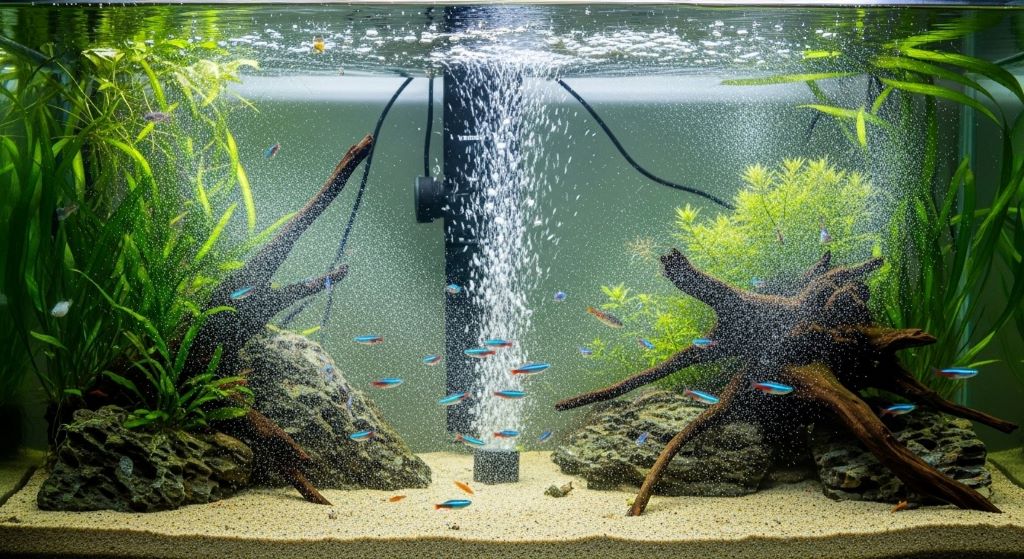
Setting up a thriving aquarium requires more than just filling a tank with water and adding fish. Water movement plays a crucial role in maintaining a healthy aquatic environment. Without proper circulation, dead spots form where debris accumulates and oxygen levels drop. This can stress your fish and harm beneficial bacteria that keep your tank balanced.
Many aquarium hobbyists struggle to find the right circulation pump for their setup. Buying an expensive model doesn’t guarantee success, and purchasing a cheap one without understanding flow requirements often leads to disappointment. The key lies in calculating your needs before making a purchase.
This guide will walk you through everything you need to know about determining the correct flow rate for your aquarium. You’ll learn how to assess your tank’s specific requirements, perform essential calculations, and choose a pump that delivers results without breaking your budget.
Understanding Water Circulation in Your Aquarium
Water movement serves several vital functions in an aquarium ecosystem. First, it distributes oxygen throughout the tank. Fish and beneficial bacteria both need oxygen to survive. Stagnant water creates zones where oxygen becomes depleted, leading to stressed fish and poor biological filtration.
Second, circulation prevents debris from settling in corners and behind decorations. When waste accumulates in these dead zones, it breaks down and releases harmful compounds like ammonia and nitrates. Proper water movement pushes debris toward your filter intake where it can be removed.
Third, circulation helps maintain consistent temperature throughout your tank. Heaters warm the water around them, but without movement, you’ll have hot and cold zones. Fish swimming between these zones experience stress from constant temperature fluctuations.
Finally, water movement mimics natural environments. Most fish species come from rivers, streams, or ocean reefs where water constantly flows. Recreating this movement in your aquarium promotes natural swimming behavior and reduces stress.
What Flow Rate Actually Means
Flow rate refers to the volume of water a pump moves within a specific time period. Manufacturers typically express this measurement in gallons per hour or liters per hour. A pump rated at 200 gallons per hour moves 200 gallons of water through its outlet every sixty minutes.
However, understanding the rated flow rate alone doesn’t tell the complete story. Manufacturers measure flow rate under ideal conditions with no resistance. In your actual aquarium setup, several factors reduce the effective flow rate.
Head height represents the vertical distance the pump must push water. The higher water needs to travel, the harder the pump works, reducing its output. Tubing length and diameter also create resistance. Long, narrow tubes force the pump to work harder, decreasing flow.
Bends and curves in your plumbing add additional resistance. Each 90-degree elbow reduces flow efficiency. Multiple turns can significantly impact performance. Therefore, the flow rate you actually achieve will always be lower than the manufacturer’s rating.
Determining Your Tank’s Water Volume
Before you can calculate flow requirements, you need to know your tank’s actual water volume. While tanks are sold by their total volume, decorations, substrate, and equipment take up space. Your actual water volume is always less than the tank’s stated capacity.
Start with your tank’s dimensions. Measure length, width, and height in inches. Multiply these three numbers together, then divide by 231 to get gallons. For example, a tank measuring 30 inches long, 12 inches wide, and 18 inches tall contains approximately 28 gallons when completely full.
Next, account for everything that displaces water. Substrate typically takes up about 10 to 15 percent of your volume. A thick gravel bed in our example tank might reduce actual volume by three to four gallons. Large rocks, driftwood, and decorations also displace water.
Additionally, you never fill a tank to the absolute brim. Most aquariums have water levels one to two inches below the top edge. This gap prevents spills and allows for proper gas exchange at the surface. Subtract this volume from your total.
After accounting for all these factors, you’ll have your actual water volume. This number forms the foundation for all your flow rate calculations. Write it down and keep it handy as you continue planning your circulation system.
Using the Tank Turnover Rate Concept
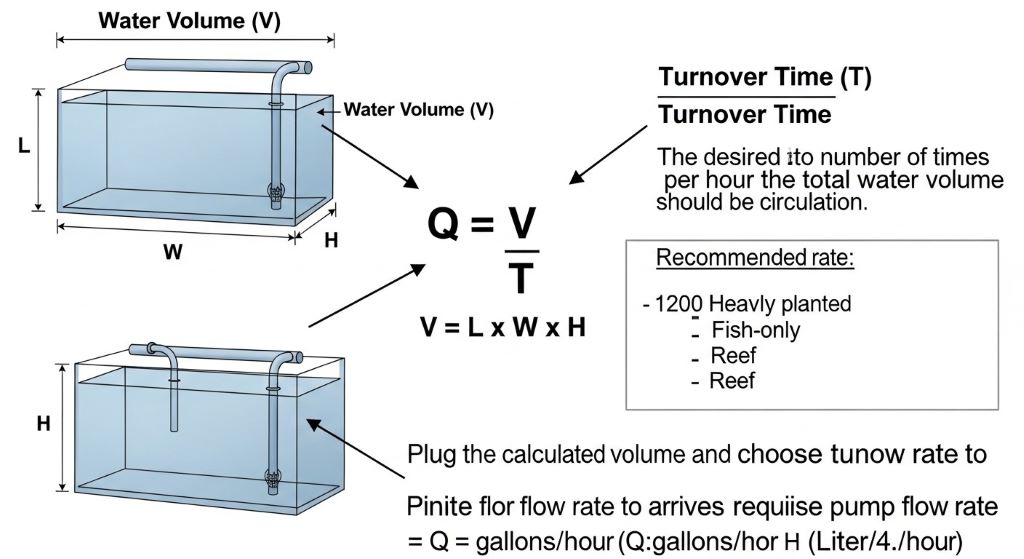
The tank turnover rate describes how many times per hour your circulation system moves the entire volume of water through the pump. This concept provides a simple way to determine minimum flow requirements for different aquarium types.
Most freshwater community tanks need a turnover rate of five to ten times per hour. A 30-gallon tank would require a pump moving 150 to 300 gallons per hour. This range works well for tetras, guppies, and other peaceful fish from slow-moving waters.
Reef aquariums and tanks housing active swimmers need higher turnover rates. Saltwater tanks typically require ten to twenty times turnover per hour. Some coral species prefer even stronger flow, sometimes needing thirty to forty times turnover. These environments naturally have strong currents, and replicating this flow keeps corals healthy.
Planted tanks fall somewhere in the middle. Most aquatic plants prefer gentle to moderate flow. Too much current damages delicate leaves and uproots plants. A turnover rate of three to five times per hour usually works well for heavily planted setups.
Specialized setups may require different approaches. Breeding tanks often need minimal flow to protect fry. Biotope aquariums should match the flow patterns of the specific environment you’re recreating. Research your particular fish species and their natural habitat to determine appropriate flow levels.
Performing Basic Flow Rate Calculations
Once you know your water volume and desired turnover rate, calculating required flow becomes straightforward. Simply multiply your actual water volume by your target turnover rate. This gives you the minimum pump capacity you need.
Let’s use our 30-gallon example with a target turnover rate of eight times per hour. Multiply 30 by 8 to get 240 gallons per hour. This represents your minimum pump capacity. However, remember that real-world conditions reduce actual flow.
Therefore, you should add a buffer to account for head height, tubing resistance, and other efficiency losses. Adding 20 to 30 percent provides a reasonable safety margin. In our example, 240 gallons per hour plus 30 percent equals approximately 310 gallons per hour.
This means you should look for a pump rated at least 310 gallons per hour to achieve your target flow of 240 gallons per hour in actual operation. This buffer ensures you’ll meet your minimum requirements even with typical installation challenges.
For multiple pumps or powerhead alternative setups, divide your total requirement among the devices. Two pumps rated at 155 gallons per hour each would provide similar total flow to one 310-gallon-per-hour pump. Multiple smaller pumps often create better overall circulation patterns than one large pump.
Factors That Affect Pump Performance
Several variables influence how well a circulation pump performs in your specific setup. Understanding these factors helps you make more accurate calculations and avoid disappointment after installation.
Pump placement significantly impacts effectiveness. A pump placed near the bottom of a tall tank must work against more head pressure than one positioned at mid-height. Every foot of vertical distance reduces flow rate. Check manufacturer specifications for head height performance curves.
Water temperature affects pump efficiency as well. Warmer water has lower viscosity, allowing pumps to move it more easily. However, most aquarium temperature variations don’t significantly impact performance. This factor matters more in ponds or very cold-water setups.
Filter media creates substantial resistance when water passes through it. If your circulation pump also powers your filter, account for this resistance. Dirty filter media increases resistance over time, gradually reducing flow. Regular maintenance helps maintain consistent performance.
Impeller condition directly affects output. Calcium buildup, algae growth, and debris lodged in the impeller all reduce efficiency. Regular cleaning every few months keeps your pump operating at peak capacity. A clean pump can flow 20 to 30 percent more water than a dirty one.
Creating a Simple Flow Rate Calculator Approach
You don’t need complex software to determine your flow requirements. A simple step-by-step approach works perfectly well for most hobbyists. Here’s a practical method you can use with just a calculator and notepad.
Step one involves measuring your tank and calculating actual water volume as described earlier. Write down this number. Let’s call it Volume.
Step two requires determining your target turnover rate based on tank type and inhabitants. Research your specific fish species if you’re unsure. Write down this number. Let’s call it Turnover.
Step three is the basic multiplication. Volume times Turnover equals your minimum required flow rate. Write down this result.
Step four adds your buffer for real-world conditions. Multiply your minimum flow by 1.3 to add a 30 percent safety margin. This gives you your target pump rating.
Step five involves checking manufacturer specifications for head height performance. If your pump needs to push water more than a few inches vertically, verify it can maintain adequate flow at that height.
This systematic approach ensures you don’t overlook important factors. Moreover, writing down each step creates a record you can reference when shopping or troubleshooting later. Keep these calculations with your aquarium maintenance log for future reference.
Evaluating Budget Circulation Pumps
Cheap doesn’t always mean inadequate. Many affordable pumps provide excellent performance for standard aquarium applications. However, you need to evaluate them carefully to ensure they meet your calculated requirements.
Start by verifying the flow rate specifications match or exceed your calculated needs. Don’t assume a cheap pump can’t deliver adequate flow. Some budget brands offer surprisingly good performance. Check customer reviews for real-world feedback on actual flow rates.
Look for adjustable flow controls if possible. This feature lets you fine-tune circulation without buying a different pump. You might discover your fish prefer slightly more or less flow than your calculations suggested. Adjustability provides flexibility.
Consider energy consumption, especially for larger pumps running continuously. A pump drawing 20 watts costs significantly more to operate over a year than one using 10 watts. Energy-efficient models often cost more upfront but save money long-term.
Noise level matters in living spaces. Some cheap pumps vibrate loudly or create annoying humming sounds. Reading reviews specifically mentioning noise helps identify quiet models. A few extra dollars for a quieter pump can be worth it for bedroom or office tanks.
Durability varies widely among budget options. Some inexpensive pumps run reliably for years while others fail within months. Look for models with good warranty coverage and positive long-term reviews. A pump that lasts two years costs less than one requiring annual replacement.
Alternative Circulation Methods
Traditional circulation pumps aren’t your only option for creating water movement. Several powerhead alternative approaches can work well, particularly in smaller tanks or specialized setups.
Sponge filters provide gentle circulation while also handling biological filtration. Air-driven sponge filters create a gentle upward flow perfect for fry tanks and small aquariums housing peaceful fish. They’re extremely affordable and virtually maintenance-free.
Canister filter returns create significant flow when positioned correctly. Directing the output across the tank’s length pushes water throughout the entire volume. Some hobbyists use spray bars to distribute flow more evenly. This approach combines filtration with circulation in one system.
Internal filters serve both purposes in small to medium tanks. Modern internal filters offer adjustable flow and multiple mounting options. They take up tank space but eliminate external equipment and plumbing.
Wavemakers create alternating current patterns that closely mimic natural environments. These devices switch flow direction periodically, preventing fish from finding permanent dead zones to hide. They’re particularly popular in reef aquariums but work well in freshwater tanks too.
Air stones and bubblers primarily add oxygen but also create modest circulation. Rising bubbles pull water upward, creating a gentle circular flow pattern. This method works best in small tanks where minimal water movement is desired.
Testing and Adjusting Your Flow
After installing your circulation pump, verify it produces the flow you calculated. Simple observation tells you a lot, but you can also measure flow more precisely if needed.
Watch how debris moves around your tank. Properly circulated water should prevent waste from settling in corners and behind decorations. If you notice accumulation in certain areas, you may need additional circulation or different pump placement.
Observe your fish behavior carefully. Most species swim actively in well-circulated water. If fish constantly hide or struggle to swim against current, your flow might be too strong. Conversely, lethargic fish hovering in corners might indicate insufficient circulation.
For precise measurement, you can time how long the pump takes to fill a container of known volume. Disconnect the pump’s output and direct it into a bucket. Time how many seconds it takes to fill one gallon. Divide 3600 by this number to get gallons per hour.
This measurement gives you actual flow rate under your specific conditions. Compare it to your calculated requirements. If it falls short, you may need a larger pump or must reduce resistance in your system.
Don’t hesitate to make adjustments. Moving decorations, redirecting output flow, or adding a second pump can all improve circulation. Your initial calculations provide guidance, but real-world testing reveals what actually works in your specific setup.
Common Mistakes to Avoid
Many aquarium hobbyists make predictable errors when selecting circulation equipment. Learning from others’ mistakes helps you avoid wasting money and frustrating your fish.
Underestimating actual flow requirements ranks as the most common error. People buy pumps based on tank volume without considering turnover rate. A pump rated at your tank’s total volume only provides one turnover per hour, which is insufficient for most setups.
Ignoring head height leads to disappointing performance. A pump rated at 300 gallons per hour at zero head might only deliver 150 gallons per hour when pushing water two feet vertically. Always check performance curves at your actual installation height.
Overlooking maintenance needs creates problems over time. Even the best pump loses efficiency when dirty. Many hobbyists notice declining flow but don’t connect it to maintenance needs. Regular cleaning prevents gradual performance degradation.
Choosing the wrong pump type for your application causes frustration. High-flow pumps work poorly in planted tanks, while low-flow models can’t meet reef tank demands. Matching pump characteristics to tank requirements ensures success.
Failing to plan for future changes limits your options. If you might add more fish or change to species preferring stronger flow, buying a slightly larger pump now prevents needing replacement later. Adjustable pumps provide the most flexibility.
Making Your Final Decision
Armed with calculations and knowledge, you’re ready to choose a circulation pump confidently. Review your requirements one final time before purchasing.
Verify the pump meets your calculated minimum flow rate with appropriate buffer. Confirm it can maintain this flow at your required head height. Check reviews for reliability and noise concerns.
Consider whether you want a single larger pump or multiple smaller units. Multiple pumps often provide better coverage and redundancy. If one fails, the other maintains some circulation until you can replace the broken unit.
Think about future needs and potential tank changes. A slightly oversized adjustable pump provides more flexibility than one barely meeting current requirements. The small additional investment can save money long-term.
Compare prices across retailers but don’t sacrifice quality for minimal savings. A pump costing five dollars less isn’t a bargain if it fails after six months. Factor in warranty coverage and return policies when comparing options.
Finally, remember that you can always adjust after installation. If flow proves too strong or too weak, you have options. Redirect output, add flow deflectors, or supplement with additional equipment. Your calculations provide an excellent starting point, but real-world testing might reveal adjustments needed.
Conclusion
Calculating flow rate before buying an aquarium circulation pump ensures you get equipment that actually meets your needs. By determining your tank’s actual water volume, understanding tank turnover rate requirements, and creating a flow rate calculator approach, you can make informed decisions regardless of budget.
Remember that cheap pumps can work perfectly well when properly matched to your requirements. The key lies in understanding what you need rather than simply choosing based on price. A ten-dollar pump providing adequate flow outperforms a fifty-dollar model that’s oversized or undersized for your application.
Take time to perform the calculations outlined in this guide. Measure your tank accurately, research your fish species’ preferences, and account for real-world conditions that reduce pump efficiency. These steps prevent costly mistakes and ensure your aquatic inhabitants enjoy properly circulated water.
Consider powerhead alternative options if they better suit your specific situation. Different aquariums have different needs, and various equipment types each offer unique advantages. The best solution depends on your tank size, inhabitants, and budget constraints.
By following this systematic approach, you’ll confidently select circulation equipment that keeps your aquarium healthy without overspending. Your fish will thank you with vibrant colors, active behavior, and long, healthy lives in their well-circulated home.
Frequently Asked Questions
What happens if my circulation pump is too powerful for my tank?
Excessive flow stresses fish, especially species from calm waters. Strong current forces fish to constantly swim against it, exhausting them. Plants may uproot or suffer torn leaves. You can reduce flow by adding a flow control valve, directing output against glass to diffuse it, or using a spray bar to distribute flow more gently across the surface.
Can I use multiple small pumps instead of one large pump?
Yes, and this approach often works better for overall circulation. Multiple pumps eliminate dead zones more effectively than a single powerful unit. They also provide redundancy if one fails. Place them at opposite ends of your tank pointing toward the center, or position them to create circular flow patterns that reach all areas.
How do I know if my aquarium has enough water movement?
Watch for debris accumulation in corners and behind decorations. Properly circulated tanks keep waste suspended until filters remove it. Also observe your fish behavior. Healthy fish swim actively throughout the tank rather than hiding constantly. Surface agitation should be visible but not turbulent. Gentle ripples indicate good circulation without excessive disturbance.
Do different fish species need different flow rates?
Absolutely. Betta fish and gouramis come from still waters and prefer minimal flow. Goldfish and tetras appreciate moderate circulation. Hillstream loaches and rainbow fish thrive in strong current. Always research your specific species’ natural habitat and replicate those conditions. Mixing species with vastly different flow preferences in one tank creates stress for some inhabitants.
How often should I clean my circulation pump?
Clean your pump every four to eight weeks depending on your tank’s bioload and water conditions. Heavily stocked tanks or those with substantial algae growth require more frequent cleaning. Disassemble the pump and rinse all parts in old tank water during water changes. Remove calcium deposits with vinegar if necessary. Regular cleaning maintains optimal flow and extends pump lifespan significantly.
Related Topics:
San Diego’s Surf-Ready Drains: Quick Tricks to Keep Pipes Clear
Transform Your Outdoor Space with These DIY Balcony Bar Ideas