


Decluttering a kids’ playroom in a day means organizing toys, removing unused items, and creating a simple storage system within a single focused session. The process involves sorting toys into categories, deciding what to keep, donate, or discard, and setting up practical storage solutions that children can maintain. Parents often feel overwhelmed by toy clutter, but with a structured plan, the task can be completed in a few hours.
According to a 2023 report by the National Association of Productivity and Organizing Professionals (NAPO), households with organized play areas report a 40% reduction in daily cleanup time and improved child engagement with toys. This shows that decluttering is not just about aesthetics—it directly improves family routines.
If you follow a simple step-by-step method, you can transform a chaotic playroom into a functional, child-friendly space in just one day. This guide explains exactly how to declutter kids playroom in a day using practical strategies that busy parents can realistically follow.
Why Does a Kids’ Playroom Become Cluttered So Quickly?
Short Answer: A kids’ playroom becomes cluttered because children accumulate toys faster than they discard them, and most spaces lack a structured storage system.
Toy clutter builds up quickly. Birthdays, holidays, school rewards, and impulse purchases gradually increase the number of items in a playroom. Without regular sorting, toys pile up and become difficult to manage.
A study from University of Toledo researchers found that toddlers engaged in deeper and more focused play when they had access to fewer toys at a time. Children in the study played longer and more creatively when presented with 4 toys instead of 16.
This suggests something important:
- Too many toys overwhelm children
- Clutter reduces focus
- Children play more creatively with fewer options
Decluttering your kids’ playroom is not about removing fun. It is about creating an environment where toys are easier to access, easier to store, and more enjoyable to use.
How Do You Prepare to Declutter a Kids’ Playroom in One Day?
Short Answer: Preparation involves gathering sorting bins, setting clear goals, and blocking 3–5 hours of uninterrupted time.
Before starting the decluttering process, preparation saves time and prevents decision fatigue. Many parents quit halfway through because they start without a system.
Essential Supplies
- 4 large boxes or bins
- Trash bags
- Storage baskets
- Labels or masking tape
- Cleaning cloths
Create Four Sorting Categories
- Keep – Toys your child actively plays with
- Donate – Good-condition toys no longer used
- Trash – Broken toys or missing pieces
- Rotate – Toys stored temporarily for later use
Professional organizers often recommend the “Toy Rotation System.” Instead of keeping every toy available, some toys are stored and rotated monthly. This keeps the playroom fresh while reducing clutter.
What Is the Step-by-Step Method to Declutter Your Kids’ Playroom in a Day?
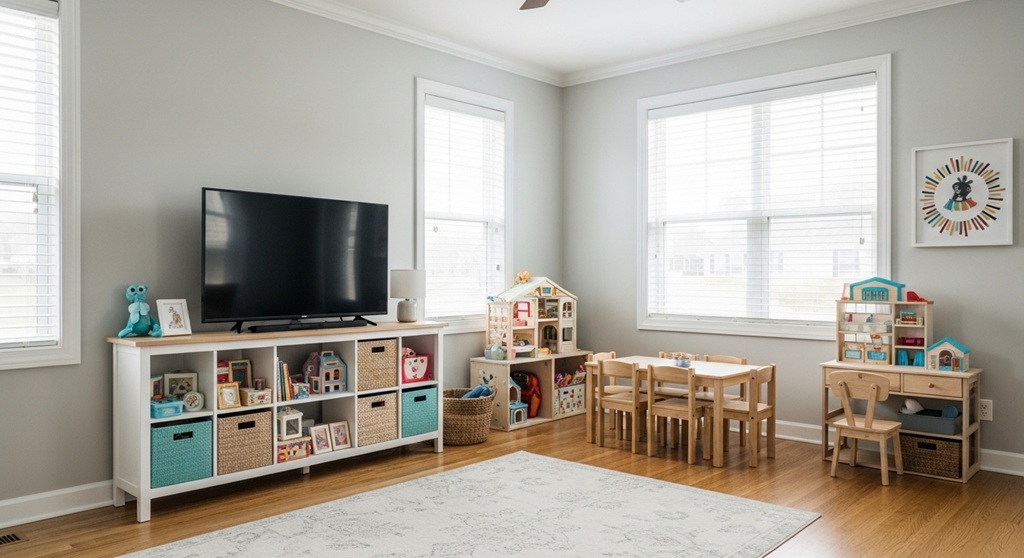
Short Answer: Empty the room, sort toys into categories, remove unused items, clean the space, and set up simple storage zones.
Step 1: Empty the Playroom
Remove every toy from shelves, bins, and storage units. Place everything in the center of the room. This step allows you to see the real volume of toys.
Many parents are surprised by how many duplicate items they find—especially toy cars, stuffed animals, and puzzle sets.
Step 2: Sort Toys by Category
Group similar toys together.
- Building toys (LEGO, blocks)
- Stuffed animals
- Art supplies
- Educational toys
- Board games
- Outdoor toys
This step helps identify duplicates and rarely used toys.
Step 3: Use the “One-Year Rule”
If a toy has not been used in the last year, it is likely safe to donate. Exceptions include sentimental items or seasonal toys.
Step 4: Remove Broken or Incomplete Toys
Broken toys create visual clutter and frustration for children. Immediately discard items with missing pieces or damaged parts.
Step 5: Clean the Playroom
Once toys are sorted, wipe shelves, vacuum the floor, and clean storage bins. This refreshes the space before reorganizing.
Step 6: Create Toy Zones
Designate areas for specific activities.
- Reading corner
- Building area
- Art station
- Puzzle shelf
Clear zones help children understand where items belong.
What Storage Solutions Work Best for Kids’ Playrooms?
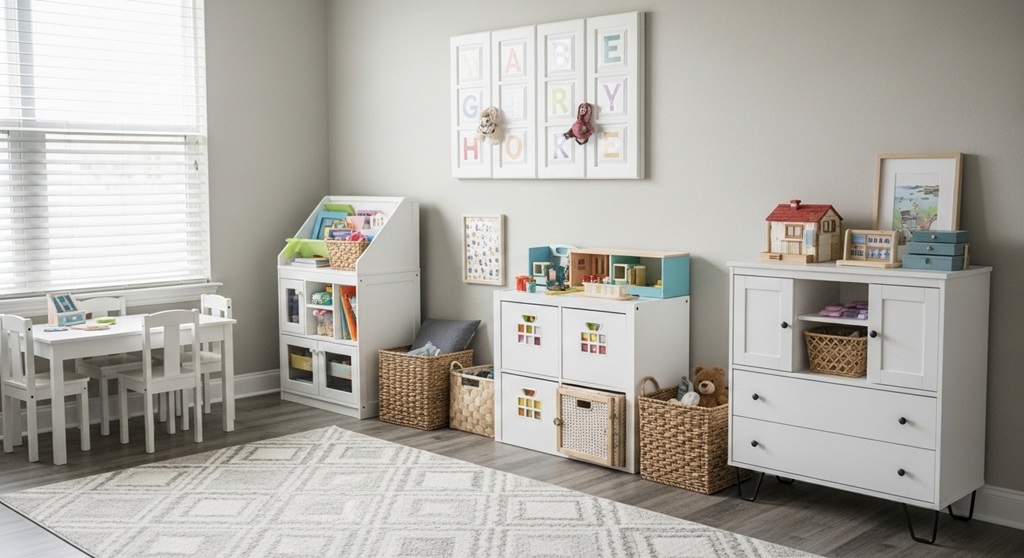
Short Answer: The best storage solutions include labeled bins, open shelves, cube organizers, and toy rotation boxes.
| Storage Type | Best For | Benefits |
|---|---|---|
| Clear Plastic Bins | Small toys | Easy visibility |
| Cube Shelves | Books and games | Structured organization |
| Labelled Baskets | Stuffed animals | Quick cleanup |
| Toy Rotation Boxes | Extra toys | Reduces clutter |
According to IKEA home organization research, children are more likely to clean up when toys are stored in open containers rather than closed cabinets.
How Can You Get Kids Involved in Decluttering?
Short Answer: Involve kids by letting them choose which toys to keep, donate, or rotate.
Children feel more responsible for maintaining an organized playroom when they participate in the decision process.
Simple Strategies
- Ask kids to choose their favorite 10 toys
- Explain that donated toys help other children
- Turn decluttering into a timed game
- Reward participation with a fun activity
Psychologists note that giving children ownership over their space improves responsibility and reduces resistance to cleanup routines.
What Are Common Decluttering Mistakes Parents Make?
Short Answer: Common mistakes include keeping too many toys, using complicated storage systems, and decluttering without a plan.
- Keeping every toy for sentimental reasons
- Buying storage instead of reducing clutter
- Not labeling bins
- Ignoring broken toys
- Expecting children to maintain complex systems
Professional organizers often say: “Decluttering first, storage second.”
Buying more containers without reducing toys usually increases clutter.
How Do You Maintain an Organized Playroom After Decluttering?
Short Answer: Maintain an organized playroom by doing quick weekly resets and monthly toy rotations.
Weekly Reset (10 Minutes)
- Return toys to labeled bins
- Check for broken toys
- Rotate items if needed
Monthly Toy Rotation
Store some toys and replace them with others from storage. This keeps the playroom interesting without increasing clutter.
Families who rotate toys report that children rediscover old toys with renewed interest.
Conclusion: Is It Really Possible to Declutter a Kids’ Playroom in One Day?
Yes. With a clear system and focused effort, decluttering a kids’ playroom in a day is completely achievable. The key is not perfection—it is simplicity. When toys are reduced, organized into categories, and stored in child-friendly containers, the room becomes easier to maintain.
A clutter-free playroom creates several benefits:
- Less daily cleanup
- More focused playtime
- Reduced household stress
- Improved organization habits for children
Start with one step: empty the room and begin sorting. Within a few hours, you can transform the space into a calm, functional play area that works for both parents and kids.
Ready to reclaim your space? Set aside one afternoon this weekend and try this method. You may be surprised how quickly a cluttered playroom can turn into an organized, enjoyable space.
Frequently Asked Questions (FAQs)
1. How long does it take to declutter a kids’ playroom?
Most playrooms can be decluttered in 3–5 hours when using a structured sorting system. The time depends on the number of toys and how quickly decisions are made.
2. How many toys should children have in a playroom?
Child development studies suggest that children engage better with fewer toys. Keeping 20–30 accessible toys at a time encourages deeper play and reduces clutter.
3. Should parents throw away broken toys?
Yes. Broken toys should be discarded immediately. They create frustration for children and increase clutter without providing play value.
4. What is toy rotation?
Toy rotation is a method where some toys are stored and swapped periodically. This keeps the playroom organized while making toys feel new again.
5. How often should a playroom be decluttered?
A quick decluttering session every 3–4 months helps maintain organization and prevents toy buildup.
6. Should kids help with decluttering?
Yes. Involving children teaches responsibility and helps them understand organization. Allowing them to choose toys to donate can also build empathy.
7. What is the easiest storage system for kids?
Open bins with clear labels are the easiest system. Children can quickly identify where toys belong and clean up independently.
Read More Also: How to Choose a Leakproof Sippy Cup for Travel & Daycare
Find out: How to Calculate Flow Rate Before Buying a Cheap Aquarium Circulation Pump