

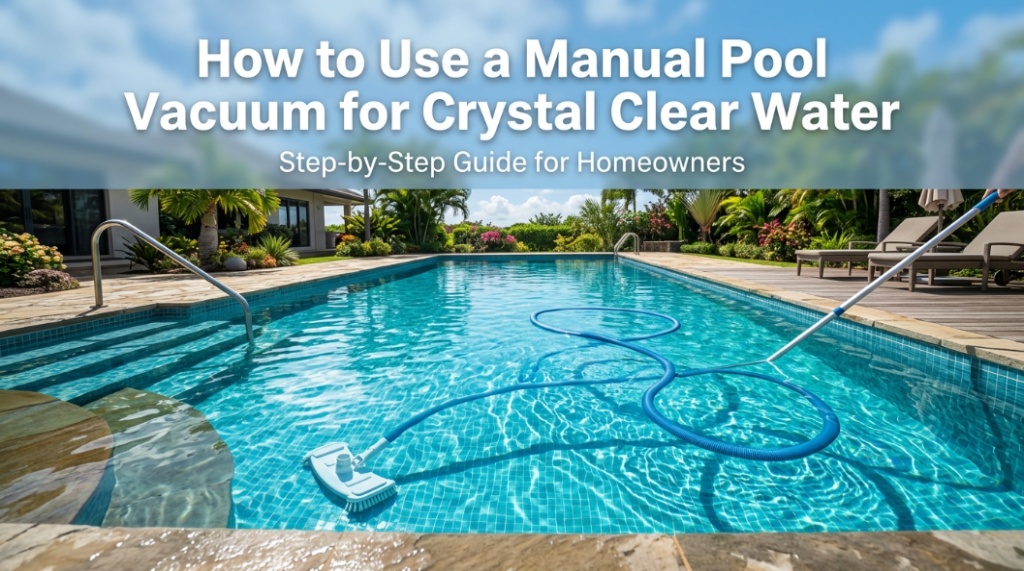
A manual pool vacuum is a simple cleaning tool that removes dirt, debris, and algae from your pool floor and walls using suction from your filtration system.
Cloudy water, slippery surfaces, and debris buildup are signs your pool is losing its clarity. If left untreated, this can lead to algae growth, bacteria buildup, and expensive maintenance issues. Many pool owners rely too heavily on chemicals or automatic cleaners, ignoring one of the most effective and budget-friendly tools available: the manual pool vacuum. Understanding how to use it correctly is the difference between a dull, uninviting pool and consistently crystal-clear water.
This manual pool vacuum guide breaks down exactly how to use it, step by step, so you can maintain clean water without overcomplicating the process or overspending on equipment.
How does a manual pool vacuum work?
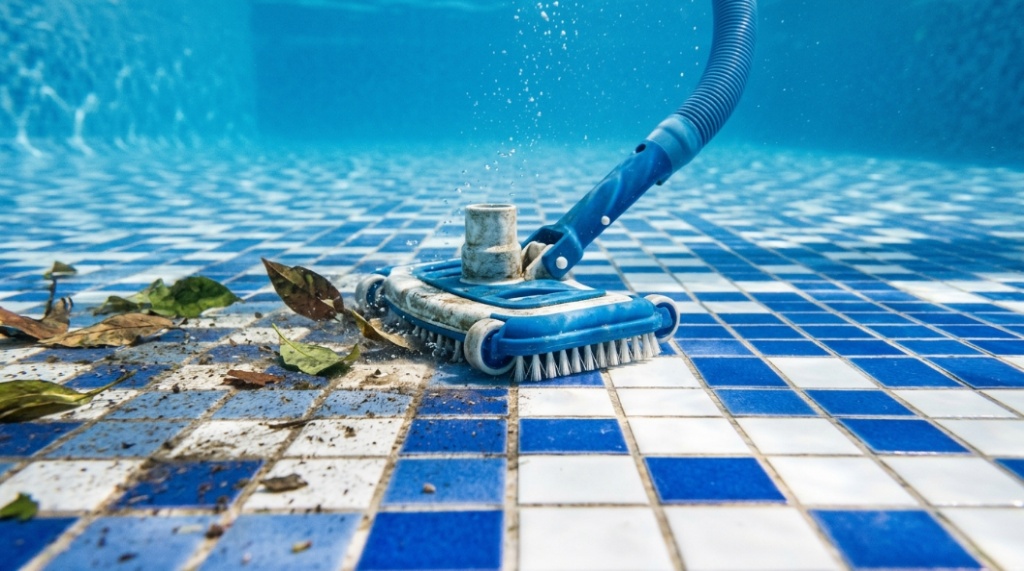
A manual pool vacuum works by connecting to your pool’s filtration system, using suction to pull debris from surfaces into the filter.
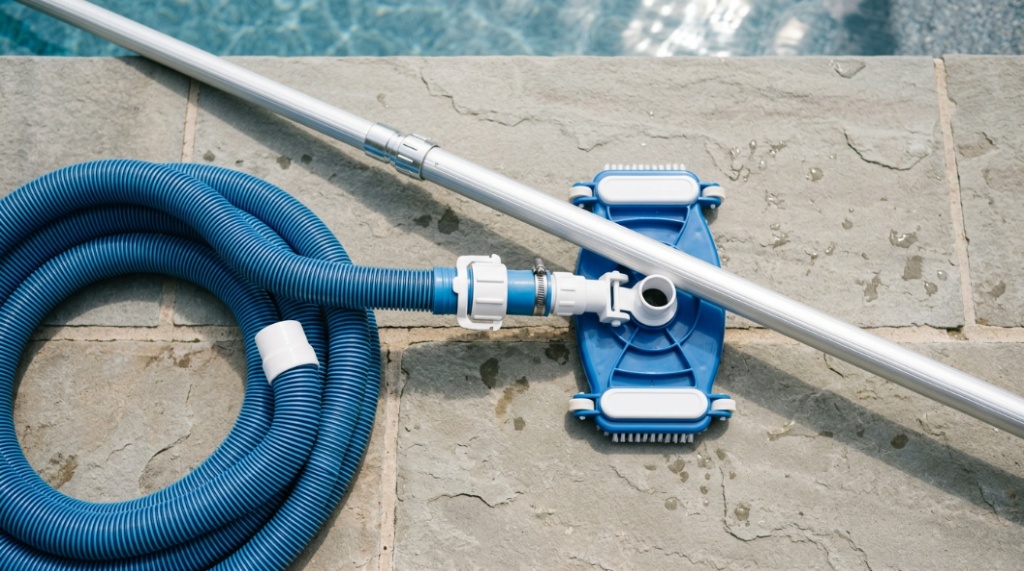
Unlike robotic or automatic cleaners, manual vacuums rely on you to guide them across the pool. The system typically includes a vacuum head, telescopic pole, and hose. When attached to a skimmer or dedicated suction port, the vacuum creates suction that pulls debris into the filtration system.
This hands-on control allows for more precise cleaning, especially in areas where debris collects, such as corners, steps, and slopes.
- Uses existing pool pump suction
- Targets specific dirty areas
- Offers better control than automatic cleaners
- Costs significantly less than robotic systems
What equipment do you need to use a manual pool vacuum?
You need a vacuum head, telescopic pole, vacuum hose, and access to your pool’s skimmer or suction port.
Before you start, ensure you have all necessary components. Missing even one piece can make the process inefficient or ineffective.
Essential tools checklist
- Vacuum head (weighted for better contact)
- Telescopic pole (adjustable length)
- Vacuum hose (long enough for pool size)
- Skimmer plate or suction adapter
- Pool brush (optional for pre-cleaning)
Using the correct equipment ensures proper suction and reduces the risk of air entering the system, which can disrupt cleaning.
How do you set up a manual pool vacuum correctly?
To set up a manual pool vacuum, attach the vacuum head to the pole, connect the hose, and fill the hose with water to remove air before connecting it to the skimmer.
This step is where most beginners make mistakes. Air in the hose reduces suction and can damage your pump.
Step-by-step setup process
- Attach the vacuum head to the telescopic pole
- Connect one end of the hose to the vacuum head
- Submerge the entire hose in water to remove air
- Insert the other end into the skimmer suction port
- Ensure your pump is running
Priming the hose (removing air) is critical. If skipped, the vacuum will lose efficiency and may not pick up debris properly.
How do you vacuum a pool manually step by step?
To vacuum a pool manually, move the vacuum head slowly across the pool floor in overlapping strokes, similar to mowing a lawn.
Rushing this process leads to missed debris and stirred-up dirt. Slow, controlled movements are key.
Manual vacuuming technique
- Start at the shallow end
- Move in straight, overlapping lines
- Keep the vacuum head flat on the surface
- Avoid quick movements to prevent debris from floating up
- Work toward the deep end
For heavily dirty pools, vacuuming to waste (bypassing the filter) may be more effective to prevent clogging.
Should you vacuum to filter or waste?
You should vacuum to filter for regular cleaning and to waste when dealing with heavy debris or algae.
| Mode | Best Use Case | Pros | Cons |
|---|---|---|---|
| Filter | Light debris | Saves water | Can clog filter |
| Waste | Heavy debris/algae | Removes debris instantly | Uses more water |
If your pool is very dirty, using the waste setting prevents fine debris from circulating back into the water.
How often should you vacuum your pool?
You should vacuum your pool at least once a week, or more frequently if it’s heavily used or exposed to debris.
Consistency is more important than intensity. Regular maintenance prevents buildup and reduces chemical usage.
- Weekly: Standard maintenance
- 2–3 times/week: High usage pools
- After storms: Immediate cleaning required
According to pool maintenance experts, regular vacuuming can reduce chemical consumption by up to 30% because fewer contaminants remain in the water.
Why is your manual pool vacuum not working properly?
A manual pool vacuum may not work due to air leaks, clogged filters, improper setup, or insufficient suction.
Common problems and fixes
- Weak suction: Check pump and filter
- Air bubbles: Re-prime the hose
- Debris returning: Clean or backwash filter
- Vacuum not moving: Adjust hose length or weight
Most issues are related to setup errors rather than equipment failure.
Is a manual pool vacuum better than an automatic cleaner?
A manual pool vacuum offers more control and lower cost, while automatic cleaners provide convenience and less effort.
| Feature | Manual Vacuum | Automatic Cleaner |
|---|---|---|
| Cost | Low | High |
| Control | High | Limited |
| Effort | Manual work required | Minimal effort |
| Cleaning precision | Excellent | Moderate |
For budget-conscious pool owners or those needing detailed cleaning, manual vacuums are often the better choice.
Can a manual pool vacuum remove algae?
Yes, a manual pool vacuum can remove algae, especially when used with the waste setting and proper brushing beforehand.
Algae tends to stick to surfaces, so brushing before vacuuming loosens it for effective removal.
Best approach for algae removal
- Brush walls and floor thoroughly
- Vacuum slowly using waste mode
- Shock the pool after cleaning
This combination ensures algae is physically removed and chemically treated.
What are the best tips for efficient manual pool vacuuming?
The best way to vacuum efficiently is to move slowly, maintain proper suction, and follow a consistent pattern.
- Always prime the hose fully
- Clean filter before starting
- Use overlapping strokes
- Vacuum during calm conditions (no wind)
- Monitor water level when using waste mode
These small optimizations significantly improve cleaning results and reduce time spent.
Conclusion: What is the best way to keep your pool crystal clear?
The best way to keep your pool crystal clear is to combine consistent manual vacuuming, proper filtration, and balanced water chemistry.
A manual pool vacuum remains one of the most effective tools for maintaining a clean pool. It gives you full control, targets problem areas, and works reliably when used correctly. Skipping this step often leads to cloudy water, algae growth, and higher maintenance costs.
Make manual vacuuming part of your weekly routine. Done right, it not only improves water clarity but also extends the life of your pool equipment. If you want consistently clean water without relying on expensive automation, mastering this process is essential.
Start applying these steps today, and your pool will stay clear, safe, and ready to use at any time.
FAQ: Manual Pool Vacuum Guide
How long does it take to vacuum a pool manually?
It usually takes 30–60 minutes depending on pool size and debris level.
Can you leave a manual pool vacuum in the pool?
No, manual vacuums should be removed after use to prevent damage and maintain efficiency.
Do you need to backwash after vacuuming?
Yes, if you vacuumed to filter and notice pressure increase, backwashing is recommended.
Why does debris come back after vacuuming?
This happens when the filter is dirty or too fine debris passes through it.
Can you vacuum a pool without a pump?
No, manual pool vacuums rely on the pump for suction.
What is the best time to vacuum a pool?
The best time is early morning or evening when water is calm and debris is settled.
Is vacuuming better than brushing?
Both are necessary—brushing loosens debris, while vacuuming removes it.
📌 Related Reads
👉 Check this guide: find a powerful vacuum cleaner that saves time in 2026